Unveiling the Hidden Landscape: 3D Imaging Reveals Intricate Clitoral Nerve System, Reshaping Medical Understanding

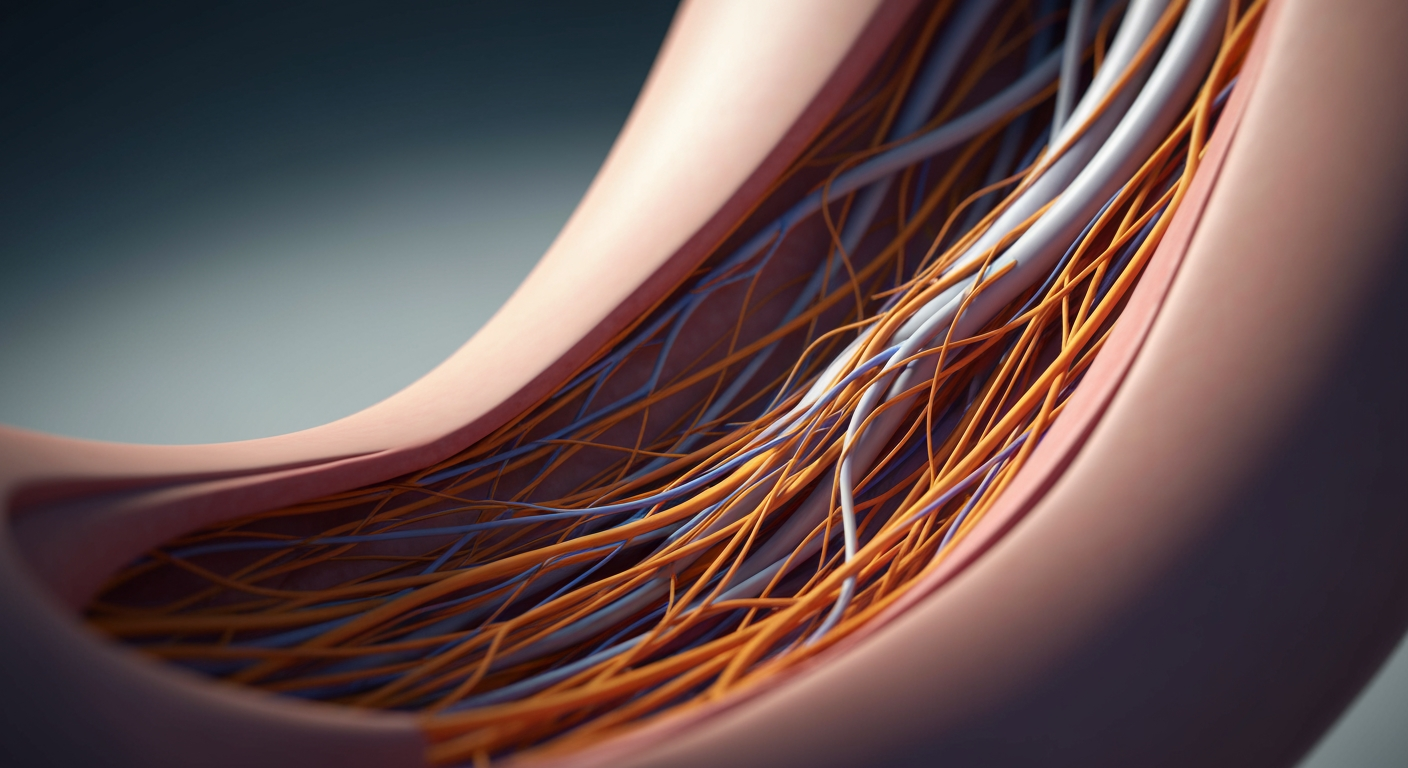
Amsterdam, Netherlands – In a landmark advancement poised to revolutionize anatomical understanding and surgical practices, scientists have created the first-ever comprehensive three-dimensional map of the clitoris's intricate nerve network. Utilizing high-energy X-rays and sophisticated imaging techniques, this unprecedented visualization brings into sharp focus an organ long shrouded in historical neglect and anatomical ambiguity. The detailed mapping not only reveals a far more complex and extensive nerve distribution than previously understood but also challenges deeply ingrained misconceptions that have pervaded medical education for centuries. This breakthrough promises to significantly impact women's health, from improving surgical outcomes to fostering a more nuanced understanding of female sexual pleasure and dysfunction.
A History of Oversight: From Taboo to Breakthrough
For generations, the clitoris, the primary organ of female sexual pleasure, has been notably absent or inaccurately represented in medical textbooks and scientific literature. While the intricate nervous system of the penis was comprehensively mapped almost three decades ago, comparable detailed knowledge of the clitoris has remained elusive. This historical oversight, attributed partly to societal taboos surrounding female sexuality, cultural ignorance, and the internal nature of much of the clitoral structure, has left a significant gap in anatomical understanding.
Early references to the clitoris date back to Hippocrates around 460 BCE, who described it as a "columella" or "little pillar." However, subsequent anatomists, like Galen in 40 AD, often misconstrued female anatomy as an inverted version of male anatomy, sometimes denying the clitoris a distinct identity or deeming it "useless." Throughout history, it has been labeled disparagingly, even dubbed the "shameful member" in the 16th century by Charles Estienne. Astonishingly, the clitoris even disappeared from editions of Gray's Anatomy for decades in the 20th century.
The tide began to turn with pioneering researchers like Melbourne urologist Helen O'Connell, whose landmark studies in 1998 and 2005 used cadaveric dissections and MRI imaging to reveal the clitoris as a much larger, mostly internal, three-dimensional organ. However, even her crucial work could not fully resolve the minute details of its neuroanatomy. Until now, traditional dissection and standard MRI scans have lacked the resolution to capture the delicate nerve fibers that convey sensation.
Unprecedented Detail: Mapping the Nerve Highway
The groundbreaking research, led by Ju Young Lee, a research associate at Amsterdam University Medical Center, and her colleagues, utilized advanced synchrotron X-rays generated by a particle accelerator. This powerful tool allowed for micron-scale 3D imaging of two donated postmortem female pelvises, providing an unprecedented view of the clitoral nerve pathways.
The findings, currently available on the preprint server bioRxiv, detail the trajectory of five complex, tree-like branching nerves running through the clitoris. Specifically, the dorsal nerve of the clitoris (DNC), the organ's main sensory nerve, was found to extend a robust array of branches into the clitoral glans, clitoral hood, and even the mons pubis. This contradicts previous anatomical assumptions that suggested the DNC tapered off as it approached the glans. The study also showed that some branches of clitoral nerves reach the mons pubis and the clitoral hood, and the posterior labial nerve innervates the surrounding clitoral body and labial structures.
This new map also reinforces and expands upon recent discoveries regarding the sheer number of nerve endings. For years, an oft-cited figure of 8,000 nerve endings in the clitoris was mistakenly attributed to a study on cows. In 2022, Dr. Blair Peters and his team at Oregon Health and Science University conducted the first actual count of human clitoral nerve fibers, revealing over 10,000, specifically identifying 10,281 nerve fibers in the dorsal nerve alone, a figure 25% higher than the previous estimate. Lee's 3D mapping further illustrates the density and complex distribution of this extensive nerve network.
Revolutionizing Medical Practice and Patient Outcomes
The immediate and profound implications of this detailed nerve mapping are particularly significant for various surgical procedures. Surgeons can now access a vital new roadmap to navigate the intricate neural pathways of the clitoris with greater precision, minimizing the risk of nerve damage and preserving sexual function.
This knowledge is especially critical in gender-affirming surgeries, where preserving sensation is paramount. Moreover, the research offers hope for survivors of female genital mutilation (FGM), a practice affecting over 230 million women globally. Approximately 22% of women who undergo reconstructive surgery after FGM experience a decline in orgasmic sensation, a statistic that this improved understanding of nerve distribution could significantly reduce. The findings also suggest that common cosmetic procedures like labiaplasty, and even surgeries for vulvar cancer, may need to rethink their "danger zones," as some nerve branches extend further than previously believed, requiring greater caution to avoid irreparable damage.
A New Era for Female Sexual Health and Education
Beyond direct surgical applications, this 3D nerve map heralds a new era for understanding female sexual health and pleasure. By providing an accurate and comprehensive anatomical foundation, researchers can now ask more precise questions about the physiology of the clitoris, unraveling the mechanisms underlying arousal and orgasm. This research can help address conditions like clitoral adhesions or other forms of sexual dysfunction, which have often been misdiagnosed or overlooked due to a lack of detailed anatomical knowledge.
The study also serves as a powerful call to action for updating medical curricula and textbooks. For too long, the clitoris has been underrepresented or inaccurately depicted, contributing to a pervasive lack of knowledge among medical professionals. The disparity in research, with approximately 20 times more scientific papers on the penile glans than the clitoral glans, underscores a historical bias that this new mapping aims to correct.
This groundbreaking 3D imaging of the clitoral nerve system marks a pivotal moment, not just in anatomy, but in challenging societal norms and promoting equitable healthcare. It transforms the clitoris from an often-ignored anatomical footnote into a fully recognized, complex organ, paving the way for improved health outcomes, enhanced sexual well-being, and a more informed medical community worldwide. Researchers view this not as an endpoint, but as "the starting point of clitoris science," with many more mysteries yet to be explored.
Sources
- theguardian.com
- zmescience.com
- thefemalelead.com
- livescience.com
- thenewfeminist.co.uk
- issm.info
- theguardian.com
- smithsonianmag.com
- birthsmalltalk.com
- theegalitarian.co.uk
- unimelb.edu.au
- livescience.com
- positive.news
- cliterate.com.au
- vechnayamolodost.ru
- zmescience.com
- smithsonianmag.com
- technologynetworks.com
- livescience.com
- issm.info
- businessinsider.com
- opb.org
- healthday.com
- vice.com
- sciencefocus.com
- iflscience.com
- kansascity.edu
- medium.com
Related Articles


Keytruda: A Lifesaving Breakthrough Mired in a Global Access Divide
Merck's Keytruda, scientifically known as pembrolizumab, has revolutionized cancer treatment, offering a beacon of hope and extended life to millions battling various malignancies. This groundbreaking immunotherapy...


The Twilight Zone: Unraveling the Mundane Truth Behind Most UFO Sightings
For decades, the phrase "unidentified flying object" has conjured images of advanced alien spacecraft, fueling a global fascination with the unknown. Yet, for many who report spotting these mysterious phenomena, the...


A Crisis of Confidence: Americans Grapple with a Pervasive Sense of Impending Doom
A profound sense of unease has settled across the United States, as a significant portion of its population expresses a deepening pessimism about the nation's future. Recent polling data reveals a widespread sentiment...