Skimo Takes the Global Stage: A Deep Dive into the Winter Olympics' Newest Thrill


Bormio, Italy – As the global sporting community turns its gaze towards the Milan Cortina 2026 Winter Olympics, a thrilling and historically rich discipline is set to make its official debut: Ski Mountaineering, or "Skimo." This high-octane sport, blending the endurance of uphill climbing with the technical prowess of downhill skiing, promises to captivate audiences and challenge athletes like never before, marking a significant evolution in the Winter Games landscape.
What is Skimo? A Fusion of Endurance and Technique
At its core, ski mountaineering is a demanding endurance sport that requires athletes to ascend snow-covered mountains on skis, then swiftly transition to a downhill race. The sport meticulously combines aspects of cross-country skiing, alpine skiing, and mountaineering. Competitors navigate challenging terrain using specialized lightweight equipment. The ascent typically involves attaching "skins" — removable fabric strips — to the base of skis for traction, allowing athletes to glide uphill. In steeper sections, athletes may remove their skis, secure them to a backpack, and continue on foot in what is known as a "bootpack." Once the summit is reached, the skins are rapidly removed, bindings are locked, and athletes embark on a high-speed, technical descent, often through gate-marked courses, jumps, and banked turns. The rapid "transitions" between these modes of travel are critical, demanding precision, speed, and strategic thinking, often determining the outcome of a race.
A Rich History, A New Stage
While Skimo is new to the Olympic program, its roots trace back thousands of years, evolving from ancient modes of transportation and military patrol. Early forms of ski mountaineering were integral for hunting, exploration, and military movements across snowy, high-alpine regions, particularly in Europe. Historic events like the 1933 race in Cervinia, Italy, and Switzerland's Patrouille des Glaciers, showcased the early competitive spirit, traversing vast distances and significant elevation gains. Indeed, a "military patrol" competition, a clear precursor to modern ski mountaineering, was even an official event at the inaugural Winter Olympics in 1924, and later a demonstration sport.
The journey to its modern Olympic inclusion gained significant momentum with its successful appearance at the 2020 Winter Youth Olympic Games in Lausanne, Switzerland, where male and female skiers competed in individual, sprint, and mixed relay events. This positive reception ultimately led the International Olympic Committee (IOC) to officially approve ski mountaineering for the 2026 Milan Cortina Winter Olympics in July 2021, marking its full-fledged return to the Olympic fold after a century.
The Olympic Format: Speed, Skill, and Strategy
For its debut at the 2026 Games, Skimo will feature three medal events: the Men's Sprint, Women's Sprint, and a Mixed Relay. The sprint races are characterized by their intense, fast-paced nature, typically lasting around three minutes. Athletes will face an ascent of approximately 70 meters (around 230 feet) before a technical downhill section. The mixed relay event involves teams of one male and one female athlete, who complete alternating laps on a slightly longer course with multiple ascents and descents.
The compressed nature of these events means every second counts, with seamless transitions between uphill and downhill modes being paramount. Competitors must quickly remove skins, secure them, and lock into downhill mode, or efficiently attach skis to their pack for bootpacking sections. This dynamic interplay of aerobic power, technical skiing ability, and lightning-fast equipment handling creates a highly engaging spectacle for viewers.
The Gear of the Grind: Lightweight Innovation
The performance in skimo racing is heavily influenced by specialized, ultralight equipment designed for both efficiency in ascent and control in descent. Skis are notably lighter and often shorter than traditional alpine skis, with women's skis typically a minimum of 150cm and men's 160cm. Boots are flexible for uphill movement but offer rigidity for downhill control. Bindings allow the heel to be free for climbing and locked for descending. Essential for uphill traction are "skins," carpet-like strips affixed to the ski bases.
Beyond the core equipment, mandatory safety gear is crucial, reflecting the sport's mountaineering heritage. This often includes a helmet, a three-antenna beacon (transceiver) carried in a zippered pocket, a shovel with a separate shaft, and a probe. Gloves must be worn at all times for protection and warmth. The continuous evolution in equipment technology aims to balance minimal weight with maximum performance and safety, continually pushing the boundaries of what athletes can achieve.
Beyond the Podium: The Future of a Growing Sport
The inclusion of ski mountaineering in the Olympic program is expected to significantly boost its global profile and accelerate its already rapid growth. The sport has seen a surge in popularity, particularly in Europe and North America, with increasing participation in off-piste skiing and uphill access at resorts. Olympic recognition provides an invaluable platform, attracting new athletes, sponsors, and fans, and encouraging the expansion of youth teams and national federations.
Its appeal lies in its demanding nature, attracting elite endurance athletes from diverse backgrounds, including running and cycling. Skimo's compact format, requiring minimal new infrastructure and aligning with environmental sustainability goals, also makes it an attractive addition for host cities. For mountain communities like Bormio, hosting these events fosters structured uphill access and promotes responsible mountain tourism, solidifying the long-term relationship between the sport and its alpine environment. The increased visibility will also likely lead to further scientific research into training methods and athlete physiology, pushing the boundaries of human performance in this demanding discipline.
As Skimo prepares to grace the Olympic stage, it represents more than just another medal event. It embodies the enduring human spirit of exploration, endurance, and connection with the mountain environment, promising a fresh, exhilarating chapter in the history of the Winter Olympic Games.
Related Articles


Afghan Women's Football Team Forges a Path Back to the Global Stage
After years of exile and uncertainty, the Afghanistan women's national football team is once again making strides toward international competition, marking a significant victory for resilience and human rights. Despite the Taliban's sweeping ban on women's sports following their 2021 takeover, a newly formed refugee team, "Afghan Women United," has commenced participation in international tournaments, symbolizing an unyielding defiance against oppression and a testament to the power of sport


Escalating Tensions Raise Security Questions for Mexico's 2026 World Cup Aspirations
Recent widespread violence following the death of a prominent cartel leader has cast a shadow of uncertainty over Mexico's preparations to co-host the 2026 FIFA World Cup, triggering international concern and prompting urgent security reassessments. With less than four months until the tournament commences, a wave of retaliatory attacks, marked by blockades, arson, and armed confrontations, has unfolded across multiple states, particularly impacting Guadalajara, one of the designated host cities

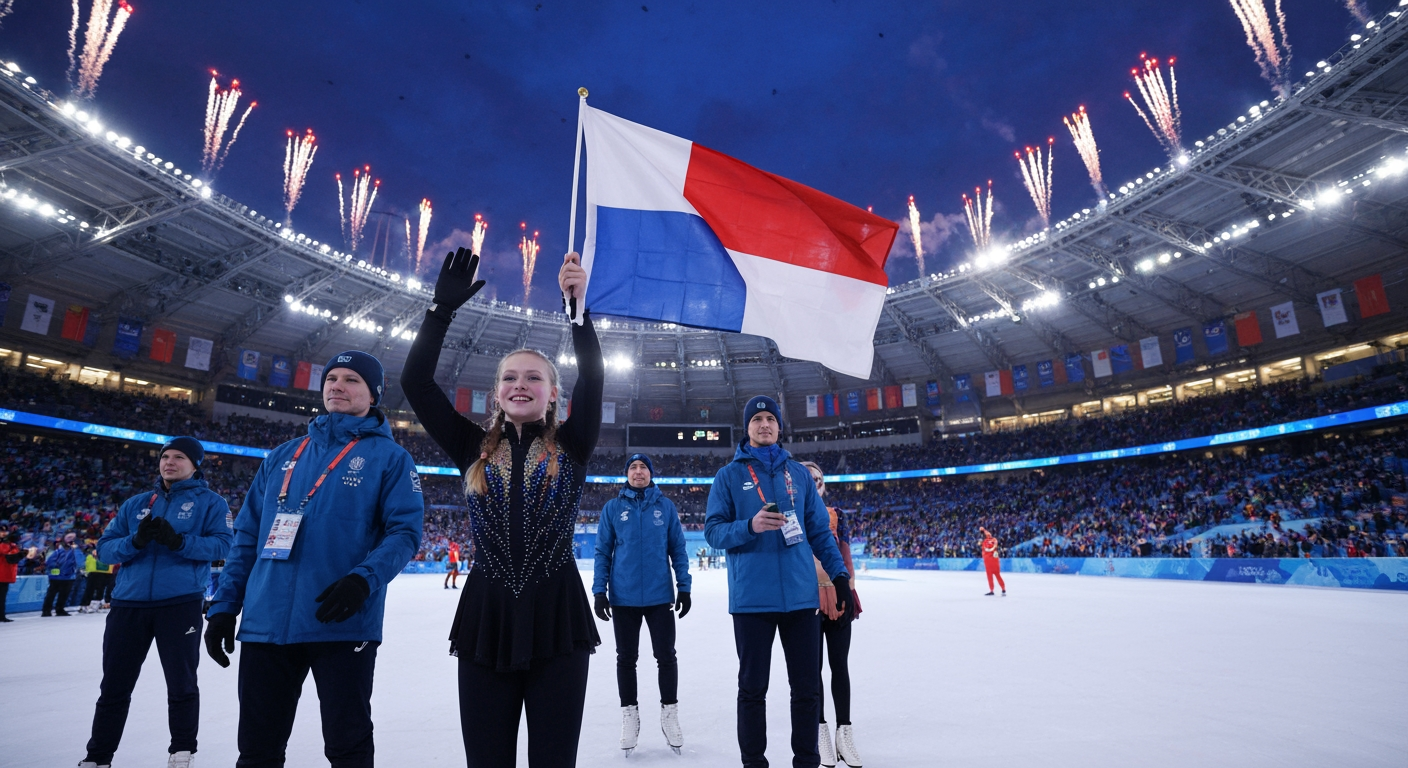
Italian Alps Bid Farewell: Milan Cortina 2026 Concludes with Spectacle of Unity and Legacy
VERONA, ITALY – The grandeur of the Verona Arena bore witness this evening to the poignant closing ceremony of the XXV Winter Olympic Games, bringing to a close 17 days of exhilarating competition and cultural celebration across Northern Italy. Under the theme "Beauty in Action," the ceremony served as a vibrant testament to athletic achievement, international camaraderie, and Italy's commitment to a sustainable future, culminating in the traditional extinguishing of the Olympic flame