Hungary's Political Landscape Undergoes Seismic Shift as Magyar Prepares to Form Government by Early May

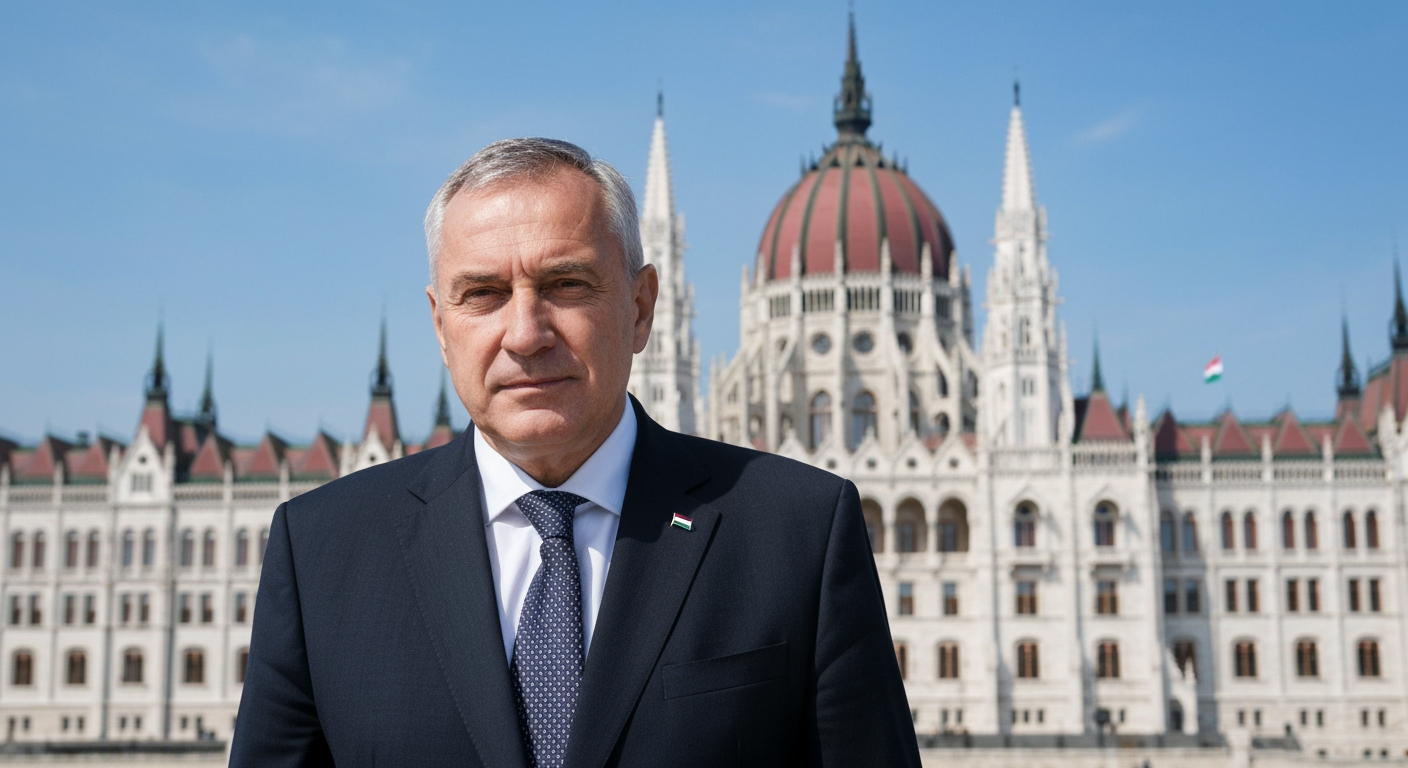
BUDAPEST – Hungary stands on the precipice of a new political era as Péter Magyar, leader of the recently ascendant Tisza party, has signaled his readiness to form a new government as early as May 5. This announcement follows his party's decisive victory in the 2026 parliamentary elections, a result that dramatically ended Prime Minister Viktor Orbán's 16-year tenure and marked an unprecedented realignment of Hungarian politics. The swift transition is anticipated to usher in a period of significant domestic reforms and a recalibration of Hungary's often-strained international relationships.
The Meteoric Rise of a Political Catalyst
Péter Magyar, a 45-year-old lawyer and former Fidesz insider, emerged from relative obscurity to become Hungary's most formidable political figure in a matter of months. His journey to national prominence began in early 2024, catalyzed by a high-profile pardon scandal that rocked Orbán's government. The controversy led to the resignations of then-President Katalin Novák and Justice Minister Judit Varga, Magyar's former wife. Seizing this moment, Magyar broke ranks with the ruling establishment, publicly denouncing what he described as a corrupt system and a government that had lost touch with its citizens.
Prior to his political awakening, Magyar navigated within Orbán's Fidesz party, holding senior positions in state-affiliated institutions and serving as a diplomat in Brussels. This insider perspective provided him with a unique platform to critique the alleged systemic issues and centralizing tendencies of the Orbán administration. His "Stand up Hungarians Community" movement rapidly gained traction, mobilizing tens of thousands of citizens in protests throughout 2024. Subsequently, he transformed the dormant Tisza (Respect and Freedom) party, originally founded in 2020, into a powerful political vehicle, quickly ascending to its leadership in July 2024. The party's rapid growth was particularly evident in the 2024 European Parliament elections, where it secured a strong second place, laying the groundwork for its subsequent parliamentary success.
A Decisive Mandate for Systemic Change
The 2026 parliamentary election delivered a resounding victory for the Tisza party, which secured a two-thirds supermajority, winning at least 137 of the 199 seats in the National Assembly. This impressive outcome effectively ended Viktor Orbán's 16-year dominance over Hungarian politics, a period characterized by constitutional amendments and significant judicial and electoral reforms implemented with Fidesz's prior supermajorities. The election saw a remarkably high voter turnout, with nearly 78% of eligible Hungarians participating, reflecting a widespread desire for change.
Magyar has interpreted this electoral landslide as a mandate for not just a change in government personnel, but a "complete change in regime." Orbán himself conceded defeat on election night, acknowledging the "painful but unambiguous" result. The Tisza party's victory is seen as a rejection of the highly polarized political landscape that has defined Hungary for decades, offering a new centrist-to-center-right, pro-European alternative to both the former ruling party and the traditional opposition.
Charting a New Course: Domestic and Foreign Policy Priorities
Magyar's incoming administration faces a complex agenda, with commitments to fundamental reforms across various sectors. Domestically, his key promises include a robust crackdown on corruption, a restoration of the rule of law, and the overhaul of government structures to enhance their independence. He has also pledged to establish new ministries focused on critical areas such as public health, environmental protection, and education, addressing long-standing public concerns. A central pillar of his economic strategy is to unlock billions of euros in European Union funds that have been frozen due to concerns over corruption and rule-of-law deficiencies under the previous government. To this end, Magyar has indicated his government's willingness to join the European Public Prosecutor's Office, allowing EU investigators to probe fraud cases and monitor the use of EU funds.
In foreign policy, Magyar has articulated a clear intention to rebuild and strengthen Hungary's relationship with the European Union and NATO, emphasizing a "pro-European" trajectory. His party's manifesto reportedly includes a commitment to joining the Eurozone by 2030, a significant departure from Orbán's stance. Regarding Eastern relations, Magyar aims to end Hungary's perceived drift toward Russia and reduce the country's dependence on Russian energy sources by 2035. While signaling a desire for pragmatic relations with Moscow, he has also stated that his government would not veto a 90-billion-euro EU loan for Ukraine, suggesting Hungary might "opt out" due to its own financial struggles rather than obstruct broader European efforts. On migration, Magyar holds a more stringent position than his predecessor, opposing the redistribution of asylum-seekers across Europe.
The Path Ahead: Challenges and Expectations
Despite the resounding victory, the path forward for Péter Magyar and the Tisza party is fraught with challenges. The immediate task involves swiftly forming a functional government and initiating the promised reforms. Analysts suggest that the new government will face "tight pressure" from the EU to quickly implement changes necessary to unfreeze crucial funds, with deadlines potentially as early as August. Hungary also grapples with internal economic issues, and the continued presence of Viktor Orbán and his Fidesz party in opposition, with their entrenched networks and political experience, will present a formidable adversary. Orbán's political model, often described as "Orbánism," has deeply influenced Hungarian political culture, and its legacy may persist even after his electoral defeat.
Magyar's relatively swift ascent also means that some of his policy positions, though broadly outlined, still lack intricate details, leading some observers to describe him as a "dark horse" whose full political agenda remains to be seen. The delicate balancing act of maintaining pragmatic relations with countries like Russia and China while reasserting Hungary's commitment to its Western alliances will require astute diplomacy.
The electoral outcome represents a momentous turning point for Hungary. The aspirations for a more transparent, less corrupt, and more deeply integrated European nation are high. However, transforming these aspirations into tangible realities will demand sustained political will, effective governance, and a navigation of complex domestic and international dynamics in the months and years to come.
Related Articles


Cuba Vows Fierce Defense Amid Escalating U.S. Tensions
HAVANA – Cuban President Miguel Díaz-Canel has issued a stark warning to the United States, declaring that the island nation is prepared to mount a fierce defense against any military aggression, including potential...

Pope Leo XIV Condemns 'Delusion of Omnipotence' Fueling International Conflict
VATICAN CITY – Pope Leo XIV has issued a stern condemnation of what he termed a "delusion of omnipotence" driving the U.S.-Israeli war in Iran, delivering a powerful message against leaders who prioritize conflict over...