Germany's China Conundrum: Merz Navigates a Shifting Global Economic Landscape

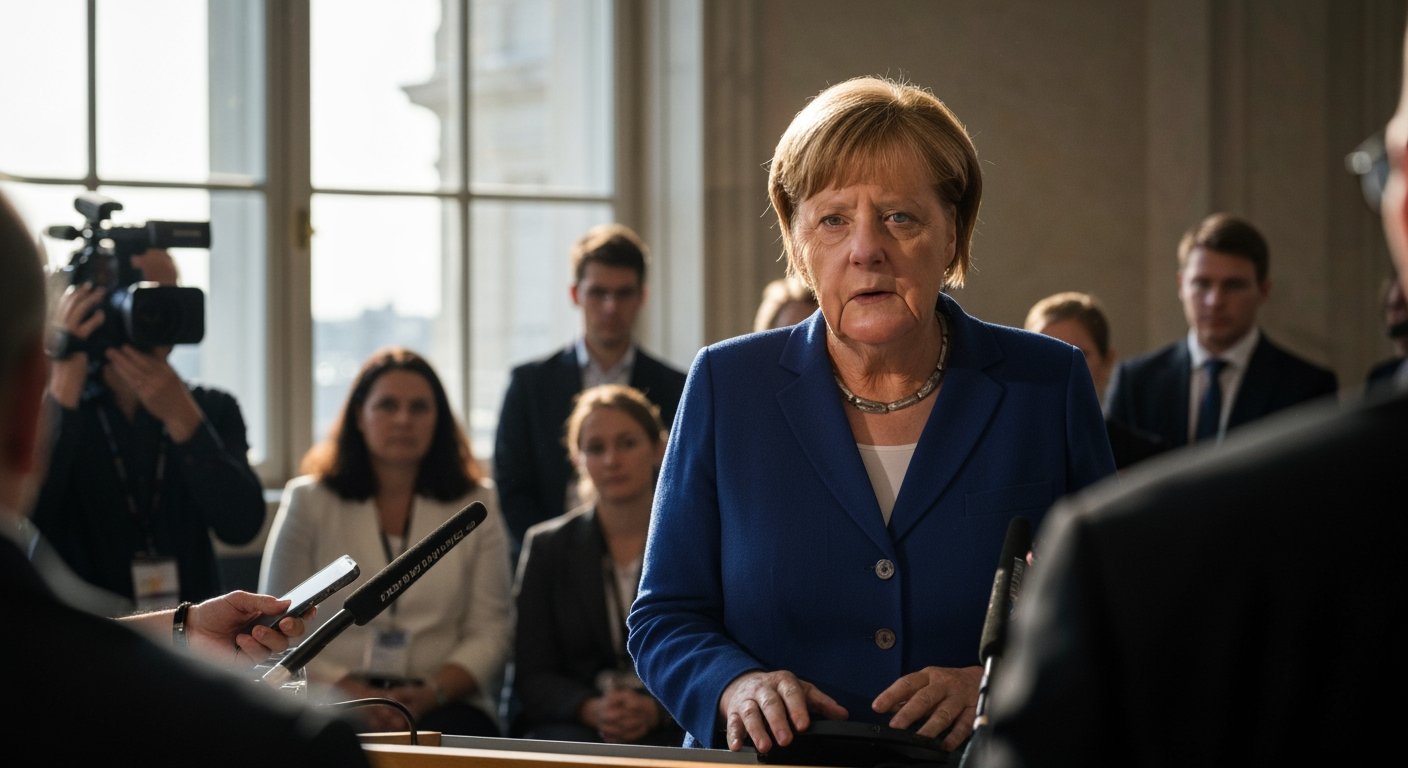
BERLIN – Germany finds itself at a pivotal juncture in its relationship with China, as a "second China shock" reshapes global trade dynamics and compels Berlin to recalibrate decades of economic policy. At the helm of this complex navigation is Chancellor Friedrich Merz, whose administration is charting a course of "de-risking without decoupling" amidst intensified competition, geopolitical tensions, and an evolving understanding of China as a systemic rival. The traditional pillars of Germany's economic prosperity, long fueled by robust trade with Beijing, are now facing unprecedented challenges, demanding a strategic pivot that balances economic interests with national security.
The notion of a "China shock" is not new to the global economy. The initial shock, following China's accession to the World Trade Organization in 2001, primarily impacted labor-intensive sectors in Western nations, while Germany largely benefited by supplying machinery and high-end automotive products to a rapidly industrializing China. This mutually beneficial relationship saw China become Germany's largest trading partner by 2016, underpinning a period of sustained growth for the eurozone's economic powerhouse. However, this era of seamless complementarity is yielding to a new reality.
The Second China Shock: From Partner to Potent Rival
The current "second China shock" is fundamentally different and presents a more direct challenge to the core of German industry. China's ascent in high-tech manufacturing, coupled with significant state-subsidized overcapacity, is now flooding global markets with cheaper goods, directly competing with Germany's traditional strengths in sectors like automotive, mechanical engineering, and chemicals. Data from 2025 illustrates the stark shift: German exports to China fell by 9.3% to their lowest level in a decade, marking a 23% decline from the peak in 2022. Car exports alone plummeted by 66% between 2022 and 2025, reaching their lowest point since 2009.
This intense competition is eroding the market share and profitability of German companies within China and in third-country markets. The European Central Bank warns that increasing Chinese competitiveness has led to the elimination or shift of approximately 240,000 jobs across the eurozone between 2015 and 2022. For Germany, the impact is particularly acute in manufacturing, with concerns that the broader effects could touch nearly a third of jobs in the euro area. The country's trade deficit with China swelled to a record 89 billion euros in 2025, signaling a deepening imbalance. This economic transformation has solidified a growing perception in Germany that China is no longer merely a competitor, but a "systemic rival" and an "institutional adversary."
Merz's Sharper Stance: De-risking in a Bipolar World
Chancellor Friedrich Merz has been a prominent voice advocating for a tougher stance on China, a position that predates his chancellorship. He has openly categorized China as part of an "axis of autocracies" alongside Russia, Iran, and North Korea, underscoring a foreign policy perspective that emphasizes systemic conflict. Merz has consistently warned German businesses about the "great risk" associated with investments in China and has explicitly stated that his government would not offer bailouts for failed ventures there.
Upon assuming office, Merz's administration has enshrined "de-risking without decoupling" as the cornerstone of its China policy. This strategy aims to reduce strategic dependencies, particularly in critical supply chains, while striving to maintain essential economic ties. A key initiative in this reorientation is the planned establishment of a National Security Council, designed to better coordinate Germany's foreign and security policy, including its approach to China, across various ministries. With key ministries focusing on China, such as the Chancellery, Economics, and Foreign Affairs, now led by the CDU/CSU, a more aligned and assertive policy on economic security and trade defense is anticipated.
Navigating Geopolitical Crosscurrents: Beyond Washington's Shadow
Germany's recalibration of its China policy is not occurring in a vacuum. It is deeply intertwined with broader geopolitical shifts, including China's continued support for Russia following the invasion of Ukraine and the resurgence of protectionist sentiments in the United States. The weaponization of dependencies, such as China's export controls on rare earth elements and Nexperia chips in 2025, has highlighted the vulnerabilities inherent in concentrated supply chains and spurred calls for diversification.
Interestingly, while adopting a more cautious approach to China, Chancellor Merz has also asserted a degree of European autonomy in foreign economic policy, particularly in response to U.S. trade practices. He has openly challenged the U.S. tariff approach, stating that Germany and Europe will not blindly follow suit and are capable of defending themselves if American policies become overly aggressive. This stance reflects a desire to forge "strategic partnerships" with like-minded global actors, suggesting a nuanced foreign policy that seeks to safeguard Germany's economic future and global influence independently of, or in addition to, the transatlantic alliance. Merz's upcoming trip to China, where he plans to pursue such partnerships, underscores this complex diplomatic tightrope walk.
The Path Forward: Balancing Interests and Managing Risks
The path ahead for Germany and its relationship with China is fraught with inherent tensions. While the government emphasizes reducing strategic dependencies, economic interdependence remains substantial. In 2024, bilateral trade reached approximately EUR 246 billion, and over 5,000 German companies continue to operate in China, with many planning to maintain or expand their investments. Large German corporations, such as Volkswagen, BMW, and Mercedes-Benz, are ramping up electric vehicle production and research and development in China, demonstrating the continued importance of the Chinese market.
This creates a delicate balance for Merz's government: addressing the imperative of national security and economic resilience without alienating a crucial trading partner or undermining the profitability of German industry. The revision of Germany's 2023 China Strategy will be a critical indicator of this balancing act, acknowledging China as a "systemic rival" while also recognizing the necessity of cooperation on global issues. The ongoing debate within Germany reflects these competing interests, with some industry voices hesitant to fully endorse a confrontational stance, citing the significant economic stakes involved. Ultimately, Chancellor Merz faces the intricate task of securing Germany's economic future and geopolitical standing in a world where the lines between partnership, competition, and rivalry are increasingly blurred. The success of his "double strategy"—an outstretched hand for partnership and a firm stance for defense—will define Germany's role in the evolving global order.
Related Articles

Russia's Enduring Nuclear Grip: A Geopolitical Lever Beyond Oil and Gas
While global attention frequently fixates on Russia's vast oil and gas reserves as instruments of geopolitical influence, a quieter, yet equally potent, form of leverage persists within its nuclear energy sector. Through its state-owned atomic energy corporation, Rosatom, Russia has cultivated deep-seated dependencies across the world, extending far beyond fossil fuel exports


Pentagon Demands Unfettered AI Access from Anthropic, Citing National Security Imperative
Washington D.C. — A high-stakes confrontation is unfolding between the U.S. Department of Defense and leading artificial intelligence firm Anthropic, as the Pentagon pressures the company to relinquish control over how its powerful Claude AI model can be used for military purposes

Energy Crisis Deepens European Divide as Druzhba Pipeline Standoff Escalates
Kyiv, Ukraine – A critical energy dispute surrounding the Druzhba oil pipeline, a vital artery for Russian crude into Central Europe, has intensified, creating fresh rifts within the European Union and complicating aid efforts for war-torn Ukraine. The southern branch of the pipeline, which supplies Hungary and Slovakia, has been offline since late January 2026, leading to a diplomatic standoff with accusations of political leverage and energy blackmail traded between Kyiv, Budapest, and Bratislava