Russia's Enduring Nuclear Grip: A Geopolitical Lever Beyond Oil and Gas

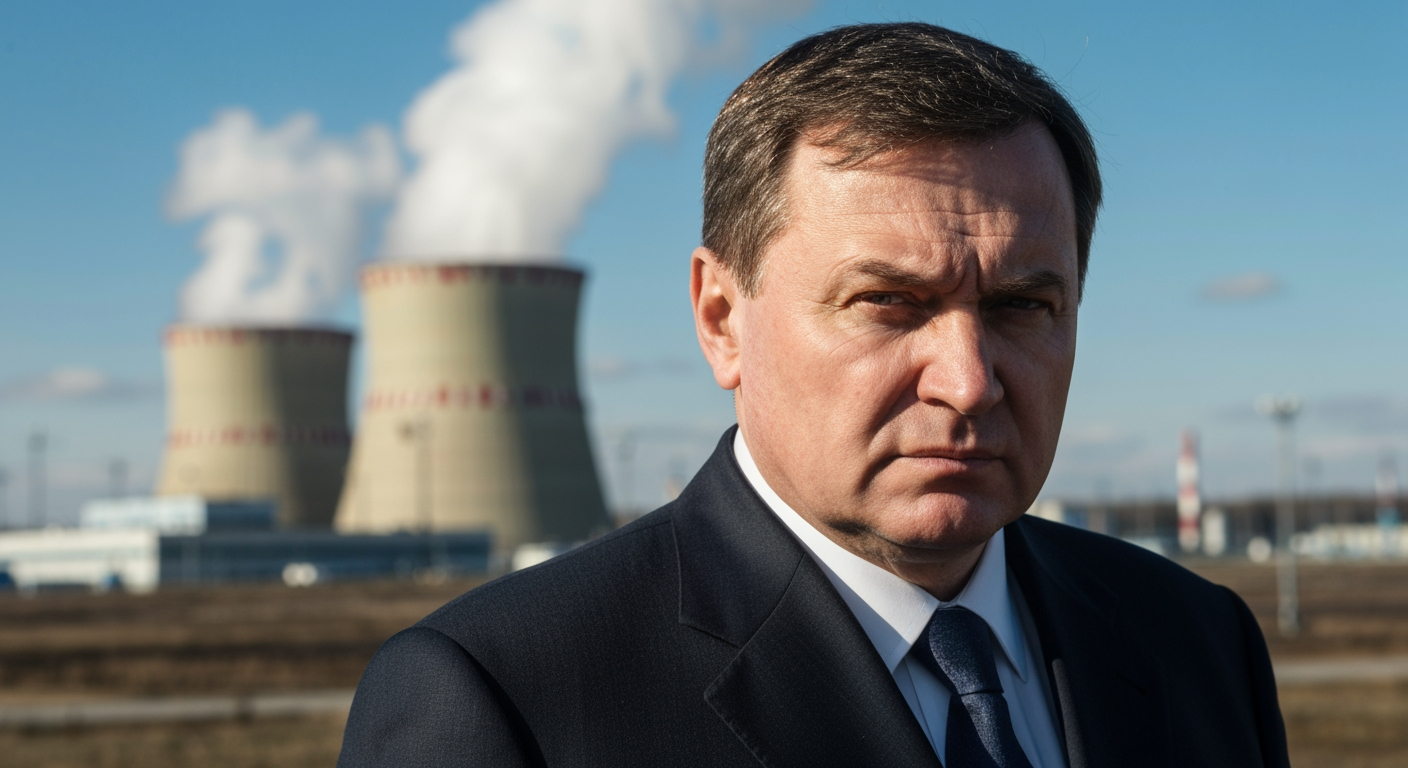
While global attention frequently fixates on Russia's vast oil and gas reserves as instruments of geopolitical influence, a quieter, yet equally potent, form of leverage persists within its nuclear energy sector. Through its state-owned atomic energy corporation, Rosatom, Russia has cultivated deep-seated dependencies across the world, extending far beyond fossil fuel exports. This strategic positioning in nuclear power plant construction, uranium enrichment, and fuel supply creates enduring economic and political ties, challenging the energy security of nations and complicating international efforts to decouple from Moscow's influence. The intricate, specialized nature of the nuclear fuel cycle means that breaking these bonds requires significant time, investment, and international cooperation, cementing Russia's role as a critical, and often indispensable, player in global energy markets.
Rosatom's Global Reach: Building Nuclear Futures
Rosatom stands as a formidable entity in the global nuclear landscape, leading in new nuclear construction abroad. The corporation is currently involved in numerous reactor construction projects internationally, with reports indicating 39 units abroad at various stages of implementation, or 24 nuclear projects in multiple countries. These ventures span continents, including significant projects in Turkey (Akkuyu), Egypt (El Dabaa), Bangladesh (Rooppur), Kazakhstan, Uzbekistan, Kyrgyzstan, and the continued collaboration on China's Tianwan Nuclear Power Plant.
Rosatom's competitive edge often stems from its unique "turnkey" approach, which encompasses the entire nuclear power plant lifecycle, from design and construction to fuel supply, operational support, and even personnel training. This comprehensive offering, frequently bolstered by generous state-backed financing and loans, creates long-term economic and political dependencies. For instance, Hungary is proceeding with a Rosatom project to expand its Paks nuclear plant, financed by a $10 billion loan from Russia. The Akkuyu plant in Turkey, constructed under a Build-Own-Operate (BOO) model, allows Russia to maintain full control over the facility for at least six decades, deepening the strategic partnership between the two nations. This model ensures that once a Rosatom-built plant is operational, the client nation remains reliant on Russian expertise, components, and fuel for its extended lifespan, effectively locking in Moscow's influence for generations. Overall, Russia has exported over 25,000 MWe of nuclear reactors and energy technology globally, with plans for more.
The Core of Influence: Uranium Enrichment and Fuel Supply
Beyond reactor construction, Russia's most critical leverage lies in its dominant position in the uranium enrichment market. Russia controls a substantial portion of the world's uranium enrichment capacity, estimated between 40% and 46%. Uranium enrichment is a highly specialized and energy-intensive process that increases the concentration of uranium-235, making natural uranium suitable for use as fuel in nuclear power plants. This technical superiority, inherited from the Soviet era and maintained through ongoing modernization programs, allows Russia to meet a significant portion of global demand.
This dominance translates into crucial dependencies for major nuclear power-producing nations. In 2021, Russia supplied 27% of the U.S.'s demand for uranium enrichment, and its share of uranium imports for the U.S. nuclear industry was approximately 12% last year. For the European Union, the reliance is even more pronounced; in 2023, Russia provided 31% of the EU's enrichment needs, 38% of its enriched uranium, and 23% of its raw uranium. Some estimates suggest Russia provides 15-20% of Europe's natural uranium imports and nearly half of its enrichment capacity. Countries operating Soviet-era VVER reactors, such as Hungary, Slovakia, the Czech Republic, Bulgaria, and Finland, are particularly vulnerable, as Rosatom's subsidiary TVEL holds a near-monopoly on the specialized fuel required for these facilities. Russia further solidifies its market position by controlling significant uranium reserves in Kazakhstan, a major global producer. The concentration of enrichment capacity in Russian hands creates a strategic bottleneck, posing significant energy security challenges.
Strategic Dependencies and Geopolitical Implications
The deep reliance on Russian nuclear technology and fuel services creates substantial strategic vulnerabilities, particularly for Western nations amidst heightened geopolitical tensions. Unlike more fungible commodities such as oil and gas, where alternative sources can often be secured relatively quickly, the highly specialized nature of uranium enrichment and reactor technology makes rapid diversification exceedingly difficult. Expanding enrichment capacity or developing alternative fuel fabrication facilities typically requires investments of billions of dollars and lead times of 5 to 10 years. This inherent inertia means that countries cannot easily or quickly pivot away from Russian suppliers, even when political considerations might dictate such a move.
The economic incentives for continuing engagement with Russia's nuclear sector are also powerful. Historically, Russia has offered competitive pricing, making its services attractive to utilities focused on cost-efficiency. However, this commercial rationale increasingly clashes with geopolitical realities. The reluctance of many nations to impose comprehensive sanctions on Rosatom stems directly from fears of severe supply disruptions that could cripple their nuclear power fleets, leading to energy shortages and economic instability. The risk is amplified by Russia's demonstrated willingness to "weaponize" its energy exports, a precedent that raises concerns about potential similar actions in the nuclear sector, where a sudden cut-off could have immediate and dire consequences. Fundamentally, Russia views its nuclear industry not merely as a revenue stream but as a potent tool for advancing its geopolitical ambitions, securing long-term influence over partner nations.
Navigating Decoupling: Challenges and Western Responses
In response to these strategic dependencies, Western nations have begun to initiate efforts aimed at reducing their reliance on Russia's nuclear sector, though progress is often slow and fraught with challenges. The United States has taken legislative steps, with the "Prohibiting Russian Uranium Imports Act" signed into law in May 2024. This bipartisan act bans imports of Russian uranium products into the U.S. as of August 12, 2024, though a waiver process remains available until January 1, 2028, to prevent immediate supply chain disruptions. The legislation also earmarks $2.72 billion to invest in domestic uranium enrichment capabilities, signaling a clear intent to establish a secure and independent nuclear fuel supply chain. Additionally, the U.S. is stockpiling nuclear fuel and investing in its domestic processing and enrichment capabilities.
Internationally, there is a concerted effort involving countries like Canada, France, Japan, and the United Kingdom to establish alternative supply chains and lessen global dependence on Russian nuclear technologies. Within Europe, several countries operating Soviet-era VVER reactors are actively seeking non-Russian suppliers for their specialized fuel. Westinghouse has already provided VVER-compatible fuel to Ukraine, Slovakia, the Czech Republic, Bulgaria, and Finland, while Framatome announced plans in 2023 to manufacture VVER fuel assemblies in Germany. Despite these initiatives, significant hurdles remain. The current global enrichment capacity outside Russia is insufficient to meet demand if Russian supplies were abruptly withdrawn. Developing new facilities requires substantial capital investment, specialized technical expertise, and a skilled workforce, all of which take years to cultivate. Furthermore, many existing long-term contracts with Russia for nuclear fuel and services extend well into the 2030s, complicating immediate disengagement.
Conclusion
Russia's influence in the global nuclear energy sector represents a sophisticated and deeply entrenched form of geopolitical leverage, distinct from its more commonly recognized dominance in oil and gas. Through Rosatom's expansive international projects, its near-monopoly in uranium enrichment, and its role as a critical fuel supplier, Moscow has forged enduring dependencies that affect the energy security and strategic autonomy of numerous nations. While the implications of this reliance are increasingly recognized, and efforts to diversify supply chains are underway, the specialized and capital-intensive nature of the nuclear fuel cycle means that complete decoupling will be a prolonged and arduous undertaking. For the foreseeable future, Russia's nuclear power will continue to be a defining characteristic of global energy dynamics, requiring sustained international commitment, significant investment, and strategic foresight to navigate its complex web of influence.
Related Articles


Pentagon Demands Unfettered AI Access from Anthropic, Citing National Security Imperative
Washington D.C. — A high-stakes confrontation is unfolding between the U.S. Department of Defense and leading artificial intelligence firm Anthropic, as the Pentagon pressures the company to relinquish control over how its powerful Claude AI model can be used for military purposes

Energy Crisis Deepens European Divide as Druzhba Pipeline Standoff Escalates
Kyiv, Ukraine – A critical energy dispute surrounding the Druzhba oil pipeline, a vital artery for Russian crude into Central Europe, has intensified, creating fresh rifts within the European Union and complicating aid efforts for war-torn Ukraine. The southern branch of the pipeline, which supplies Hungary and Slovakia, has been offline since late January 2026, leading to a diplomatic standoff with accusations of political leverage and energy blackmail traded between Kyiv, Budapest, and Bratislava

Germany's Industrial AI Ambition: A Bid for Global Leadership Amidst US-China Tech Rivalry
Germany, long revered as the industrial heartland of Europe, is strategically positioning itself to leverage Artificial Intelligence (AI) as a crucial tool for economic resilience and global competitiveness. As the world navigates a rapidly evolving technological landscape dominated by the AI advancements of the United States and China, Germany is channeling its engineering prowess and manufacturing heritage into industrial AI, seeking to redefine its future and maintain its economic standing