Central Bank Independence Under Scrutiny: Lagarde Warns of Global Economic Risks

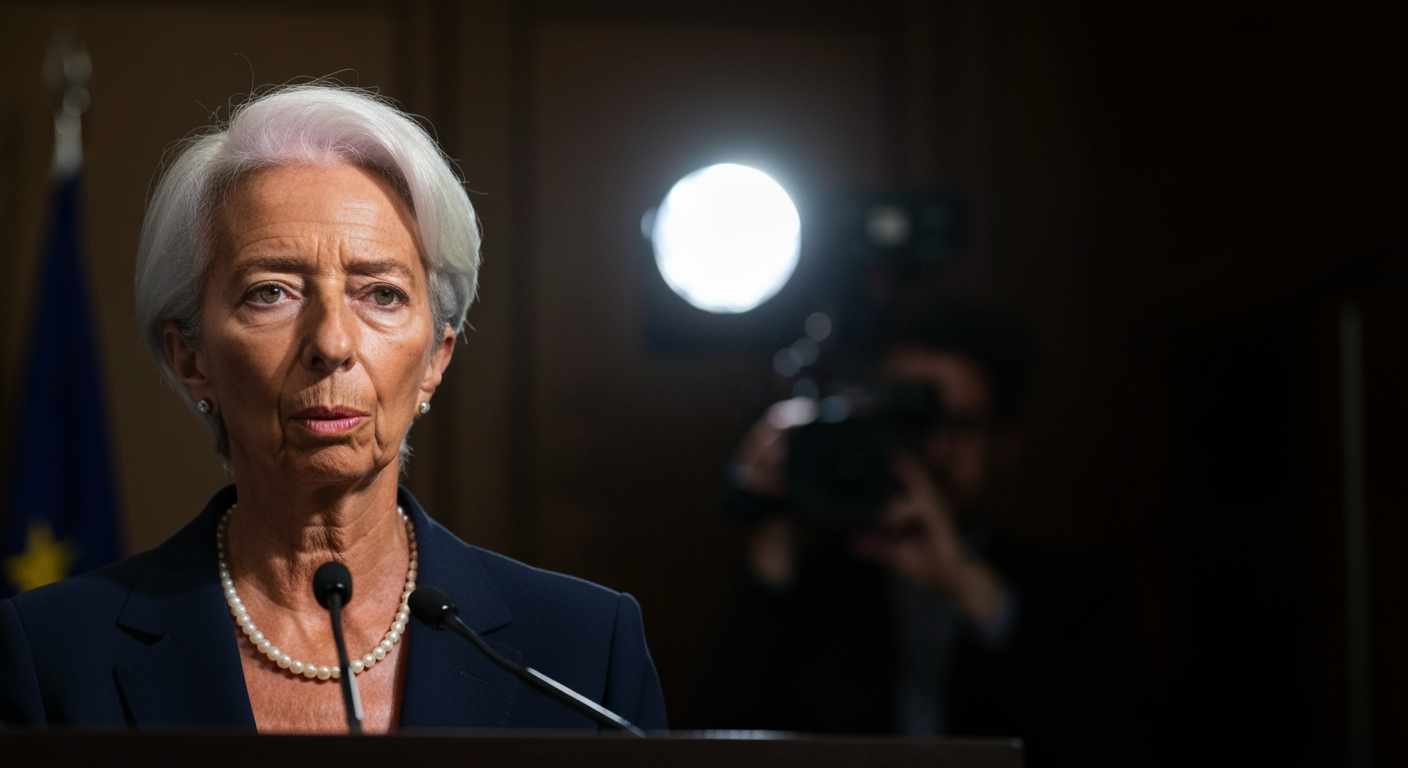
The foundational principle of central bank independence, long considered a cornerstone of stable economies, faces increasing global pressures, prompting leaders like European Central Bank (ECB) President Christine Lagarde to issue stark warnings about potential risks. In a landscape marked by heightened political volatility and complex economic challenges, the ability of central banks to make unbiased decisions, free from short-term political influence, is more critical than ever. Lagarde has consistently underscored the paramount importance of this autonomy, arguing that any erosion could spell serious danger for national and global economic stability.
The Bedrock of Economic Stability
Central bank independence is not merely an institutional convention; it is widely viewed as a critical mechanism for ensuring sound monetary policy and maintaining price stability. This autonomy allows central bankers to implement policies based purely on macroeconomic analysis and long-term economic objectives, rather than succumbing to the immediate demands of political cycles or electoral pressures. Lagarde has articulated that this independence is "critically important" for decisions to be "as unbiased as possible," driven solely by economic fundamentals and the anticipated impact of monetary policy. She highlights that central bankers often operate with long-term mandates, enabling them to pursue medium-term targets rather than being swayed by short-term political expediency, which could prove "counterproductive". The rationale is rooted in the understanding that political interference in monetary policy can lead to inflationary spirals, misallocation of resources, and ultimately, a loss of public and market confidence in the currency and the economy.
Alarms from Across the Atlantic
One of the most prominent instances of perceived threats to central bank independence, and one specifically highlighted by Lagarde, has been the attempts by former U.S. President Donald Trump to influence the Federal Reserve. Lagarde has characterized such actions, including efforts to potentially remove Federal Reserve officials, as a "very serious danger" to both the U.S. and the broader world economy. She pointed to the critical nature of judicial precedent regarding the dismissal of Fed governors, noting that they can typically only be removed for gross misconduct, a safeguard against arbitrary political intervention. This emphasis on protecting the independence of the world's most powerful central bank underscores a global concern that such precedents, if undermined, could have ripple effects, encouraging similar political pressures in other nations and destabilizing the international financial system. The ECB president has maintained that such actions would have significant consequences for the United States and other countries alike.
European Pressures and Succession Scrutiny
While Lagarde has voiced concerns over external threats to independence, the principle has also faced scrutiny within the European context, even around the ECB itself. Recent reports and speculation regarding Lagarde's potential early departure from her role have sparked discussions about the politicization of the central bank's leadership selection process. Allegations suggested that an early exit might be intended to allow French President Emmanuel Macron to influence the choice of her successor, a move seen by some as a direct challenge to the central bank's political neutrality. While Lagarde has reportedly reassured her colleagues that she remains focused on her duties and would communicate any such decisions directly, the mere emergence of such speculation underscores the constant vigilance required to uphold the integrity of independent institutions. These discussions highlight that the perceived neutrality of the succession process is as crucial as the independence of the incumbent. Beyond specific leadership concerns, Lagarde has also observed that "political developments and moments of political risk have an obvious impact on the economy," noting rising borrowing costs for some European governments amid political uncertainty. Moreover, other political factions, such as the Reform U.K. party, have proposed changes to their national central banks, indicating a broader trend of political forces seeking to exert greater control over monetary authorities.
The Far-Reaching Stakes
The implications of eroding central bank independence extend far beyond institutional reputation. A loss of autonomy can lead to monetary policies that are out of sync with economic realities, potentially resulting in runaway inflation, currency depreciation, and reduced investor confidence. When central banks are perceived as tools of political expediency, their credibility is severely compromised, making their pronouncements and actions less effective in guiding market behavior and economic expectations. This could lead to a less stable economic environment, deterring investment and hindering long-term growth. Lagarde's repeated warnings serve as a reminder that the stakes are profoundly high, affecting not only financial markets but also the everyday economic well-being of citizens. She argues that allowing political cycles to dictate monetary policy decisions would be "completely counterproductive" and "countercyclical," ultimately harming the economy.
Safeguarding a Vital Principle
As global economies navigate periods of high inflation, geopolitical tensions, and ongoing structural shifts, the debate over central bank independence remains central to ensuring financial stability. Christine Lagarde's steadfast advocacy for this principle serves as a crucial reminder of its delicate nature and the continuous effort required to protect it from various forms of political encroachment. While the pressures are multifaceted, from direct political interference to concerns over leadership succession, the consensus among leading economic authorities is that the ability of central banks to operate autonomously, guided by long-term economic objectives, is indispensable for a resilient and prosperous global economy. The ongoing discourse reaffirms that safeguarding this independence is not just an academic ideal but a practical necessity for sound economic governance in an ever-evolving world.
Related Articles


Russia's Enduring Nuclear Grip: A Geopolitical Lever Beyond Oil and Gas
While global attention frequently fixates on Russia's vast oil and gas reserves as instruments of geopolitical influence, a quieter, yet equally potent, form of leverage persists within its nuclear energy sector. Through its state-owned atomic energy corporation, Rosatom, Russia has cultivated deep-seated dependencies across the world, extending far beyond fossil fuel exports


Pentagon Demands Unfettered AI Access from Anthropic, Citing National Security Imperative
Washington D.C. — A high-stakes confrontation is unfolding between the U.S. Department of Defense and leading artificial intelligence firm Anthropic, as the Pentagon pressures the company to relinquish control over how its powerful Claude AI model can be used for military purposes

Energy Crisis Deepens European Divide as Druzhba Pipeline Standoff Escalates
Kyiv, Ukraine – A critical energy dispute surrounding the Druzhba oil pipeline, a vital artery for Russian crude into Central Europe, has intensified, creating fresh rifts within the European Union and complicating aid efforts for war-torn Ukraine. The southern branch of the pipeline, which supplies Hungary and Slovakia, has been offline since late January 2026, leading to a diplomatic standoff with accusations of political leverage and energy blackmail traded between Kyiv, Budapest, and Bratislava