American Football's European Offensive: A Spirited Contest for Hearts and Gridirons

Once a niche import, American football is steadily transforming from a curiosity into a burgeoning phenomenon across Europe, driven by strategic efforts from the National Football League (NFL) and the ambitious rise of local professional leagues. This expansion marks a persistent, multi-decade "fight" for relevance and a share of the continent's sporting passion, a battle waged on multiple fronts from packed stadiums to burgeoning grassroots programs. The sport's growing footprint suggests a compelling shift in Europe's diverse athletic landscape.
A Century of Seeding: Early Introductions and NFL Europe's Legacy
The roots of American football in Europe stretch back to the early 20th century, primarily sown by U.S. military personnel during and after the World Wars, who played recreationally and introduced the game to local communities. Germany, Italy, and the United Kingdom emerged as early centers of interest. By the late 1970s and early 1980s, the first national leagues began to take shape, with Italy launching its league in 1977, Germany in 1979, and Finland in 1980.
The National Football League made its first significant foray into cultivating a dedicated European following with the launch of the World League of American Football in 1991, which later rebranded as NFL Europe. This developmental league, active until 2007, aimed to entertain European fans and nurture talent outside the United States. Despite its eventual dissolution due to unprofitability, NFL Europe established a crucial foundation of enthusiasm and infrastructure, particularly in Germany, where German teams like the Frankfurt Galaxy and Berlin Thunder were notably successful and garnered significant fan bases. Its legacy endures, providing a blueprint and a nostalgic connection for later endeavors.
The NFL's Strategic International Series and Talent Development
Following the end of NFL Europe, the NFL pivoted its international strategy, focusing on bringing regular-season games to European cities through its International Series. This initiative began in London in 2007 and has since expanded significantly. The games have proven remarkably successful, drawing record attendances and generating substantial economic impact for host cities. For instance, a 2022 regular-season game in Munich, Germany, between the Tampa Bay Buccaneers and the Seattle Seahawks, generated an economic impact of 70.2 million euros for the city, with 32.2 million euros in direct spending. In October 2022, a game at Wembley Stadium in London set a record for attendance outside the U.S., with 86,215 fans.
The International Series has become a cornerstone of the NFL's global strategy, with London hosting three games in 2024, Munich hosting one, and future games planned for Madrid, Spain, and Paris, France, in 2025 and 2026 respectively. This sustained presence has fueled a remarkable growth in the European fan base, with Germany now leading with an estimated 6.5 million NFL fans, closely followed by the United Kingdom with 6 million. Beyond showcasing its professional product, the NFL has also invested in talent development through programs like the NFL Academy, launched in 2019 in the UK. This academy targets aspiring young international players aged 15 to 18, providing them with training to potentially advance to NCAA collegiate programs and even the NFL. Over 50 players from the NFL Academy have already moved on to play in the NCAA.
European League of Football: A Homegrown Professional Ambition
While the NFL cultivates its fan base through its marquee events, a significant homegrown effort to establish professional American football in Europe is underway with the European League of Football (ELF). Launched in 2020 with its inaugural season in 2021, the ELF explicitly aims to rekindle the excitement generated by NFL Europe, even adopting names of former NFL Europe teams like the Frankfurt Galaxy and Hamburg Sea Devils. The league emphasizes developing homegrown talent, limiting the number of international players on rosters to foster a sustainable pipeline of European stars, with the ultimate goal of producing NFL prospects.
The ELF has experienced rapid growth, expanding from 8 teams in its first season to 16 teams by 2025, spanning countries such as Germany, Austria, France, Spain, Poland, and Switzerland. This expansion, while demonstrating ambition, has also presented significant challenges. Reports indicate issues with financial stability, lack of transparency, and operational shortcomings within the league. These concerns led to a notable split in late 2025 and early 2026, with several prominent teams forming a new entity, the European Football Alliance (EFA), citing "persistent issues — poor communication, a lack of transparency, financial mismanagement" within the ELF. This internal struggle highlights the difficulties in building a sustainable professional sports league from the ground up in a competitive market. Despite these headwinds, other established domestic leagues continue to thrive, including the German Football League (GFL), the Austrian Football League (AFL), the Italian Football League (IFL), France's D1 Elite, and Finland's Maple League.
Beyond the Game: Economic Impact and Cultural Exchange
The expanding presence of American football in Europe extends beyond the playing field, generating considerable economic and cultural ripples. NFL International Series games bring thousands of visitors, boosting local tourism and hospitality sectors. The 2022 Munich game, for example, saw 32.2 million euros in direct spending for the city. Increased television viewership and betting interest also contribute to the sport's economic footprint.
Culturally, the NFL's push into Europe is characterized as more than just a business strategy; it is a "cultural endeavor" that fosters cross-cultural dialogue. The sport acts as a unifying force, bridging geographical and cultural divides through shared competition and camaraderie. While soccer remains Europe's dominant sport, American football's unique spectacle and strategic depth continue to captivate new audiences, demonstrating the universal appeal of sports. The NFL's robust revenue, in fact, often outpaces that of Europe's top soccer leagues, underscoring its significant global commercial power.
The Enduring Fight
The journey of American football in Europe is a testament to perseverance, marked by both strategic successes and significant hurdles. From early military introductions and the foundational, though ultimately unsuccessful, NFL Europe, to the current era of the NFL International Series and the ambitious, albeit challenged, European League of Football, the sport has continually fought for its place. Despite internal divisions within nascent European leagues and the monumental task of competing with deeply entrenched national sports, the momentum appears to favor continued growth. The dedicated efforts of the NFL, coupled with the passion of local organizers and a growing fan base, suggest that American football's presence on the European stage is not just a fleeting trend, but an enduring and evolving narrative of international sports expansion.
Related Articles


Afghan Women's Football Team Forges a Path Back to the Global Stage
After years of exile and uncertainty, the Afghanistan women's national football team is once again making strides toward international competition, marking a significant victory for resilience and human rights. Despite the Taliban's sweeping ban on women's sports following their 2021 takeover, a newly formed refugee team, "Afghan Women United," has commenced participation in international tournaments, symbolizing an unyielding defiance against oppression and a testament to the power of sport


Escalating Tensions Raise Security Questions for Mexico's 2026 World Cup Aspirations
Recent widespread violence following the death of a prominent cartel leader has cast a shadow of uncertainty over Mexico's preparations to co-host the 2026 FIFA World Cup, triggering international concern and prompting urgent security reassessments. With less than four months until the tournament commences, a wave of retaliatory attacks, marked by blockades, arson, and armed confrontations, has unfolded across multiple states, particularly impacting Guadalajara, one of the designated host cities

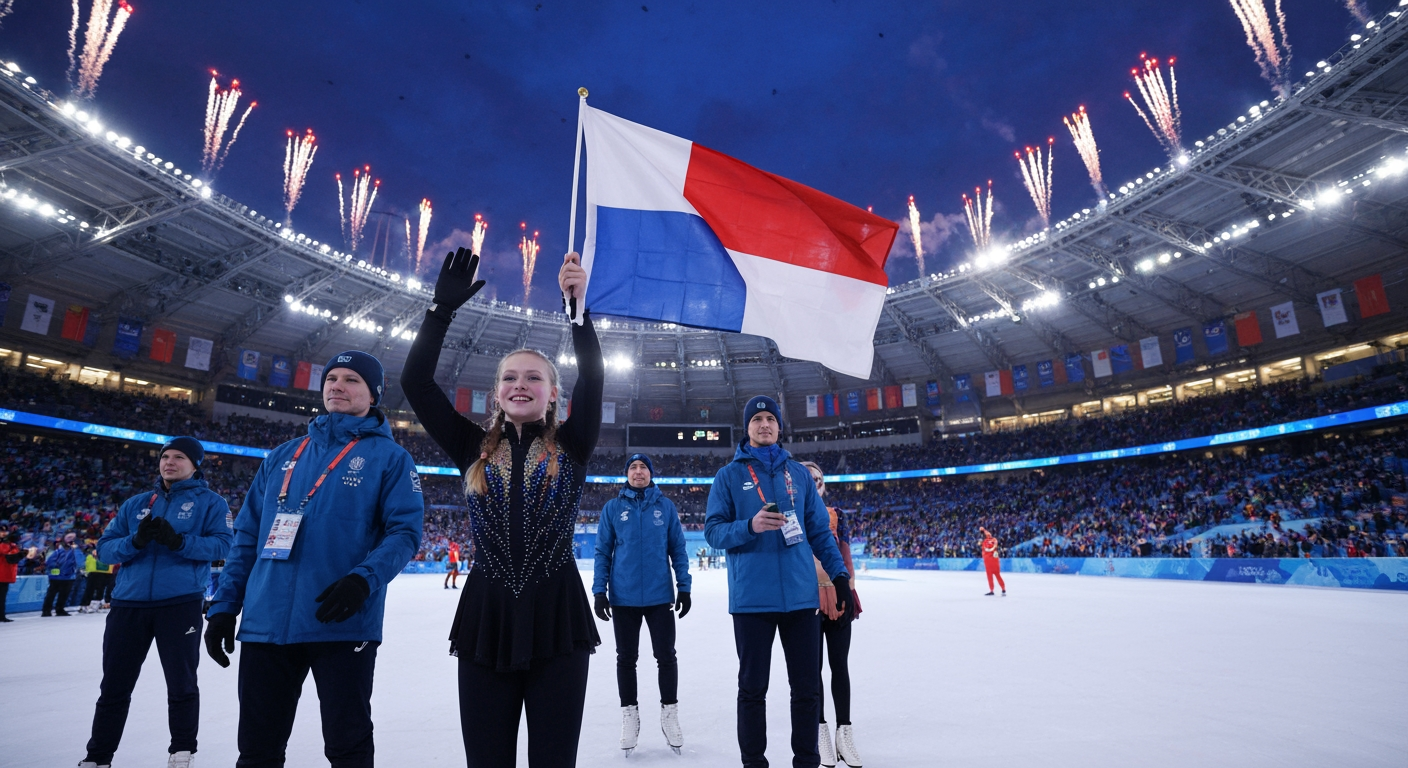
Italian Alps Bid Farewell: Milan Cortina 2026 Concludes with Spectacle of Unity and Legacy
VERONA, ITALY – The grandeur of the Verona Arena bore witness this evening to the poignant closing ceremony of the XXV Winter Olympic Games, bringing to a close 17 days of exhilarating competition and cultural celebration across Northern Italy. Under the theme "Beauty in Action," the ceremony served as a vibrant testament to athletic achievement, international camaraderie, and Italy's commitment to a sustainable future, culminating in the traditional extinguishing of the Olympic flame