"Yellow Letters" Takes Top Berlinale Prize Amidst Intense Political Storm

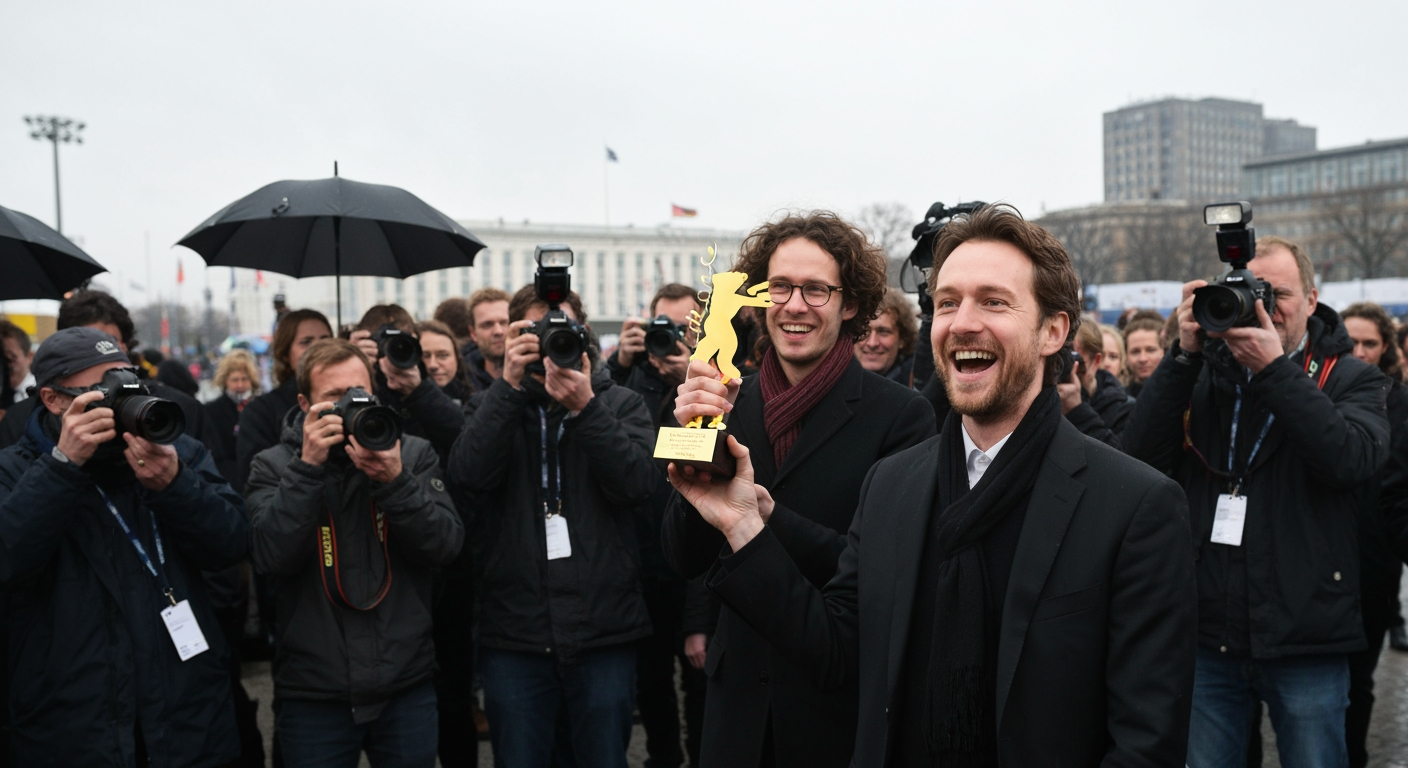
The 76th Berlin International Film Festival concluded Saturday with German-Turkish filmmaker İlker Çatak's "Yellow Letters" clinching the coveted Golden Bear for Best Film. The poignant political drama, a powerful exploration of state persecution and its personal toll, emerged victorious from a competition often overshadowed by a swirling vortex of global political tensions and internal debates over artistic neutrality. This marks a significant moment for German cinema, as "Yellow Letters" is the first German film to secure the festival's highest honor in over two decades.
A Golden Bear for a Timely Narrative
"Yellow Letters," co-written by İlker Çatak, Ayda Çatak, and Enis Köstepen, delves into the lives of Derya and Aziz, a celebrated Turkish artist couple. Their world is upended when Aziz faces targeting by Turkish authorities due to his online political views, leading to the loss of their jobs, their home, and a profound disruption of their family life. The film’s narrative intimately portrays how political pressure can deeply affect personal relationships and highlights the resilience required in the face of escalating authoritarianism. The jury, led by esteemed German director Wim Wenders, recognized the film's profound relevance and artistic merit, signaling a powerful affirmation of cinema's role in reflecting contemporary global struggles. The win for "Yellow Letters" is particularly resonant given the festival's contentious backdrop, where discussions about art and politics frequently dominated the discourse.
Berlinale Grapples with Geopolitical Currents
From its opening days, the 76th Berlinale found itself at the epicenter of a charged debate concerning the intersection of art and geopolitics. Jury president Wim Wenders sparked considerable controversy with his initial remarks on the festival's official response to the ongoing conflict in Gaza. When questioned about the German government's stance and the festival's role, Wenders stated that the jury "has to stay out of politics," suggesting that "dedicatedly political" films venture into the realm of politicians rather than artists. This assertion quickly ignited a firestorm of backlash, prompting discussions about the role of cultural institutions in times of crisis and the very definition of artistic engagement.
The fallout from Wenders' comments was swift and widespread. Renowned Indian author Arundhati Roy, who was slated to present a restored film, withdrew from the festival in protest, deeming Wenders' stance "unconscionable" and arguing that cultural neutrality in the context of violence is a political position in itself. Subsequently, an open letter signed by over 80 prominent film industry figures, including Javier Bardem, Tilda Swinton, and Adam McKay, condemned what they termed the Berlinale's "institutional silence" regarding the humanitarian crisis in Gaza. The letter accused the festival of potentially censoring artists who voiced opposition to Israel's actions and Germany's supportive role.
Artistic Expression Versus Institutional Stance
Berlinale Director Tricia Tuttle addressed the mounting criticism, dismissing some claims as "misinformation" and "inaccurate" and calling for "cool heads in hot times." While acknowledging the importance of free speech, Tuttle emphasized that filmmakers should not be compelled to speak on every political issue. However, the festival's programming itself presented a stark contrast to the initial calls for political detachment. Many of the films in competition, including "Yellow Letters," directly confronted themes of identity, migration, state oppression, and war, inadvertently highlighting the inherent political nature of much contemporary cinema.
The closing ceremony became an additional platform for political expression. Several filmmakers used their acceptance speeches to highlight global conflicts and human rights concerns. Abdallah Alkhatib, who received the Best First Feature award for "Chronicles From the Siege," critically addressed both Israel's actions and the German government's position, eliciting strong emotional responses from the audience. Other winners, such as Marie-Rose Osta and Turkish director Emin Alper, also took the opportunity to speak out, while actress Sandra Hüller, recognized for Best Leading Performance in "Rose," thanked fellow artists for "speaking truth." Beyond the immediate conflict, the festival continued its tradition of providing a voice to dissidents, with Iranian directors Jafar Panahi and Mahnaz Mohammadi using the platform to denounce the Iranian government's crackdown on protestors.
A Legacy of Engagement
The Berlinale has historically carved out a unique space among major film festivals, known for its keen engagement with social and political issues. This year's contentious debates underscored the enduring tension between artistic freedom, institutional responsibility, and the pressures of global politics. The festival showcased a range of compelling works, with other notable awards including the Silver Bear Grand Jury Prize for Emin Alper's "Salvation" and the Jury Prize for Lance Hammond's "Queen at Sea." Grant Gee received Best Director for "Everybody Digs Bill Evans," a film about the legendary jazz pianist, and Sandra Hüller earned the Silver Bear for Best Leading Performance for her portrayal in "Rose," a historical drama set in 17th-century Germany.
In the end, the triumph of "Yellow Letters" at a festival deeply immersed in political dialogue serves as a potent reminder of cinema's capacity to illuminate complex realities and challenge prevailing narratives. Despite the controversies, the 76th Berlinale reaffirmed its commitment to showcasing films that resonate with the human experience, even when that experience is fraught with political turmoil. The festival concluded not with a resolution to the debates, but with a powerful testament to the enduring interplay between art, conscience, and the ever-evolving global landscape.
Related Articles


The Journey Towards Conscience: Is Responsible Travel an Achievable Ideal?
The allure of distant lands and novel experiences continues to captivate humanity, yet the escalating impacts of global tourism present a profound ethical dilemma. As wanderlust drives billions across continents, a critical question emerges: In an era of climate crisis and overtourism, can travel truly be responsible? The answer, experts suggest, is a complex tapestry woven with challenges and burgeoning opportunities, demanding a collective shift in mindset and practice from both industry and individual travelers. ### The Promise and Peril of Global Exploration Responsible travel, broadly defined, seeks to minimize the negative environmental and socio-cultural impacts of tourism while maximizing its positive contributions to local economies and communities

Stolen Identity: German Filmmakers Recouping Their Art in a Digital Age
In an era where digital distribution offers unprecedented reach for independent creators, it also presents fertile ground for intellectual property theft. The harrowing experience of two German film students, Moritz and Julius, whose short film "Butty" was stolen, renamed "T-130," and submitted to international film festivals under another individual's name, serves as a stark reminder of the vulnerabilities artists face

Berlinale Navigates Turbulent Waters Amidst Polarized Gaza Debate
The Berlin International Film Festival, widely recognized for its historically political stance and celebration of diverse cinematic voices, finds itself at a critical juncture, grappling with intense scrutiny and division over the ongoing conflict in Gaza. The festival's leadership is facing a formidable balancing act, striving to uphold artistic freedom and foster dialogue while simultaneously contending with accusations of censorship and pressure to take a more definitive political position