U.S. Imposes Sweeping Ban on Foreign Humanoid Robots Amid Escalating Tech Rivalry

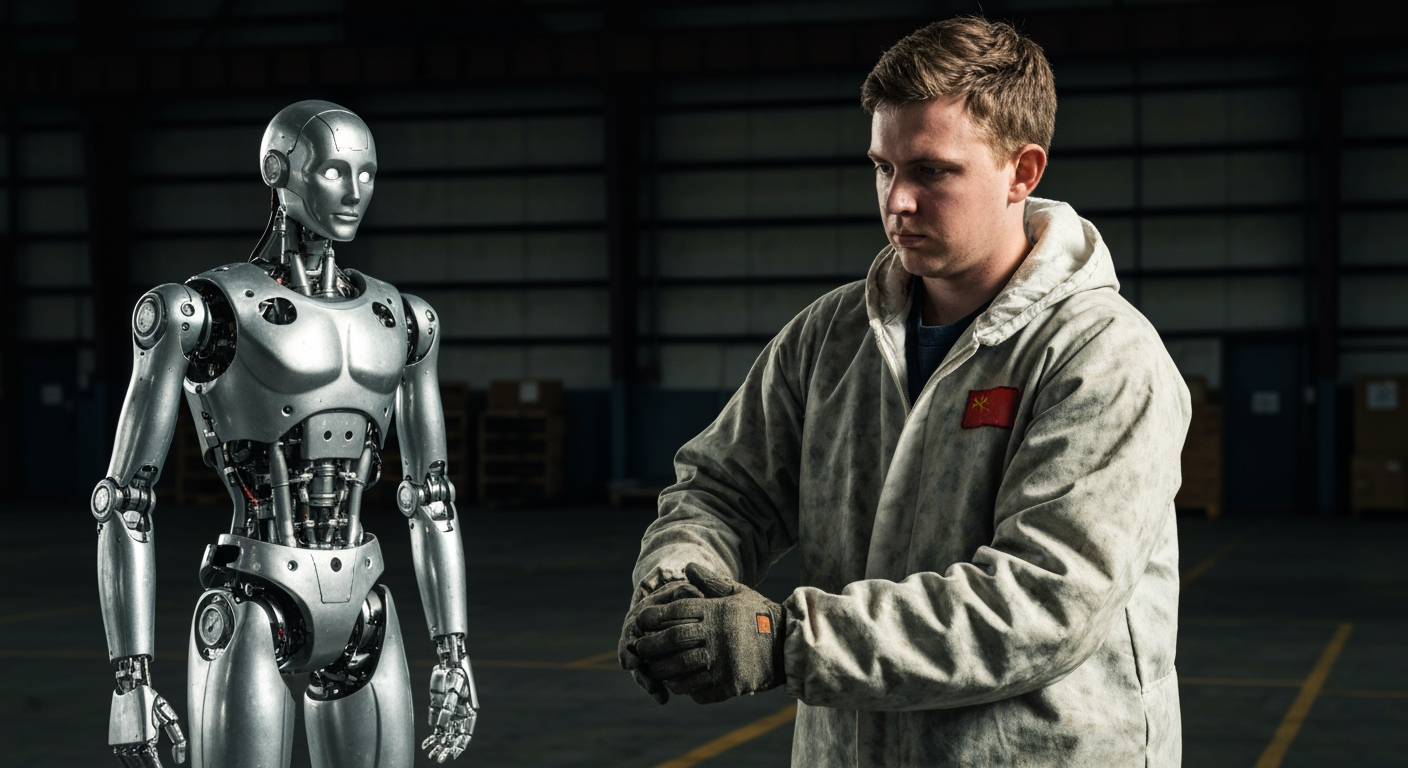
WASHINGTON D.C. – In a significant move set to reshape the global robotics landscape and intensify technological competition, the U.S. Federal Communications Commission (FCC) on Tuesday banned the import of new foreign-made humanoid and quadruped robots, citing profound national security concerns. The sweeping restrictions, which also encompass connected power inverters, explicitly target China's dominant position in advanced robotics and underscore the Trump administration's ongoing efforts to safeguard critical American supply chains and promote domestic manufacturing. The decision reflects a growing apprehension within Washington that sophisticated robotic devices could be exploited by adversaries for surveillance, espionage, or to compromise vital infrastructure.
The New Frontier of Tech Restrictions
The FCC's ruling, announced Tuesday, July 28, 2026, adds "advanced robotic devices"—specifically defined as mobile robots such as humanoids and quadrupeds—to its "Covered List," effectively barring new models from receiving the necessary authorization for import and sale within the United States. This action marks an expansion of the administration's aggressive strategy to curtail the influence of technology originating from what it deems foreign adversaries. The ban applies to robots fully assembled abroad, as well as those assembled in the U.S. with over 35% foreign-made components, according to administration officials. Critically, the prohibition extends only to new models that have not yet received FCC approval, leaving currently authorized and deployed robots unaffected.
Simultaneously, the FCC also included connected power inverters on the restricted list. These devices are crucial for integrating renewable energy sources and batteries into the electrical grid and data centers. The dual ban highlights an interagency consensus that networked robotics and power inverters represent critical vulnerabilities to American infrastructure and data integrity. FCC Chairman Brendan Carr emphasized that the agency is "acting in lock step with our national security agencies" to secure America's critical supply chains, echoing President Donald Trump's stated goal of fostering an "independent and resilient robotics supply chain and industrial base".
National Security at the Forefront
The primary justification for the ban hinges on grave national security apprehensions. FCC officials articulated that "advanced robotic devices collect data that could be leveraged by malign actors to surveil Americans, enhance the capabilities of foreign intelligence services, or to remotely commandeer the robots". The determination supporting these restrictions specifically points to potential cybersecurity risks that could threaten critical infrastructure and the safety of U.S. residents. Concerns also extend to the possibility of supply chain vulnerabilities, which could disrupt U.S. economic and national security.
These fears are not entirely unfounded in the current geopolitical climate. Authorities reportedly aimed to avert hacking campaigns reminiscent of the 2023 "Volt Typhoon" operation, which exposed vulnerabilities in critical infrastructure. The FCC's move underscores a broader governmental effort to shield the U.S. artificial intelligence (AI) buildout from threats of disruption, data theft, and cyberattacks. The government posits that the networked capabilities of advanced robotic systems create extensive vulnerabilities and vectors for attacks that could manipulate their data and physical operations. While the ban is framed broadly to apply to all foreign-made devices, the strategic focus on China is unmistakable, given its overwhelming market dominance in this nascent but rapidly expanding sector.
Economic Repercussions and Geopolitical Tensions
The U.S. ban is poised to send ripples through the global robotics market. China currently commands an estimated 85% share of the worldwide humanoid robot market, making it the undeniable leader in production and deployment. This strong position has been attributed to Chinese manufacturers' ability to scale production and reduce costs faster than many international competitors. The new restrictions will severely limit, if not eliminate, market access for these Chinese firms in the United States, which represents a significant economic blow.
Analysts at Morgan Stanley have projected the humanoid robot market could reach an astonishing $5 trillion by 2050, highlighting the immense economic stakes involved. By restricting foreign competition, particularly from China, the Trump administration aims to provide a substantial boost to American firms, fostering a domestic robotics industry. This strategy aligns with a broader policy agenda focused on "reindustrializing America" and securing critical supply chains against potential disruptions. Already, American companies like Boston Dynamics, Tesla, Figure AI, and Agility Robotics are manufacturing some humanoid robots in the U.S., and the ban could accelerate investment and production within these domestic players.
However, the ban is also expected to escalate tensions between Washington and Beijing. Chinese officials have swiftly condemned the U.S. actions, with the Chinese embassy in Washington urging the U.S. to "heed the objective and rational voices of the business communities in both countries" and warning that China will "take all necessary measures in response to any action that causes material harm to its interests". This diplomatic friction comes ahead of a planned summit between President Trump and Chinese leader Xi Jinping in September, suggesting further strain on an already fraught relationship. Experts suggest that while the FCC states the ban applies across the board, exemptions are likely to be granted to non-Chinese suppliers, as has been the case with previous technology restrictions involving drones and internet routers.
A Pattern of Strategic Decoupling
The FCC's latest action is not an isolated event but rather a continuation of a persistent U.S. policy to decouple its technology infrastructure from Chinese influence. Over recent years, the U.S. has imposed restrictions on a range of Chinese technologies and companies, including telecommunications giants like Huawei and ZTE, surveillance equipment providers like Hikvision, and social media applications such as TikTok. These measures consistently cite national security, data privacy, and supply chain integrity as core justifications.
The debate over Chinese technology often involves the concept of a "Covered List," which designates equipment and services deemed to pose an unacceptable risk to U.S. national security. The addition of advanced robotic devices and power inverters to this list demonstrates a broadening scope of concern, moving beyond communications infrastructure to advanced manufacturing and energy sectors. Critics, including some Chinese analysts, view these actions as a "counterproductive, self-defeating" move, characterizing it as a "small yard, high fence" mindset that could ultimately hinder U.S. technological development and burden American consumers with higher costs and potentially outdated technology. Nevertheless, the Trump administration remains resolute in its belief that securing the AI supply chain from Chinese threats is paramount to national security and economic prosperity.
Conclusion
The U.S. ban on new foreign-made humanoid and quadruped robots marks a pivotal moment in the escalating technological competition between the United States and China. Driven by national security concerns over data integrity, surveillance, and critical infrastructure vulnerability, the FCC's decision aims to bolster domestic manufacturing and solidify American leadership in artificial intelligence and robotics. While the long-term economic and geopolitical ramifications remain to be fully seen, the immediate impact will likely be felt in disrupted supply chains, heightened international tensions, and a potentially accelerated push for homegrown innovation within the U.S. robotics industry. The measure underscores a new era where advanced robotics are not merely industrial tools but strategic assets in a global contest for technological supremacy.
Related Articles


Global Surge in Antisemitism: 2025 Marks Deadliest Year in Decades for Jews Outside Israel
Global Jewish communities are grappling with an alarming and sustained rise in antisemitic violence, with a new report revealing that 2025 was the deadliest year for antisemitic attacks outside of Israel in over three...


France Expels Russian Media Commentator Amid Escalating Disinformation Battle
PARIS, France – In a significant escalation of France's battle against foreign interference, the French government on Wednesday ordered the expulsion of Russian media commentator Xenia Fedorova, accusing her of actively...