The Subaquatic Gold Rush: Unearthing the Hidden Billions of Deep-Sea Mining
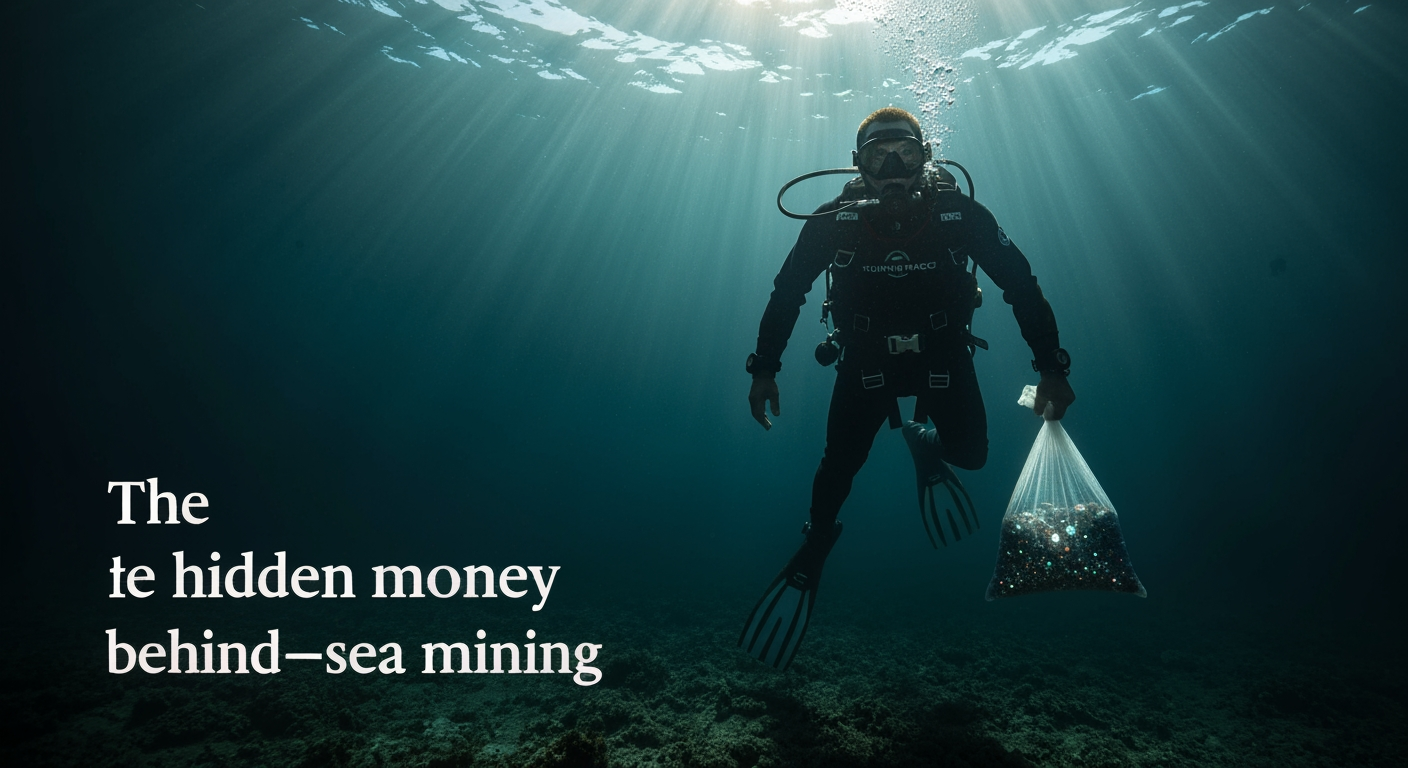
The deep ocean floor, a realm once thought to be beyond humanity's reach, is emerging as a new frontier in the global scramble for critical minerals, promising vast fortunes but stirring profound environmental anxieties. Beneath miles of frigid water lie polymetallic nodules, massive sulfide deposits, and cobalt-rich crusts, teeming with metals essential for modern technology – from electric vehicle batteries to smartphones and renewable energy infrastructure. This burgeoning industry, poised to unlock an estimated $20 trillion opportunity, presents a complex financial landscape where potential riches collide with unquantified ecological risks and the opaque nature of nascent investment.
The Mineral Rush Under the Waves
The driving force behind this deep-sea exploration is an escalating global demand for minerals like nickel, cobalt, copper, and manganese, coupled with dwindling high-grade deposits on land and increasing land-based mining costs. These polymetallic nodules, which have rested on the seabed for millions of years, contain multiple valuable metals, essentially offering "four mines for the price of one" to interested companies. For instance, a single tonne of these nodules could yield approximately $1,500 in revenue. The metals found in these deep-sea deposits are indispensable for the burgeoning green technology sector, making deep-sea mining a potentially vital component of future mineral supply chains. Beyond nodules, other prime targets include seafloor massive sulfides rich in copper, zinc, silver, and gold, and cobalt and manganese-rich crusts that also contain copper, nickel, and rare earth elements.
The Deep-Pocketed Frontier
The allure of such immense wealth has attracted a diverse array of investors, nations, and corporate entities to the deep-sea frontier. More than 30 countries and commercial operators currently hold exploration licenses issued by the International Seabed Authority (ISA), the intergovernmental body governing deep-sea activities in international waters. China, India, and France are among the prominent nations actively engaged, alongside smaller island states like Nauru and Tonga, which sponsor commercial operators in exchange for a share of potential economic returns.
Major commercial entities such as The Metals Company (TMC), Global Sea Mineral Resources (GSR), and Deep Sea Mining Finance (DSMF) are actively positioning themselves to diversify resource portfolios and secure stable supplies of critical materials. The capital required for developing the specialized subsea exploration and extraction technologies, including remotely operated vehicles (ROVs) and autonomous underwater vehicles (AUVs), is substantial. While the technology for full-scale deep-sea mining is not yet proven commercially, significant private investment is already flowing into the broader mineral exploration sector. For example, prominent billionaires like Jeff Bezos, Bill Gates, Michael Bloomberg, Marc Andreessen, and Sam Altman have invested in Kobold Metals, a company utilizing AI-powered exploration for valuable rare earth minerals, indicating a wider trend of high-net-worth individuals eyeing strategic mineral resources. These investments highlight the significant financial stakes and the anticipation of lucrative returns from securing these critical resources.
Balancing Riches and Ruin: Environmental Costs and Uncertainties
Despite the economic promise, deep-sea mining carries profound environmental implications that represent a significant, and often unquantified, financial risk. The deep ocean harbors vast, largely unknown ecosystems, with an estimated 99% of its species yet to be classified. The proposed mining methods, which involve large collectors acting like underwater vacuums to retrieve nodules from depths of up to 6,000 meters, could cause substantial disruption. These immense, tank-like vehicles, weighing tens of tons, are expected to wreak havoc on the seabed, destroying fragile habitats and generating sediment plumes that could spread far beyond the immediate mining sites.
The long-term ecological consequences of such activities, including biodiversity loss, disruption of ocean currents, and potential impacts on fisheries, are not fully understood. The economic cost of these environmental damages, including potential remediation efforts or the loss of crucial ecosystem services, remains largely externalized or speculative. While companies assert their commitment to minimizing impact, the scale of potential disruption in an environment as vast and delicate as the deep sea poses an enormous challenge. This uncertainty creates a "hidden" financial cost, as future environmental liabilities could significantly impact profitability and raise questions about the true economic viability of deep-sea mining when all costs are considered.
Navigating the Regulatory Currents and Financial Frameworks
The governance of deep-sea mining in international waters falls under the purview of the International Seabed Authority (ISA), established under the United Nations Convention on the Law of the Sea (UNCLOS). The ISA is currently in the critical process of developing a comprehensive Mining Code, a regulatory framework intended to guide seabed mineral exploitation. This code is expected to mandate robust Environmental Impact Assessments (EIAs) and ensure that mining activities benefit all humankind while protecting marine ecosystems.
A key aspect of this regulatory framework involves the financial mechanisms for licensing, royalties, and benefit-sharing. The transparency and fairness of these financial flows are crucial, particularly for developing nations that may sponsor mining efforts. The absence of the United States as a signatory to UNCLOS means it cannot exploit deep-sea minerals beyond its own Exclusive Economic Zone (EEZ), limiting its direct participation in broader international ventures overseen by the ISA. The ongoing debates within the ISA reflect a tension between the commercial imperative to extract valuable resources and the global responsibility to safeguard marine biodiversity. The ultimate structure of the Mining Code, including its financial provisions, will heavily influence the economic and environmental calculus of deep-sea mining for decades to come.
A Future Beneath the Waves: Wealth and Responsibility in Uncharted Territory
The pursuit of deep-sea minerals represents a quintessential dilemma of the 21st century: how to meet the insatiable demands of a technologically advancing world while preserving the planet's delicate ecosystems. The "hidden money" in deep-sea mining is not just the tantalizing, untapped trillions of dollars in critical minerals, but also the concealed costs of environmental degradation and the complex, sometimes opaque, financial arrangements underpinning this new frontier. As the world stands at the precipice of commercial-scale deep-sea mining, the imperative for transparent financial frameworks, robust environmental safeguards, and a balanced approach to resource extraction has never been more critical. The decisions made today regarding the economic and ecological governance of the deep seabed will define humanity's relationship with its last unexplored wilderness, determining whether this venture yields sustainable prosperity or irreversible ecological damage.
Related Articles

Europe's Green Surge vs. America's Fossil Fuel Might: A Global Energy Showdown
The global energy landscape is undergoing a profound transformation, marked by two fundamentally different approaches to power generation and economic development. On one side, the European Union is vigorously pursuing an ambitious clean energy transition, aiming for climate neutrality and energy independence through renewables


Balcony Solar Illuminates New Path for Renewable Energy Across US States
A quiet revolution is beginning to unfold across American cities and suburbs, transforming apartment balconies and small patios into miniature power plants. As US states increasingly embrace renewable energy solutions, the simple, accessible technology of balcony solar panels is emerging as a significant new frontier, offering individuals a direct stake in the clean energy transition

A Tale of Two Energies: China Champions Renewables as U.S. Grapples with Coal's Sunset
In a dramatic global energy narrative, China has firmly positioned itself as a titan of renewable energy, channeling unprecedented investments into solar, wind, and hydropower, while the United States, under former President Donald Trump's administration, made concerted efforts to revive its struggling coal industry. This stark divergence in energy strategies by the world's two largest economies has profound implications, not only for their respective economic futures and environmental footprints but also for the trajectory of global climate action and international energy markets