Mounting Plastic Emissions Threaten to Double Global Health Damage by 2040, Landmark Study Warns

A new global study has issued a stark warning: the health damage caused by plastic emissions is projected to more than double by 2040 if current production and disposal patterns persist. The research, published in The Lancet Planetary Health, represents the first comprehensive assessment to quantify the loss of healthy life years attributed to the entire lifecycle of plastics, from extraction to disposal. The findings underscore a rapidly escalating public health crisis intertwined with environmental degradation, demanding urgent and concerted global action.
The Alarming Projections: A Future Burden on Global Health
The study, titled "Global health burdens of plastics: a lifecycle assessment model from 2016 to 2040," paints a grim picture for the coming decades. Researchers, including lead author Megan Deeney of the London School of Hygiene & Tropical Medicine, utilized a first-of-its-kind global model to evaluate the health impacts using Disability-Adjusted Life Years (DALYs). This metric measures the number of healthy years of life lost due to either early death or diminished quality of life from illness.
Under a "business-as-usual" scenario, the annual number of DALYs attributable to plastic is projected to soar from 2.1 million in 2016 to 4.5 million by 2040. This signifies an estimated 83 million years of healthy life lost worldwide between 2016 and 2040 due to the pervasive influence of the plastics system. The implications extend far beyond environmental concerns, suggesting a profound and escalating threat to human well-being globally.
The Lifecycle of Harm: Unpacking Plastic's Detrimental Reach
The health burdens of plastic are not confined to discarded waste alone; they span the entire lifecycle of these ubiquitous materials. The study meticulously tracked plastics from the initial extraction of raw materials, primarily fossil fuels, through production, transport, use, and ultimately, disposal via recycling, landfilling, open burning, and environmental leakage.
Primary plastic production, the creation of virgin plastic, emerges as the single largest driver of health damage across all scenarios examined, accounting for over 60% of total health harms. This phase involves significant greenhouse gas emissions, contributing to climate change, which alone accounts for 40% of the health harms identified. Air pollution, predominantly stemming from plastic production processes, is responsible for 32% of the health impacts, while toxic chemicals released throughout the lifecycle contribute another 27%. The open burning of plastic waste also stands out as a major contributor to health degradation.
The process begins with the extraction of oil and gas, which form the feedstock for more than 90% of plastics. The subsequent chemical transformation into polymers, such as polyethylene terephthalate (PET) for water bottles, releases various pollutants. Regions with high concentrations of petrochemical plants, like the "cancer alley" in Louisiana, USA, illustrate the direct health risks faced by communities living near these production sites. Even after production, transport contributes to emissions, and at the end-of-life, decomposition in landfills can leach chemicals, while incineration and open burning release hazardous substances into the air.
The Economic and Human Toll: A Crisis of Cost and Illness
The consequences of plastic pollution manifest in a wide array of human health conditions and considerable economic costs. Exposure to chemicals present in plastics, including phthalates, PFAS, BPA, and flame retardants, has been linked to chronic diseases such as cancers, diabetes, obesity, fertility problems, gastrointestinal issues, and neurotoxicity, as well as chronic inflammation. Fine particulate matter from air pollution, a byproduct of plastic processes, is associated with respiratory and heart diseases.
Furthermore, microplastics (particles less than 5 mm) and nanoplastics (less than 1 μm) pose a unique threat. These tiny fragments are now ubiquitous, found in human blood, lung tissues, and even placentas. Their small size allows them to cross biological membranes, leading to concerns about additional toxic properties. Studies have indicated that breathing plastic particles and associated chemicals can cause lung damage, with long-term exposure implications still being investigated. Workers in plastic-related industries frequently exhibit lung problems and reduced lung capacity.
The economic burden of this crisis is staggering. Plastic pollution is estimated to cost the world at least $1.5 trillion annually. Health-related economic losses specifically from plastic production emissions have already exceeded $200 billion. In the United States alone, the human health impacts from plastic use represent an estimated annual cost of $410 billion to $930 billion, encompassing healthcare expenses, lost worker productivity, and premature deaths. Experts caution that these figures are likely underestimates, given the vast knowledge gaps regarding the long-term health implications and complex interactions of the thousands of chemicals found in plastics.
A Global Challenge, A Call for Action: Shifting the Tide
The scale of plastic pollution is immense and continues to grow. Global plastic production has surged from 2.1 million tonnes in 1950 to over 400 million tonnes today. Each year, between 19 and 23 million tonnes of plastic waste leak into aquatic ecosystems, equivalent to 2,000 garbage trucks full of plastic being dumped into the world's oceans, rivers, and lakes daily. In 2020 alone, over 250 million tonnes of plastic were discarded, with a fifth directly entering the environment, primarily from 20 countries struggling with overwhelmed waste management systems. Despite recycling efforts, only about 9% of global plastic waste was recycled in 2019, with a substantial portion ending up in landfills, incinerated, or openly burned.
Addressing this multifaceted crisis requires a systemic shift. The study emphasizes that simply increasing plastic waste collection or recycling in isolation has minimal impact on reducing global health burdens. Instead, a comprehensive "full system change" that combines various measures is deemed the most effective approach, potentially reducing the health burden by 43% by 2040 compared to business-as-usual. The most impactful strategy is reducing the production of unnecessary plastic, without simply substituting it with other equally harmful materials.
International bodies are beginning to respond. The United Nations Environment Assembly (UNEA) is working towards a legally binding international instrument to combat plastic pollution. However, progress on a global treaty has faced challenges. On an individual level, actions such as reducing the use of single-use plastics, supporting legislation for plastic reduction, and proper waste disposal are crucial. Innovation in eco-friendly materials and products designed for reuse and recycling are also vital components of the solution.
Conclusion
The projected doubling of health damage from plastic emissions by 2040 serves as an urgent wake-up call for policymakers, industries, and individuals worldwide. The invisible threat of plastics, embedded in every stage of their lifecycle, contributes to a growing list of chronic diseases and imposes immense economic costs. While the problem is complex and deeply ingrained in modern society, the scientific evidence is clear: immediate and coordinated action is imperative. A concerted global effort focused on reducing plastic production, improving waste management, fostering innovation, and implementing robust policies offers a pathway to mitigate this escalating public health and environmental crisis, securing a healthier future for generations to come.
Related Articles

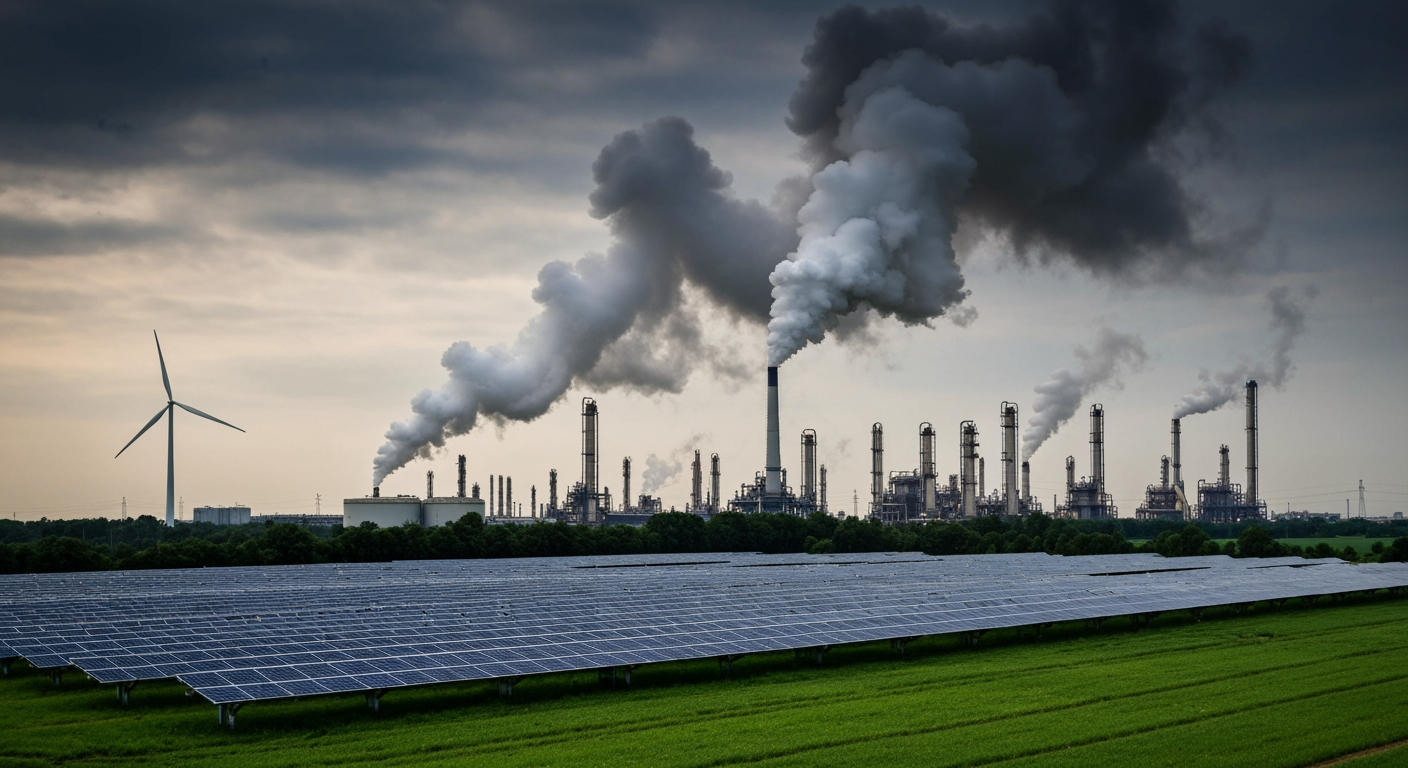
Europe's Green Surge vs. America's Fossil Fuel Might: A Global Energy Showdown
The global energy landscape is undergoing a profound transformation, marked by two fundamentally different approaches to power generation and economic development. On one side, the European Union is vigorously pursuing an ambitious clean energy transition, aiming for climate neutrality and energy independence through renewables


Balcony Solar Illuminates New Path for Renewable Energy Across US States
A quiet revolution is beginning to unfold across American cities and suburbs, transforming apartment balconies and small patios into miniature power plants. As US states increasingly embrace renewable energy solutions, the simple, accessible technology of balcony solar panels is emerging as a significant new frontier, offering individuals a direct stake in the clean energy transition

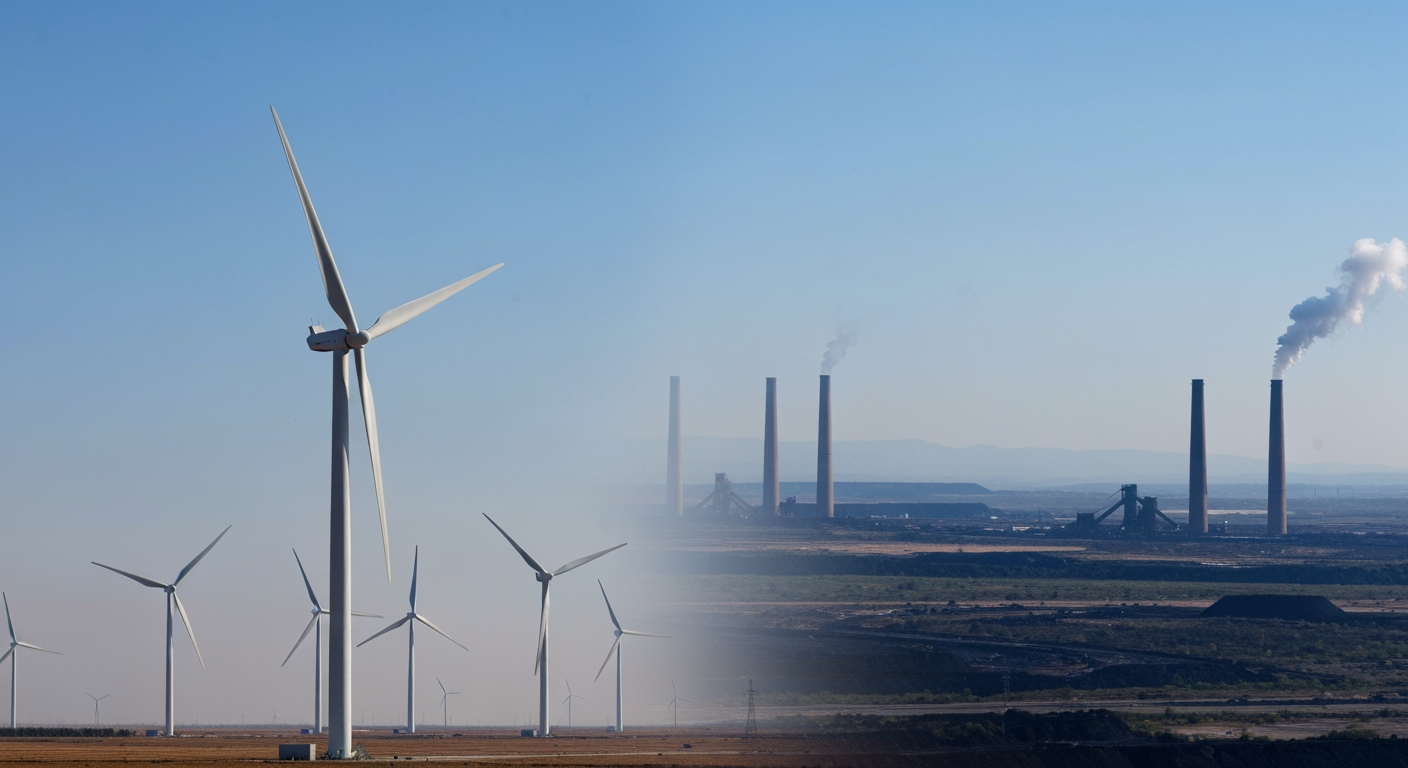
A Tale of Two Energies: China Champions Renewables as U.S. Grapples with Coal's Sunset
In a dramatic global energy narrative, China has firmly positioned itself as a titan of renewable energy, channeling unprecedented investments into solar, wind, and hydropower, while the United States, under former President Donald Trump's administration, made concerted efforts to revive its struggling coal industry. This stark divergence in energy strategies by the world's two largest economies has profound implications, not only for their respective economic futures and environmental footprints but also for the trajectory of global climate action and international energy markets