India's Delicate Dance: Modi's Israel Visit Navigates a Complex Middle East

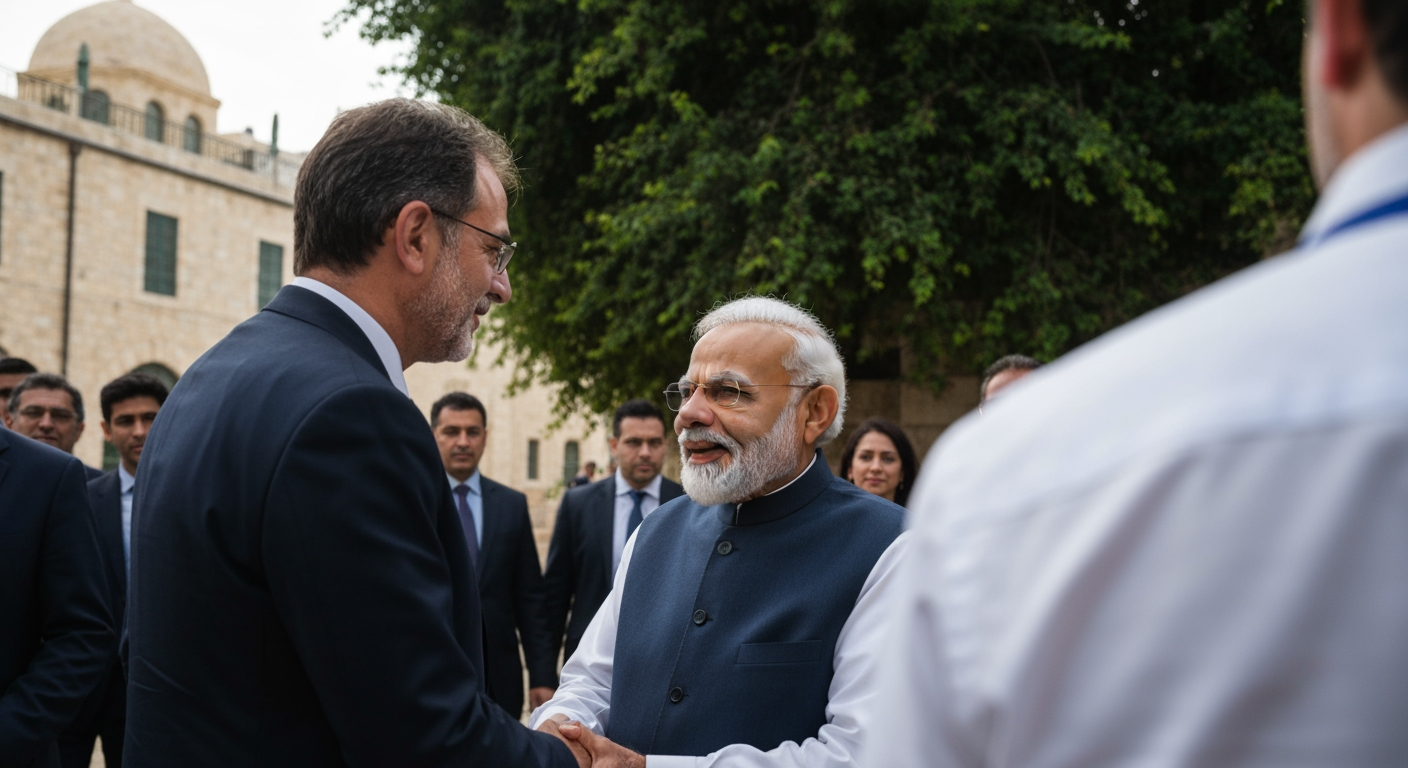
Prime Minister Narendra Modi's two-day visit to Israel, beginning February 25, marks a pivotal moment in India's evolving foreign policy, underscoring New Delhi's determination to deepen strategic ties while simultaneously navigating the volatile geopolitical landscape of the Middle East. The visit, his second to the Jewish state and the first by an Indian premier since 2017, comes amidst intense international scrutiny of Israel's actions in Gaza, setting the stage for a delicate balancing act that could significantly impact India's global standing and its traditional relationships in the Arab world.
The journey aims to reaffirm a robust and multifaceted strategic partnership, focusing on enhanced cooperation in defense, advanced technology, trade, and cybersecurity. However, the timing of the visit has drawn criticism, particularly from opposition leaders and a parliamentary panel, who question the prudence of such a high-profile engagement amidst ongoing regional instability and allegations of war crimes against Israeli leadership. This diplomatic tightrope reflects India's ambition to assert its strategic autonomy on the global stage, even as it confronts the inherent complexities of balancing competing interests.
Deepening Strategic Embrace: The Indo-Israeli Nexus
India's relationship with Israel has undergone a significant transformation since the establishment of full diplomatic relations in 1992. While India formally recognized Israel in 1950, decades of non-aligned policy and deference to Arab nations' sentiments delayed full engagement. Today, however, the bond is characterized by a comprehensive economic, military, and political partnership.
Defense cooperation forms the bedrock of this strategic alliance. Israel has emerged as a crucial supplier of advanced military systems to India, becoming its second-largest source of defense equipment after Russia. India, in turn, is Israel's largest client for military equipment sales. Reports suggest that Modi's visit is expected to finalize defense deals worth billions of dollars, encompassing sophisticated weaponry such as SPICE 1000 guidance kits, Rampage air-to-ground missiles, and advanced drones, along with increased collaboration in cyber, artificial intelligence, and quantum technologies. This burgeoning defense partnership has been notably evident since the 1999 Kargil conflict, during which Israel supplied critical armaments and intelligence to India. More recently, India has reportedly provided significant military assistance, including Hermes 900 drones, since the Hamas-led attack on Israel in October 2023.
Beyond military hardware, economic ties are flourishing. Bilateral trade, excluding military sales, reached approximately $10.7 billion in the fiscal year 2022-23, making India Israel's second-largest trading partner in Asia. Discussions for an India-Israel Free Trade Agreement are currently underway, signaling further economic integration. Cooperation extends to vital sectors such as agriculture, water management, science and technology, and counter-terrorism. The collaborative spirit is also evident in multilateral initiatives like the I2U2 Group, which includes India, Israel, the UAE, and the United States, designed to foster cooperation in West Asia.
The Historical Imperative: India's Enduring Ties with the Arab World
For decades, India maintained a staunchly pro-Palestine stance, deeply rooted in its own anti-colonial struggle and the principles of the Non-Aligned Movement. India was the first non-Arab nation to recognize the Palestine Liberation Organization (PLO) as the sole legitimate representative of the Palestinian people in 1974 and formally recognized Palestinian statehood in 1988. Leaders like Mahatma Gandhi and Jawaharlal Nehru vocally opposed the partition of Palestine, viewing it through the lens of self-determination and anticolonial solidarity.
However, India's engagement with the Middle East extends far beyond the Palestinian question, encompassing vital economic and strategic interests with the broader Arab world. The region supplies nearly two-thirds of India's total oil imports and represents a crucial trading partner, with bilateral trade reaching $226.43 billion in the financial year 2024-2025. Countries like the UAE and Saudi Arabia are among India's largest trading partners. Moreover, millions of Indian expatriates reside and work in Gulf countries, contributing significantly to remittances that bolster India's economy.
Acknowledging these deep historical and economic linkages, India continues to engage actively with Arab nations. New Delhi has expanded its ties with the UAE and Saudi Arabia, and even hosted the Arab League summit in January 2026. India also consistently reaffirms its support for a two-state solution for the Israeli-Palestinian conflict and has recently backed a global condemnation of Israeli settlements in the West Bank.
Navigating Geopolitical Crosscurrents
Prime Minister Modi's current visit to Israel illuminates the complexities of India's "Act West" policy, which seeks to deepen engagement with West Asia without alienating traditional allies. The diplomatic environment surrounding this visit is particularly fraught. Allegations of war crimes and genocide against Israeli leadership at the International Criminal Court and the International Court of Justice have placed Israel under intense global scrutiny. India's decision to proceed with the visit at such a juncture risks being interpreted by some as a political endorsement, potentially impacting its standing as a voice for the Global South and its commitment to a rules-based international order.
The visit also unfolds in the shadow of regional instability, including the ongoing conflict in Gaza and shifting alliances. While Israel's Prime Minister Benjamin Netanyahu has proposed a "hexagon of alliances" involving Israel, India, Greece, and Cyprus, aimed at countering "radical axes," such proposals are viewed with apprehension by some, including Pakistan, who see them as threats to regional stability. India, for its part, continues to assert a policy of strategic autonomy, carefully managing relationships without necessarily aligning with any specific bloc in regional rivalries. This strategy was recently underscored by India's decision not to formally designate Hamas as a terrorist organization, preserving diplomatic flexibility.
The broader regional context, including the India-Middle East-Europe Economic Corridor (IMEC) project, a multimodal trade and infrastructure initiative linking India to Europe via the Gulf and Israel, also frames the significance of this visit. For New Delhi, sustaining momentum for IMEC requires active engagement with all its nodes, including Israel.
The Tightrope Walker's Resolve
Prime Minister Modi's visit to Israel is a clear demonstration of India's evolving foreign policy, one that prioritizes strategic interests and economic opportunities in a rapidly changing global order. The deepening partnership with Israel, driven by critical needs in defense technology and innovation, is a pragmatic move for a rising power. However, this pivot comes with the persistent challenge of maintaining its long-standing relationships with Arab nations and its historical support for the Palestinian cause.
The delicate dance India performs in the Middle East reflects a nuanced approach to international relations, seeking to maximize its benefits from all sides while minimizing diplomatic fallout. As India aims to strengthen its position as a global power, its ability to successfully walk this geopolitical tightrope, balancing robust ties with Israel against its essential engagement with the Arab world, will be a defining feature of its foreign policy for years to come.
Related Articles

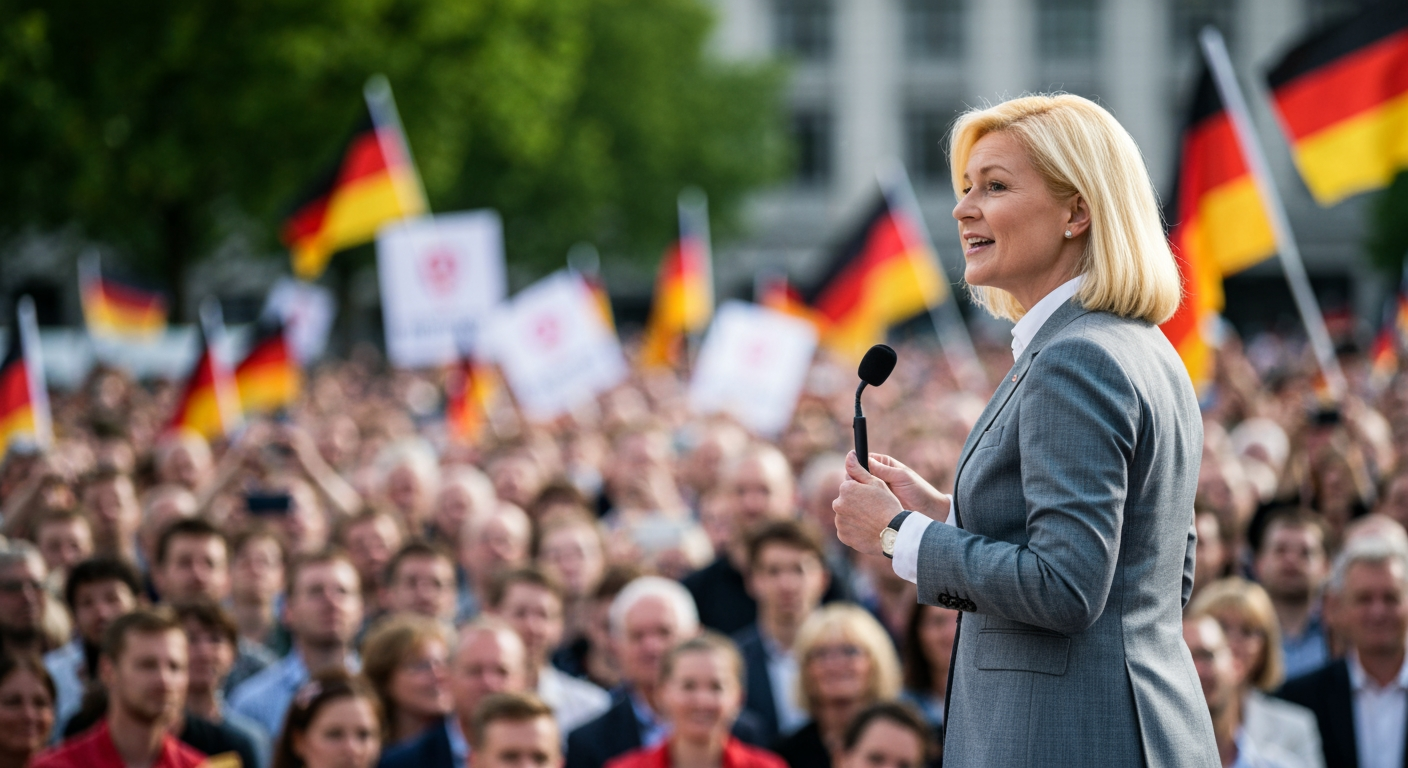
Germany on the Cusp of a Historic First: The Path to a Female Head of State
Germany stands at a potentially historic juncture as discussions intensify regarding the selection of its next Federal President in 2027. For the first time in its history, the nation could elect a woman to the largely ceremonial yet deeply symbolic role of head of state, marking a significant milestone in its political evolution


Navigating the Labyrinth of Truth: Cutting Through Epstein Files Disinformation
The highly anticipated release of millions of documents related to financier and convicted sex offender Jeffrey Epstein has unleashed a torrent of information, but it has also created a fertile ground for widespread disinformation. As the public grapples with the sheer volume of court records, interviews, emails, and images, the challenge of discerning fact from fiction has become paramount

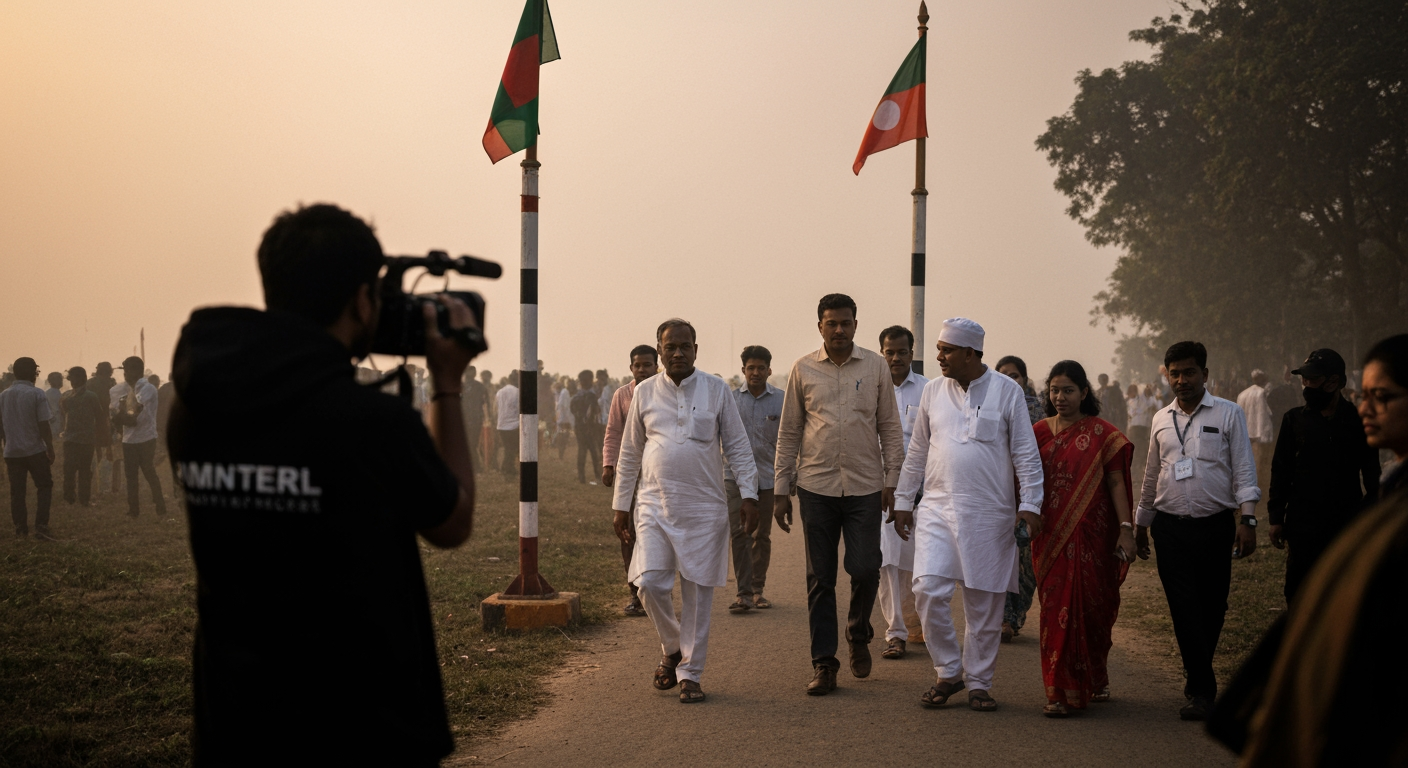
India and Bangladesh Embark on a New Chapter to Reinvigorate Bilateral Ties
Dhaka and New Delhi are actively recalibrating their multifaceted relationship, signaling a significant reset in bilateral ties following a recent political transition in Bangladesh. The election of the Bangladesh Nationalist Party (BNP) and the ascendance of Prime Minister Tarique Rahman have opened a new diplomatic window, prompting India to swiftly engage with the new leadership to foster renewed cooperation