High-Stakes Diplomacy: CIA Director's Covert Visit to Moscow Confirmed Amid Global Tensions

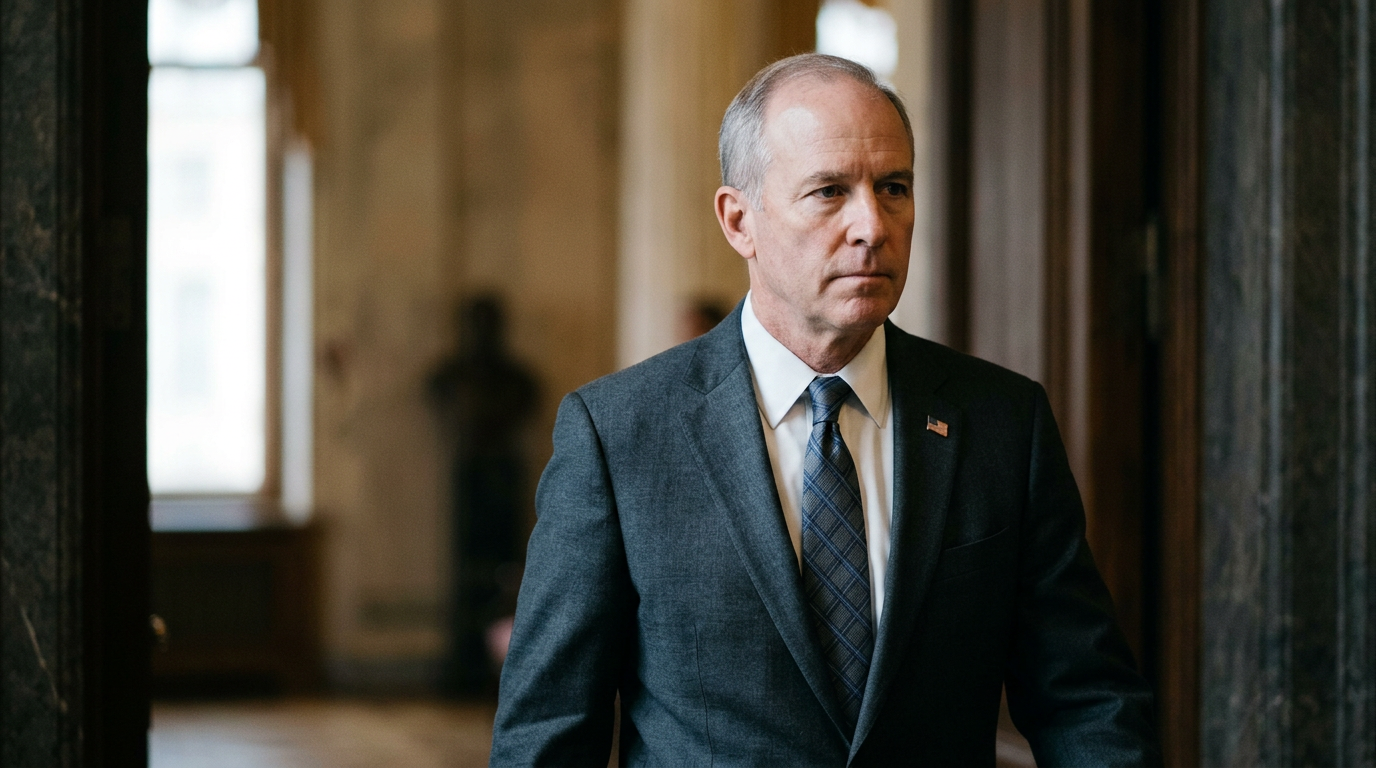
Moscow, Russia – In a highly unusual and largely unannounced development, John Ratcliffe, Director of the U.S. Central Intelligence Agency, conducted a visit to Moscow on August 25, 2026, a trip later confirmed by the Kremlin amidst swirling geopolitical complexities. The clandestine journey by the top American intelligence official underscores the critical, albeit often covert, channels of communication maintained between Washington and Moscow, even as relations between the two global powers navigate a deeply strained period marked by ongoing conflict in Ukraine, escalating tensions surrounding Iran, and persistent cybersecurity concerns. The secretive nature of the visit, revealed initially through flight-tracking data and U.S. media reports before official acknowledgment, highlights the delicate balance of strategic dialogue in an era of overt confrontation.
The presence of the CIA chief in the Russian capital first came to light through observations of a U.S. military C-17 Globemaster III transport plane arriving at Moscow’s Vnukovo Airport on Tuesday, August 25. Flight-tracking data from Flightradar24 showed the aircraft originating from Joint Base Andrews in Maryland, making a stop in Riga, Latvia, before proceeding to Moscow. This visible, albeit unconfirmed, aerial movement was quickly followed by reports in U.S. media outlets, including CBS News and Axios, citing unnamed U.S. officials familiar with the situation who confirmed Ratcliffe's trip. These initial reports indicated that a U.S. diplomatic motorcade was also spotted within the Russian capital, further corroborating the high-level presence. The U.S. government, through the CIA and White House, initially offered no immediate public comment on the visit, adhering to traditional protocols surrounding sensitive intelligence operations. However, the following day, Kremlin spokesman Dmitry Peskov officially confirmed Ratcliffe’s presence in Moscow. Peskov stated that the CIA Director held talks with Russian intelligence officials, though he explicitly noted that no meeting with President Vladimir Putin took place. The Kremlin spokesperson characterized the discussions as "contacts between security services". This confirmation from Moscow marked a rare instance of public acknowledgment for such a high-level, clandestine intelligence exchange.
The specific agenda of Director Ratcliffe’s discussions remains officially undisclosed, a standard practice for intelligence-level engagements. However, the timing of the visit, described as Ratcliffe's first known trip to Russia as CIA chief, strongly suggests a focus on some of the most contentious and pressing issues defining the current U.S.-Russia relationship. Among the paramount concerns is the ongoing conflict in Ukraine, where U.S.-brokered peace talks aimed at ending Russia's invasion have largely stalled. The visit occurred shortly after reports emerged that the U.S. had requested Kyiv to temporarily suspend long-range strikes on major Russian cities during the period of the delegation's presence in Moscow. This request underscores the sensitivity surrounding the discussions and potentially indicates efforts to de-escalate immediate tensions during the intelligence exchange. Another significant topic likely on the table was Russia’s relationship with Iran, which has become a growing point of contention between Washington and Moscow. Just prior to Ratcliffe’s trip, the U.S. Treasury Secretary announced a new strategy of economic sanctions designed to isolate Iran, a move that directly impacts Russia given its extensive military, economic, and diplomatic ties with Tehran, including the supply of drones for the conflict in Ukraine. Furthermore, the CIA has historically played a crucial role in facilitating U.S.-Russia detainee exchanges. Recent successes in this area, including the 2024 release of Wall Street Journal reporter Evan Gershkovich and marine veteran Paul Whelan, and the 2025 release of U.S.-Russian dual national Ksenia Karelina, suggest that further discussions on incarcerated individuals could have been a key component of the meetings.
Such a high-level visit by a U.S. intelligence chief to Moscow is a rare occurrence, underscoring its significant diplomatic implications. It marks the first known trip to the Russian capital by a U.S. spy chief since William Burns, Ratcliffe's predecessor, met with Russian President Vladimir Putin in November 2021, just three months before Russia’s full-scale invasion of Ukraine. The continuity of communication channels between intelligence services, even when overt political relations are in disarray, serves as a critical mechanism for de-escalation and crisis management. Director Ratcliffe has reportedly maintained contact with his Russian intelligence counterparts throughout his tenure, notably engaging in a phone call with Sergei Naryshkin, the head of Russia’s Foreign Intelligence Service (SVR), in March 2025, where both agreed to regular contacts to foster stability and reduce confrontation. This covert yet acknowledged dialogue serves as a pragmatic necessity, allowing for the exchange of critical information and the relay of warnings that might prevent miscalculation during periods of heightened geopolitical tension. The fact that the Kremlin chose to confirm the visit, albeit after U.S. media reports, suggests a deliberate, albeit subtle, signaling of openness to such high-level, behind-the-scenes engagement.
Despite the confirmation from Moscow, the U.S. government maintained its official silence on the specifics of the visit. This posture is consistent with the clandestine nature of intelligence operations, aiming to protect sources and methods while allowing for sensitive diplomatic maneuvering outside the public eye. The absence of immediate public details, however, has fueled speculation among analysts regarding the precise nature and outcomes of the discussions. Some interpretations suggest the visit could have been a means to deliver firm warnings to Moscow regarding its actions or to explore pathways for de-escalation in ongoing conflicts. The request for Ukraine to temporarily halt strikes on Russian territory during the visit further highlights the delicate context and potentially significant stakes involved. While the immediate tangible results of such an exchange may not be visible, the mere fact that the highest-ranking U.S. intelligence official was in Moscow signals Washington's acknowledgment of the necessity for direct engagement on critical security matters, irrespective of broader political disagreements.
In conclusion, CIA Director John Ratcliffe's unannounced, yet subsequently confirmed, visit to Moscow represents a critical instance of high-stakes, behind-the-scenes diplomacy. Occurring during a period of profound friction between the United States and Russia, the visit underscores the enduring importance of intelligence channels as a means of communication when official diplomatic avenues are strained. While the specifics of the discussions remain shrouded in secrecy, the context of the Ukraine conflict, tensions surrounding Iran, and ongoing efforts regarding detainee exchanges strongly point to a pragmatic attempt to manage complex security challenges. The visit, rare in its nature and delicate in its execution, offers a glimmer of potential for sustained, albeit covert, engagement between the two nations, providing a crucial, if understated, mechanism for navigating an increasingly volatile global landscape.
Related Articles

Ratko Mladić, "Butcher of Bosnia" and Convicted War Criminal, Dies at 84
THE HAGUE, Netherlands – Ratko Mladić, the former Bosnian Serb military commander known as the "Butcher of Bosnia" and convicted of genocide, war crimes, and crimes against humanity, has died at the age of 84. Serbian...

Long-Awaited 9/11 Mastermind Trial Set for 2028, Decades After Attacks
GUANTANAMO BAY, Cuba – Nearly a quarter-century after the devastating terror attacks of September 11, 2001, a military judge has finally set a trial date for Khalid Sheikh Mohammed, the alleged mastermind behind the...