Germany's Balcony Solar Boom: A Nation Embraces Micro-Power Plants
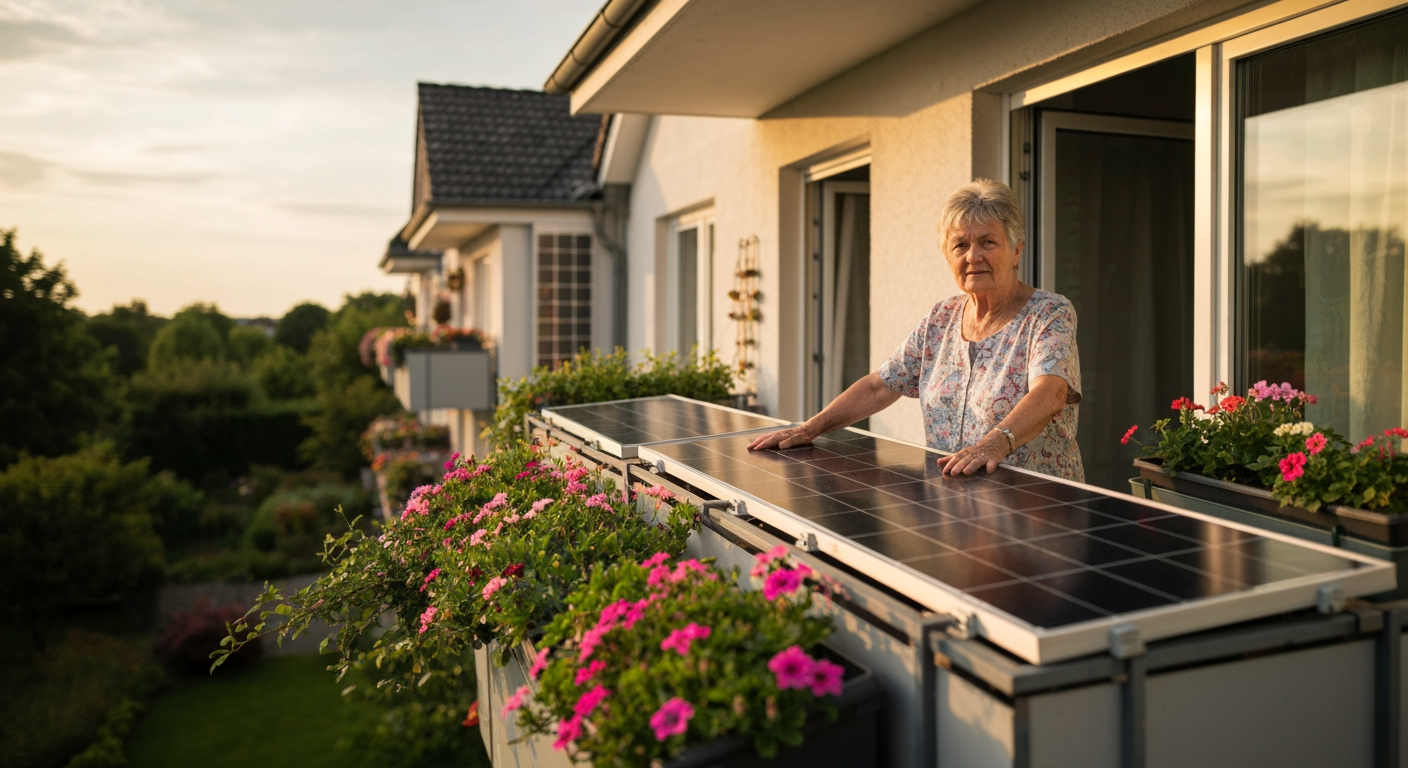
Germany is experiencing an unprecedented surge in the adoption of balcony solar panels, transforming urban landscapes and empowering millions of residents to become active participants in the nation's ambitious energy transition. These compact, "plug-and-play" photovoltaic systems, known as Balkonkraftwerke (balcony power plants), have rapidly moved from niche technology to a widespread phenomenon, driven by a confluence of supportive government policies, soaring energy costs, and a growing desire for energy independence among the populace. The milestone of over one million installed systems, reached by mid-2025, underscores a profound shift in how Germans generate and consume electricity.
The Ascent of Balcony Power Plants
Balcony solar panels are essentially mini-photovoltaic systems, typically consisting of one or two solar modules and a micro-inverter, designed for straightforward installation on balconies, terraces, or even garden sheds. Unlike complex rooftop solar installations, these devices are lauded for their simplicity: users can purchase them from retailers, mount them easily, and plug them directly into a standard household electrical socket. This accessibility has democratized solar energy, allowing apartment dwellers and renters, who traditionally lacked access to rooftop installations, to generate their own clean electricity.
The growth trajectory of these systems in Germany has been meteoric. By early 2024, over 400,000 plug-in solar systems had been installed nationwide. This figure escalated rapidly, surpassing 500,000 by June 2024, with another 220,000 units added in the first half of that year alone. By June 2025, the number of registered balcony solar systems officially exceeded one million, effectively doubling the previous year's total. While official figures are substantial, experts estimate the actual number of operational units, including unregistered systems, could range between 1.5 and 4 million across Germany, highlighting the grassroots nature of this energy revolution.
A Policy and Economic Tailwind
Several critical factors have converged to fuel this remarkable adoption rate. Foremost among them are the proactive policies enacted by the German government. The "Solarpaket I" legislation, implemented in 2024, significantly streamlined bureaucratic hurdles. The registration process for these micro-systems was simplified, reducing the required information from 20 data points to a mere five, and notably, eliminating the need for separate registration with local network operators since April 2024. Furthermore, the maximum inverter power limit for plug-in solar devices was raised from 600 watts to 800 watts (AC), enhancing their energy output. The government also abolished the requirement for a bidirectional meter, allowing systems to utilize existing meters which may run in reverse during energy feed-in.
Economic incentives have played an equally crucial role. Since January 1, 2023, balcony solar systems and associated battery storage have benefited from a 0% sales tax rate, significantly reducing the initial investment cost. Beyond federal incentives, numerous federal states and municipalities offer subsidies, such as Berlin's program providing up to €500 per apartment for the purchase of balcony solar systems, effectively covering a substantial portion of the typical €400 to €800 cost of a unit.
The geopolitical landscape has also been a powerful catalyst. Following Russia's invasion of Ukraine, electricity and natural gas prices across Europe surged dramatically, prompting German households to seek immediate solutions for reducing their energy bills. Balcony solar panels offered a tangible, accessible, and relatively inexpensive way for individuals to regain some control over their energy costs, with typical payback periods ranging from 2.5 to 5 years.
Empowering Consumers, Contributing to Climate Goals
The allure of balcony solar extends beyond financial savings. For many Germans, these mini-power plants represent a personal contribution to climate action and a sense of "self-efficacy" in the face of broader environmental challenges. They offer a tangible connection to renewable energy, fostering greater awareness of electricity consumption and inspiring active participation in the energy transition. This is particularly significant in a country with a "very strong solar culture" and ambitious goals to source 80% of its electricity from renewables by 2030.
From an environmental perspective, each 800-watt system, generating approximately 760 kilowatt-hours annually, is estimated to prevent around 310 kilograms of carbon dioxide emissions per year. The one million systems currently installed collectively offset approximately 310,000 metric tons of CO2 emissions annually, equivalent to removing roughly 67,000 cars from the road. While individually small, the cumulative impact of these decentralized energy sources meaningfully contributes to Germany's overall decarbonization efforts.
The democratization of energy is another profound benefit. Balcony solar panels have made renewable energy generation accessible to millions living in apartments and rented properties, a demographic often excluded from large-scale solar projects. Renter protections passed by federal lawmakers in July 2024 further prevent landlords from arbitrarily blocking installations, solidifying this right to self-generation.
Navigating the Future: Challenges and Innovations
Despite the widespread enthusiasm, the balcony solar movement faces certain limitations and ongoing developments. Individually, these systems provide modest energy savings, typically supplying enough power for small appliances like refrigerators or for charging electronic devices, and contribute less than 1% to Germany's total energy needs. Their efficiency is also highly dependent on optimal sunlight exposure and suitable balcony orientation, with performance significantly reduced in shaded conditions.
Technical considerations also arise; some early inverters, crucial for converting direct current to alternating current, have caused electromagnetic interference, affecting radio networks. However, safety standards are evolving, with regulators requiring microinverters to shut down immediately during outages to prevent hazards.
Looking ahead, the integration of battery storage solutions is becoming increasingly prevalent. The percentage of German balcony solar buyers also purchasing batteries doubled from 20% in 2023 to 40% in 2025, allowing users to store excess energy generated during the day for nighttime use. This trend promises to enhance the self-sufficiency and economic benefits of these micro-power plants.
The German balcony solar boom stands as a testament to how innovative policy, economic pressures, and individual initiative can converge to accelerate the energy transition. By making clean energy generation accessible and attractive to the general public, Germany is not only progressing towards its climate goals but is also fostering a more distributed, resilient, and participatory energy future.
Sources
- distilled.earth
- happyeconews.com
- sunsharetek.com
- intersolar.de
- ovacen.com
- nylyn.solar
- thewittyherald.com
- pogreen.com
- solarandsolar.hu
- cleantechnica.com
- newsmypower.com
- renewable-ei.org
- cleanenergywire.org
- trendwatching.com
- review-energy.com
- soeasyrobot.com
- batterlution.com
- energytrend.com
- taiyangnews.info
- saveonwatts.com
- ankersolix.com
- newsmypower.com
- cleanenergywire.org
- theearthcall.com
- grist.org
- canarymedia.com
- atolls.com
- immobilien-lindstedt.de
- grist.org
Related Articles


Extreme Heat: A Dual Threat to the Power Grid, Heightening Blackout Risks
As the mercury climbs and heat waves become more frequent and intense across the globe, electrical grids face a perilous dual challenge: surging demand for cooling and compromised infrastructure performance. This...

Clearing the Air: Pushing Past Persistent Myths Hindering EV Adoption
The rapid acceleration towards electric vehicles (EVs) is a cornerstone of global sustainability efforts, yet many consumers harbor doubts, with concerns ranging from limited driving range to environmental impact and...