Germany and Israel Grapple with Widening Rift as Merz's Gaza Criticism Sparks Diplomatic Firestorm

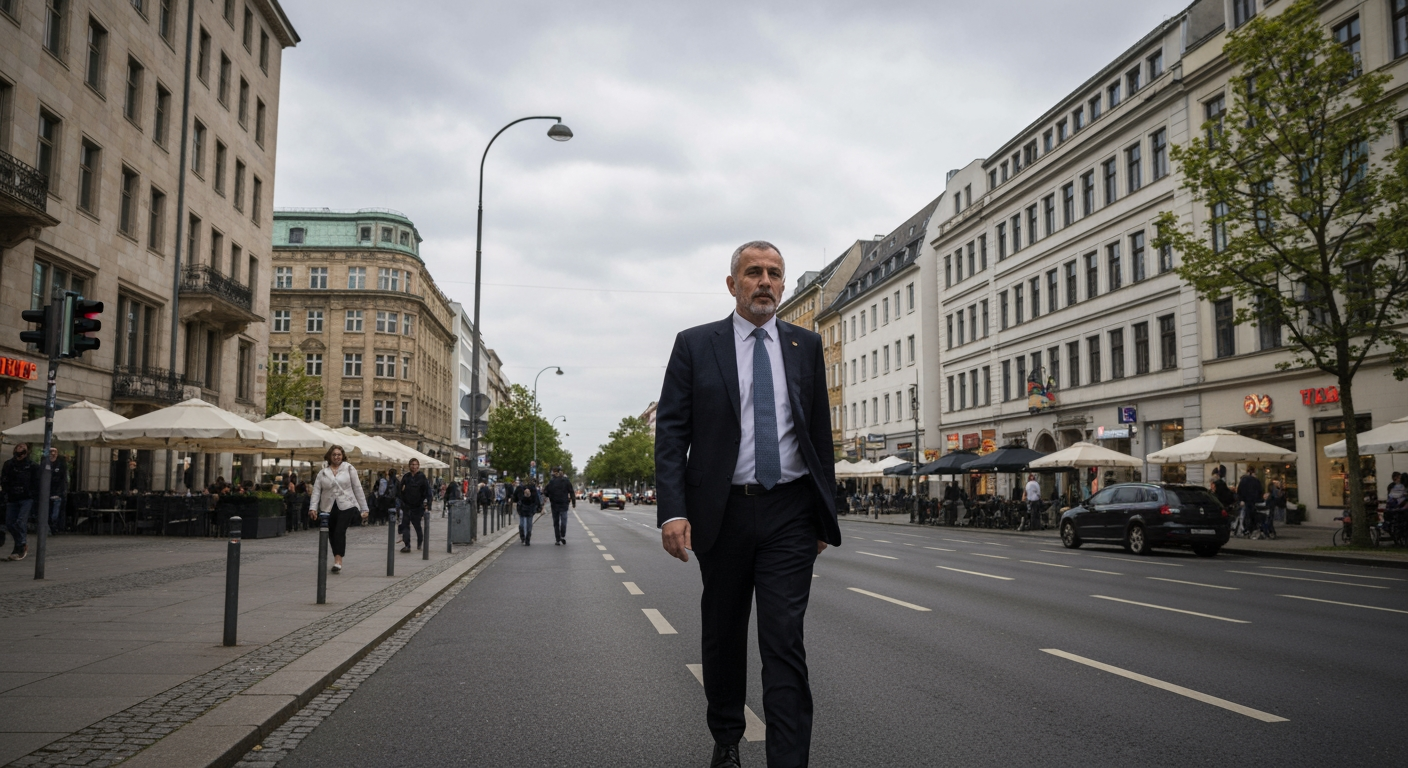
A foundational pillar of post-World War II diplomacy is facing its most profound test as German Chancellor Friedrich Merz has delivered an unprecedented and forceful public rebuke of Israel's military conduct in Gaza, triggering a diplomatic fallout that highlights a growing divide between the two historically intertwined nations. Merz's remarks, which questioned the justifiability of Israel's actions and cited potential violations of international humanitarian law, represent a significant departure from Germany's long-standing policy of unwavering support for the Jewish state, straining a relationship forged in the shadow of the Holocaust.
An Unprecedented Rebuke from Berlin
In late May 2025, speaking from Finland, Chancellor Merz articulated his deepest concerns regarding the escalating humanitarian crisis in the Gaza Strip. He stated that "what the Israeli army is doing in the Gaza Strip, I no longer understand," and characterized the civilian suffering as "no longer comprehensible" and "no longer justified as a fight against Hamas terrorism.". Merz emphasized that a German Chancellor must speak out "when lines are crossed where international humanitarian law is now really being violated.". His critique intensified in early July 2025, when he disclosed speaking weekly with Israeli Prime Minister Benjamin Netanyahu and conveying that Israel risked losing its "best friends" if its military approach continued. He pressed for clarity on Israel's objectives in Gaza, stating that "massive casualties among the civilian population are no longer understandable.". These statements marked a sharp shift in tone from Berlin, which traditionally prefers to address concerns with Israel through private diplomatic channels..
Straining the Staatsräson: Germany's Shifting Stance
For decades, Germany's relationship with Israel has been defined by its "Staatsräson" – a reason of state rooted in historical responsibility for the Holocaust. This unique commitment has ensured Germany's steadfast support for Israel's security and right to exist.. However, Merz's recent criticisms and subsequent policy adjustments indicate a re-evaluation of how this Staatsräson translates into contemporary foreign policy, particularly concerning the Gaza conflict. Internal pressure within Germany has also mounted, with some members of Merz's own coalition, particularly from the Social Democrats (SPD), calling for an even tougher stance, including a halt to arms exports to Israel.. These critics argue that the post-Holocaust mantra of "never again" should equally apply to the humanitarian situation in Gaza.. Public sentiment in Germany mirrors this shift, with a May 2025 survey revealing that 51% of Germans opposed weapons exports to Israel, and only 36% held a positive view of Israel, a decline from 46% in 2021.. In August 2025, Merz responded to growing concerns by suspending military exports to Israel that could be used in Gaza.. Yet, by September 2025, Merz nuanced his position, warning that criticism of Israel was increasingly being used as a pretext for antisemitism in Germany, while reaffirming Germany's commitment to Israel's security..
Israeli Reactions and Diplomatic Fallout
The German Chancellor's criticisms have not gone unanswered by Jerusalem, leading to a rare public spat between the two nations. In April 2026, Israeli Finance Minister Bezalel Smotrich launched a scathing attack on Merz, invoking Holocaust analogies to suggest Merz should atone for Germany's past rather than critique Israeli policy. Smotrich provocatively declared that "You will not force us into ghettos again.". This deeply controversial remark prompted an immediate and public rebuke from Israel's Ambassador to Germany, Ron Prosor. Ambassador Prosor condemned Smotrich's use of Nazi-era comparisons as unacceptable and distorting the memory of the Holocaust, even as he acknowledged the legitimacy of political disagreements.. Prosor underscored that despite the policy disagreements, Germany remains Israel's primary ally in Europe, and the security bond between Berlin and Jerusalem remains a foundational element of German state policy.. This exchange underscores the fragility of the diplomatic ties when faced with the intensely sensitive historical narratives that define the relationship.
The Broader International Context and Future of Relations
Germany's increasingly critical stance places it in a delicate position on the international stage. In July 2025, Germany notably abstained from a joint statement issued by 28 Western nations, including key allies like the United Kingdom and France, which condemned the "inhumane killing" of Palestinians and demanded an immediate end to the conflict.. This decision drew further domestic criticism and highlighted Germany's struggle to balance its unique historical obligations with broader international calls for accountability regarding the humanitarian situation in Gaza..
Despite these tensions, Germany has continued to be a significant economic and military partner for Israel, serving as its second-largest arms supplier after the United States.. Between October 2023 and May 2025, Germany approved over €485 million in arms exports to Israel.. This continued military support has, however, led to legal challenges within Germany, with a criminal complaint filed against Merz and other officials accusing them of aiding a "Gaza genocide" through arms exports.. Germany has consistently maintained that it upholds international law and advocates for a two-state solution, condemning violence by extremist settlers..
The evolving dynamic between Germany and Israel marks a critical juncture. While Merz's government maintains its commitment to Israel's fundamental security, the unprecedented public criticism and the ensuing diplomatic friction suggest that the nature of their "special relationship" is undergoing a profound transformation. The challenge for both nations lies in navigating these growing disagreements while preserving the essential bonds of alliance and addressing the complex humanitarian and political realities of the Middle East.
Related Articles


Iran's Geopolitical Calculus: Examining Justifications Amidst Global Scrutiny
In an increasingly complex global landscape, Iran consistently articulates a multifaceted rationale for its core policies, particularly its nuclear program, ballistic missile development, and regional engagement. These...


India's Small Businesses Caught in the Hormuz Squeeze as Crisis Escalates
New Delhi, India – India's vast landscape of Small and Medium Enterprises (SMEs), a critical engine of the nation's economic growth and employment, is grappling with severe headwinds stemming from the escalating crisis...

EU Funding Halt Threatens Rwandan Troop Presence in Mozambique Amidst Rising Costs and Geopolitical Tensions
Kigali, Rwanda – The future of Rwanda's crucial military intervention in Mozambique's restive Cabo Delgado province hangs in the balance as European Union financial support is set to expire in May 2026, with no...