German Agriculture Under Siege: Adapting to a New Era of Extreme Weather

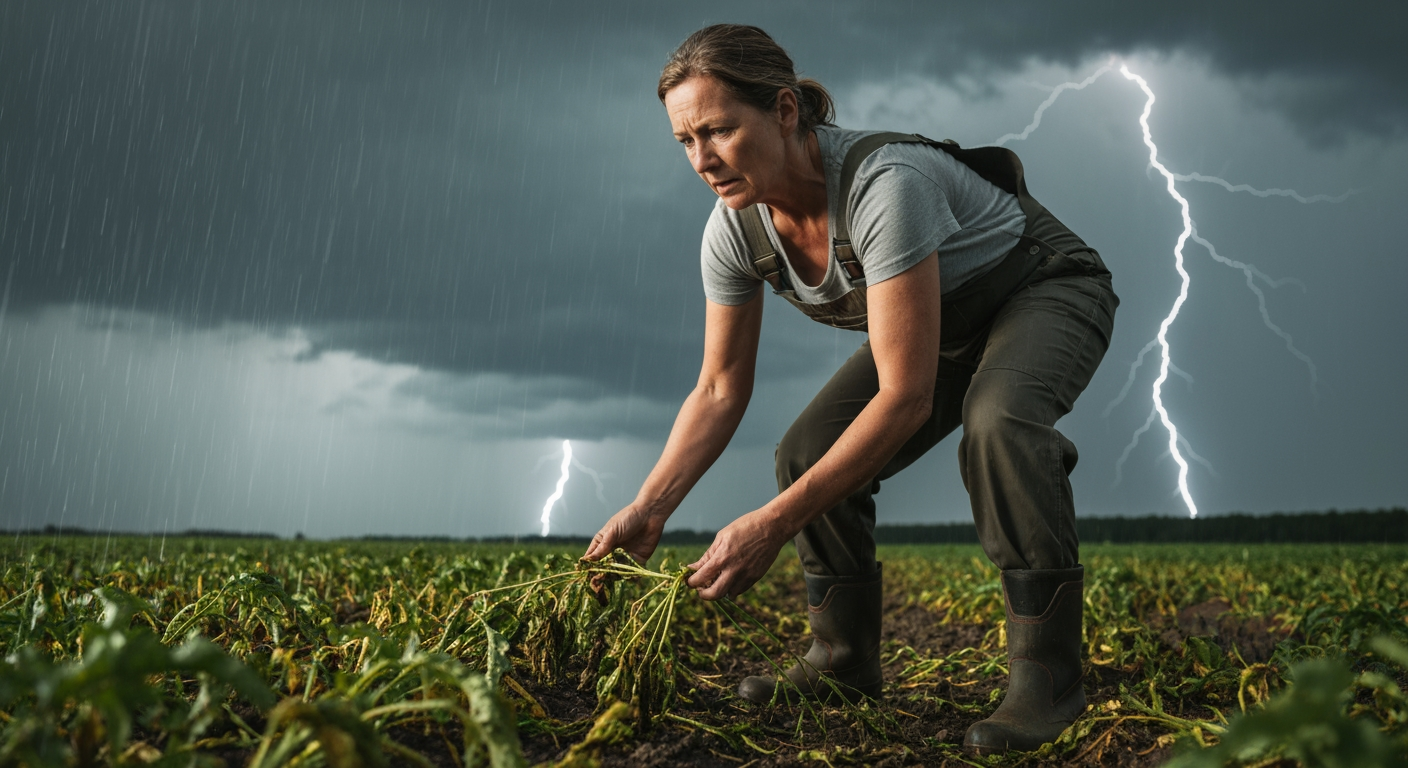
German agriculture finds itself at an increasingly critical juncture, grappling with a relentless surge in extreme weather events that threaten to redefine its landscape. From scorching droughts and devastating floods to unseasonable frosts, the frequency and intensity of these climatic shocks are testing the resilience of farmers, impacting crop yields, livestock health, and ultimately, the nation's food security and economic stability. The challenge extends beyond isolated incidents, painting a picture of a systemic shift demanding urgent and innovative adaptation.
Germany's Shifting Climate and the Agricultural Burden
The climate across Germany has undergone noticeable changes, marked by an undeniable increase in both average temperatures and the volatility of weather patterns. Projections for Central Europe indicate a potential temperature rise of 1°C to 5°C by the end of the century, compared to the 1986-2005 period, exceeding the global average increase. This warming trend contributes to a heightened probability of prolonged dry spells, particularly during the crucial growing seasons, and an elevated risk of damaging late and early frosts. While average annual precipitation in Germany has seen a roughly 10% increase since 1881, primarily due to heavier winter rainfall, summer months have experienced a slight decrease in precipitation in many regions, exacerbating drought conditions and creating stark regional disparities in water availability.
This climatic evolution has manifested in a series of severe events. The summer of 2003, for instance, set a benchmark for heat, yet the period from April to July 2018 witnessed a new record for warmth and exceptional dryness across much of the country. The 2018 drought was particularly devastating, widely recognized as a significant turning point for German agriculture, leading to widespread harvest failures and being classified as an event of national significance.
The Multi-Faceted Assault: Drought, Flood, and Frost
The impacts of extreme weather are varied and widespread, affecting almost every facet of German agriculture. Droughts and heatwaves stand out as the most significant threats, consistently identified as the primary cause of crop losses and financial hardship for farmers. The severe and prolonged dryness in 2018, for example, resulted in an 8% reduction in the EU-28 grain harvest compared to the five-year average, with German farmers anticipating a 10% decline below the previous year's already low yield. Many operations were forced to abandon harvesting and instead chopped their drought-stricken crops directly into the soil. More recently, a heatwave in July 2026 is projected to lead to substantial yield losses, particularly for winter wheat and maize, as crops are prematurely forced into maturity, resulting in smaller grains. Potatoes are noted as being exceptionally vulnerable to heat and water scarcity. Beyond arable crops, the 2018 and 2019 droughts caused the destruction of 245,000 hectares of forest, producing an estimated 160 million cubic meters of damaged wood. Dry springs, such as those experienced in 2025 and 2026, further complicate matters by impeding the germination and early growth of vital summer crops like maize and sugar beets.
Conversely, heavy rainfall and consequential flooding present another formidable challenge. These events lead to damaging waterlogging, especially detrimental to winter crops such as winter wheat, winter barley, and winter rape, by hindering nutrient absorption and causing substantial yield reductions. Floodwaters can contaminate fodder and render fields unusable, posing immediate health risks to livestock and necessitating complex clean-up operations. Recent floods in southern Germany, including those in Bavaria and Baden-Württemberg in June 2024, caused extensive agricultural damage. Such events not only directly destroy crops but can also damage crucial farm infrastructure, impacting long-term productivity and economic growth.
Late frosts, occurring after plants have begun their vegetative cycle due to warmer early springs, are also becoming more frequent. What was once a risk every five to six years is now anticipated almost every second year. This phenomenon is particularly devastating for fruit growing and viticulture, where early budding leaves vulnerable blossoms exposed to sudden drops in temperature, often leading to significant yield losses or total crop failures. The year 2024 saw the most severe frost damage to German vineyards in four decades, triggering compensation claims totaling tens of millions of Euros. Beyond these primary concerns, hail and storms also contribute to substantial agricultural losses, while warmer temperatures facilitate the spread of new pests and diseases, such as the apple codling moth and various fungi, further complicating crop management.
Economic Strain and the Search for Security
The cumulative effect of these extreme weather events translates into significant economic strain for Germany's agricultural sector. Farmers face substantial financial losses, with some experiencing existential threats to their livelihoods. The droughts of 2018 and 2019 alone inflicted billions of euros in damages across agriculture and forestry. For winter wheat, extreme summer droughts between 1995 and 2019 resulted in average income losses exceeding 23 million Euros annually across Germany. To mitigate such crises, the German government has provided emergency aid, exemplified by the 340 million Euros allocated during the 2018 drought. Similarly, the European Union offers crisis support, with 46.5 million Euros provided for frost damage in fruit and wine growing in 2024.
Despite the evident risks, comprehensive insurance against drought remains uncommon in Germany. This is primarily due to the prohibitive costs associated with such policies, as drought events often affect numerous farms simultaneously, leading to immensely high potential payouts for insurers. This gap in protection leaves many farmers vulnerable to the full financial impact of these increasingly common disasters.
Cultivating Resilience: Adaptation Strategies
In response to these escalating challenges, German agriculture is proactively pursuing a range of adaptation strategies, supported by research and governmental initiatives, aimed at building greater resilience. At the farm level, innovative approaches include the implementation of diversified crop rotations, which help spread risk and improve soil health, and the cultivation of drought-resistant and robust crop varieties better suited to fluctuating conditions. Practices that enhance soil health, such as humus buildup and conservative tillage, are being adopted to maximize water retention within the soil. Modern technologies like precision agriculture and efficient irrigation systems, including overhead frost protection, are also becoming more widespread to optimize resource use and mitigate direct weather damage. Furthermore, some farmers are exploring the introduction of entirely new crop types that are inherently more adaptable to the changing climate.
Government bodies and research institutions play a crucial role in fostering this adaptation. They fund research into climate-adapted production systems and techniques, promoting the development of resilient agricultural practices. This includes providing financial support and subsidies for farmers adopting climate-resilient methods. Efforts are also underway to establish more effective water management plans and implement early warning systems for extreme weather events, enabling farmers to prepare and react more effectively. Policymakers are working towards developing a coherent, long-term agricultural framework for climate adaptation across federal and state levels. Additionally, there is a growing push to promote multi-peril insurance options that can cover a broader range of weather-related risks, including drought, to provide more comprehensive financial security for farmers.
A Future Forged in Adaptation
The intensifying impact of extreme weather events presents an undeniable and ongoing challenge to German agriculture. Yet, the sector is not merely reacting but actively transforming. Through a combination of on-farm innovation, scientific research, and supportive policy, Germany's farmers are striving to cultivate a more resilient and sustainable agricultural system. The path forward demands continuous adaptation, strategic investment, and a collective commitment to protecting the foundational industry that feeds the nation. While the uncertainties of a changing climate persist, the proactive efforts to build climate-proof agriculture offer a hopeful vision for the future of food production in Germany.
Sources
- julius-kuehn.de
- baden-wuerttemberg.de
- ioew.de
- umweltbundesamt.de
- nabu.de
- kit.edu
- dkkv.org
- landwirtschaft.de
- landwirtschaft.de
- landwirtschaft.de
- agrarpolitik-blog.com
- praxis-agrar.de
- welt.de
- raiffeisen.de
- verbaende.com
- welt.de
- agrarwelt.com
- table.media
- deutschlandfunk.de
- niedersachsen.de
- bayern.de
- deutschlandfunk.de
- forschung-und-wissen.de
- tagesspiegel.de
- landvolk.net
- xfarm.ag
- netafim.de
- jade-hs.de
- bayern.de
- praxis-agrar.de
- bundeswirtschaftsministerium.de
Related Articles

A Looming Catastrophe: Wars and Extreme Weather Converge to Threaten Global Food Security
The world stands at a perilous crossroads, facing a convergence of geopolitical conflicts and a potent climate phenomenon that together threaten to plunge millions more into acute hunger. The ongoing war in Ukraine...

Strait of Hormuz Becomes Global Flashpoint in Escalating US-Iran Conflict
The world's most critical maritime chokepoint, the Strait of Hormuz, has emerged as a central battleground in the ongoing conflict between the United States and Iran, precipitating severe disruptions to global energy...


Global Trade Reels as Trump's 'Forced Labor' Tariffs Spark International Outcry and Confusion
Washington D.C. – A new wave of tariffs initiated by the Trump administration, ostensibly aimed at combating forced labor in global supply chains, has sent shockwaves through international trade circles, provoking...