Beyond Doubt: The Paris Agreement's Undeniable Impact on Global Climate Action

Amid ongoing debates about the efficacy of international climate policy, the Paris Agreement, adopted in 2015, frequently faces scrutiny regarding its ultimate success. However, a closer examination reveals that this landmark accord has fundamentally reshaped global efforts to combat climate change, catalyzing unprecedented ambition and tangible shifts in policy, economics, and technological development worldwide. Far from being a failure, the agreement has laid an indispensable foundation for collective climate action, significantly altering the trajectory of projected global warming and driving a green economic revolution.
A New Paradigm for Global Climate Governance
The Paris Agreement marked a pivotal departure from previous international climate treaties, most notably the Kyoto Protocol. Unlike its predecessor's top-down approach with legally binding emission reduction targets primarily for developed nations, Paris introduced a "bottom-up" framework built on Nationally Determined Contributions (NDCs). This innovative structure invites each signatory to voluntarily outline and communicate its own climate action plans, encompassing emission reductions, adaptation strategies, and means of implementation. The universality of this approach has been a monumental success, drawing in virtually every nation – 195 parties as of February 2023 – to participate in a shared global effort, making it the first truly global climate agreement.
Crucially, the agreement established a long-term goal to keep the rise in global average temperature to "well below 2 degrees Celsius above pre-industrial levels" and to "pursue efforts to limit the temperature increase to 1.5 degrees Celsius". This dual target, particularly the aspirational 1.5°C limit, has become a central benchmark for climate policy and a powerful symbol for vulnerable nations. Its political resilience was notably demonstrated when the United States withdrew under a previous administration, yet the agreement not only endured but also saw continued commitment from other nations, and even subnational entities and businesses within the U.S. itself, before the country officially rejoined.
The "Ratchet Mechanism" and Escalating Ambition
At the heart of the Paris Agreement's design for continuous improvement is its "ratchet mechanism." This mechanism mandates that countries submit updated and progressively more ambitious NDCs every five years. This iterative process, coupled with a transparency framework and a "global stocktake" to periodically assess collective progress towards the agreement's long-term goals, was engineered to prevent stagnation and encourage escalating ambition over time.
Since its inception, this mechanism has demonstrably spurred increased commitment. Many countries have indeed strengthened their pledges, and the agreement has normalized key concepts such as the 1.5°C target and the pursuit of "net-zero emissions" – where any remaining greenhouse gas emissions are balanced by removal from the atmosphere. This has led to major emitters like China, the European Union, Japan, and South Korea officially setting carbon neutrality goals. While challenges remain in translating these pledges into sufficiently rapid action, the framework has undeniably shifted the global dialogue and fostered a culture of continuous improvement in climate policy.
Catalyzing a Global Green Economy and Innovation
Perhaps one of the most profound, yet often underestimated, achievements of the Paris Agreement is its catalytic effect on the global economy and the clean energy transition. The agreement sent an unequivocal signal to markets and investors worldwide: the future is low-carbon. This signal has significantly shifted the financial landscape, making clean energy technologies more attractive for investment and increasing the perceived risk associated with fossil fuel projects.
As a direct result, renewable energy sources like wind and solar have become "staggeringly cheap" and are being deployed at rates unimaginable a decade ago, often proving more cost-effective to build than new fossil fuel alternatives. This clean energy boom is not only reducing emissions but also driving economic growth, fostering innovation, and creating millions of jobs globally. In the U.S. alone, clean energy jobs expanded three times faster than the national workforce, adding nearly 100,000 new jobs in the past year and bringing the total to 3.56 million. This economic momentum underscores that climate action is increasingly viewed not as a cost, but as a significant opportunity for growth and competitiveness.
Narrowing the Warming Gap, But Challenges Remain
Despite these significant achievements, it is crucial to acknowledge that the world is not yet on track to meet the Paris Agreement's most ambitious goals. Pre-Paris projections for global temperature rise by 2100 often ranged from 3.7°C to 4.8°C. However, with the implementation of current pledges, this projection has been significantly reduced, estimated at around 2.4-2.6°C by COP27 (2022), and potentially 1.7-2.1°C if all long-term pledges are fully met. This reduction of over 1.3 degrees Celsius in anticipated warming represents a monumental achievement, potentially saving countless lives and mitigating severe climate impacts.
However, a substantial "ambition gap" persists. Even with current NDCs, policies as of late 2022 could still lead to a global temperature rise of 2.7°C by 2100, exceeding both the 1.5°C and 2°C targets. Moreover, global fossil fuel production plans continue to exceed levels consistent with the 1.5°C limit. Challenges also include ensuring the credibility of national pledges and mobilizing sufficient climate finance, especially for adaptation and loss and damage in developing countries.
A Living Agreement for an Urgent Future
The narrative that the Paris Agreement has failed often overlooks the profound shifts it has initiated. It is a living document, a dynamic framework designed for continuous evolution rather than a static solution. It has fostered an enduring global consensus on the urgency of climate action, provided a flexible mechanism for national commitments, and undeniably accelerated the transition to a clean energy economy. While the path to a 1.5°C world remains steep and fraught with challenges, the agreement provides the essential architecture for sustained international cooperation and for holding nations accountable for their environmental stewardship. Its achievements confirm its role as an indispensable tool in humanity's ongoing effort to avert the most catastrophic consequences of climate change.
Related Articles

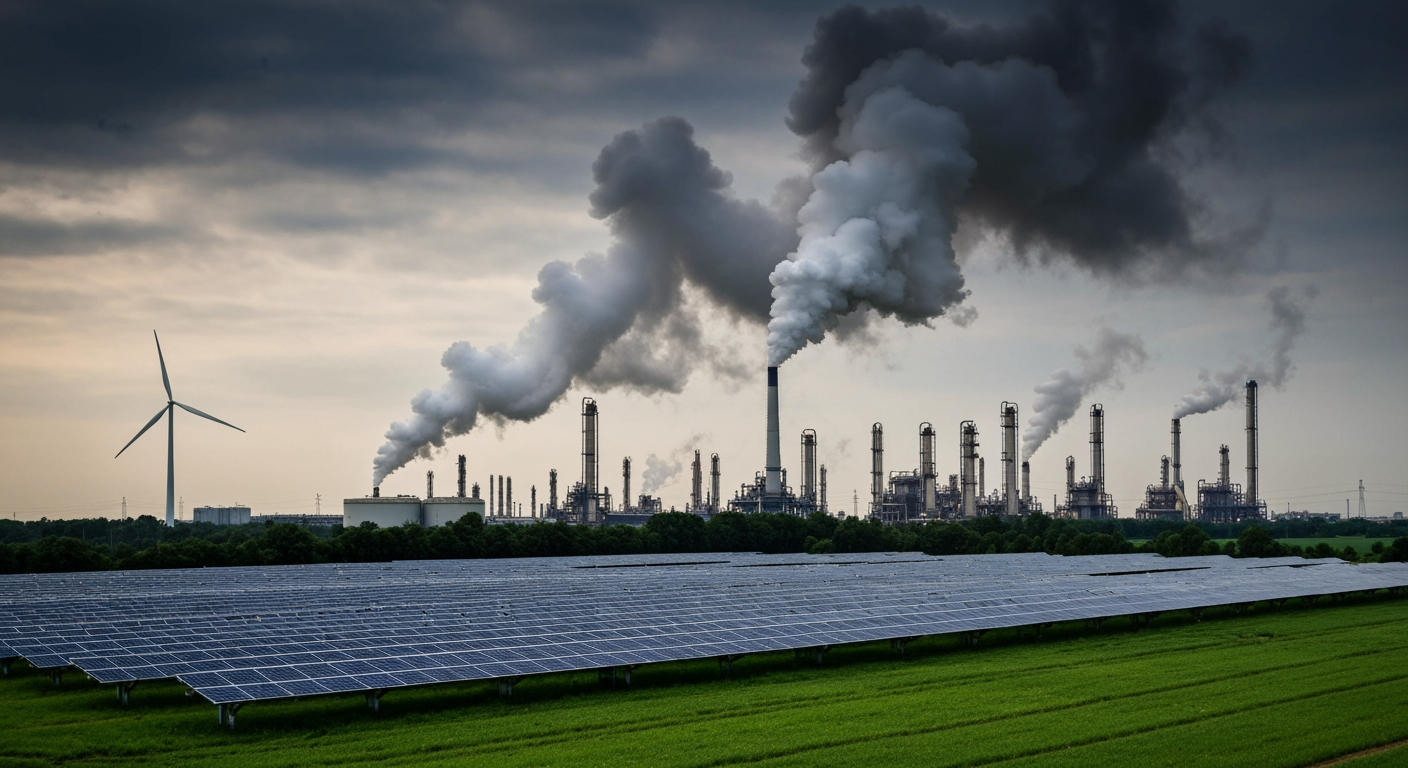
Europe's Green Surge vs. America's Fossil Fuel Might: A Global Energy Showdown
The global energy landscape is undergoing a profound transformation, marked by two fundamentally different approaches to power generation and economic development. On one side, the European Union is vigorously pursuing an ambitious clean energy transition, aiming for climate neutrality and energy independence through renewables


Balcony Solar Illuminates New Path for Renewable Energy Across US States
A quiet revolution is beginning to unfold across American cities and suburbs, transforming apartment balconies and small patios into miniature power plants. As US states increasingly embrace renewable energy solutions, the simple, accessible technology of balcony solar panels is emerging as a significant new frontier, offering individuals a direct stake in the clean energy transition

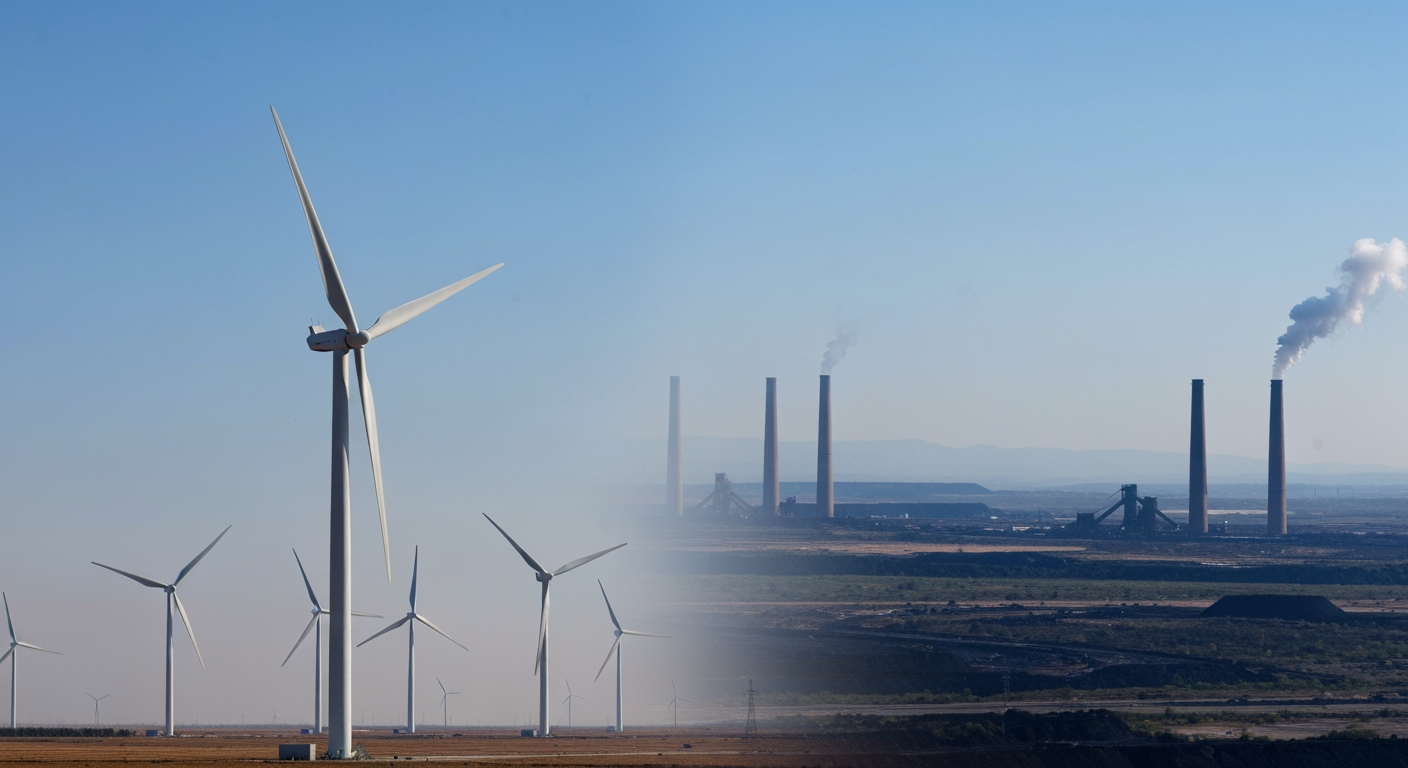
A Tale of Two Energies: China Champions Renewables as U.S. Grapples with Coal's Sunset
In a dramatic global energy narrative, China has firmly positioned itself as a titan of renewable energy, channeling unprecedented investments into solar, wind, and hydropower, while the United States, under former President Donald Trump's administration, made concerted efforts to revive its struggling coal industry. This stark divergence in energy strategies by the world's two largest economies has profound implications, not only for their respective economic futures and environmental footprints but also for the trajectory of global climate action and international energy markets