Beijing's Enduring Lifeline: Unpacking China's Vital Support for North Korea's Economy

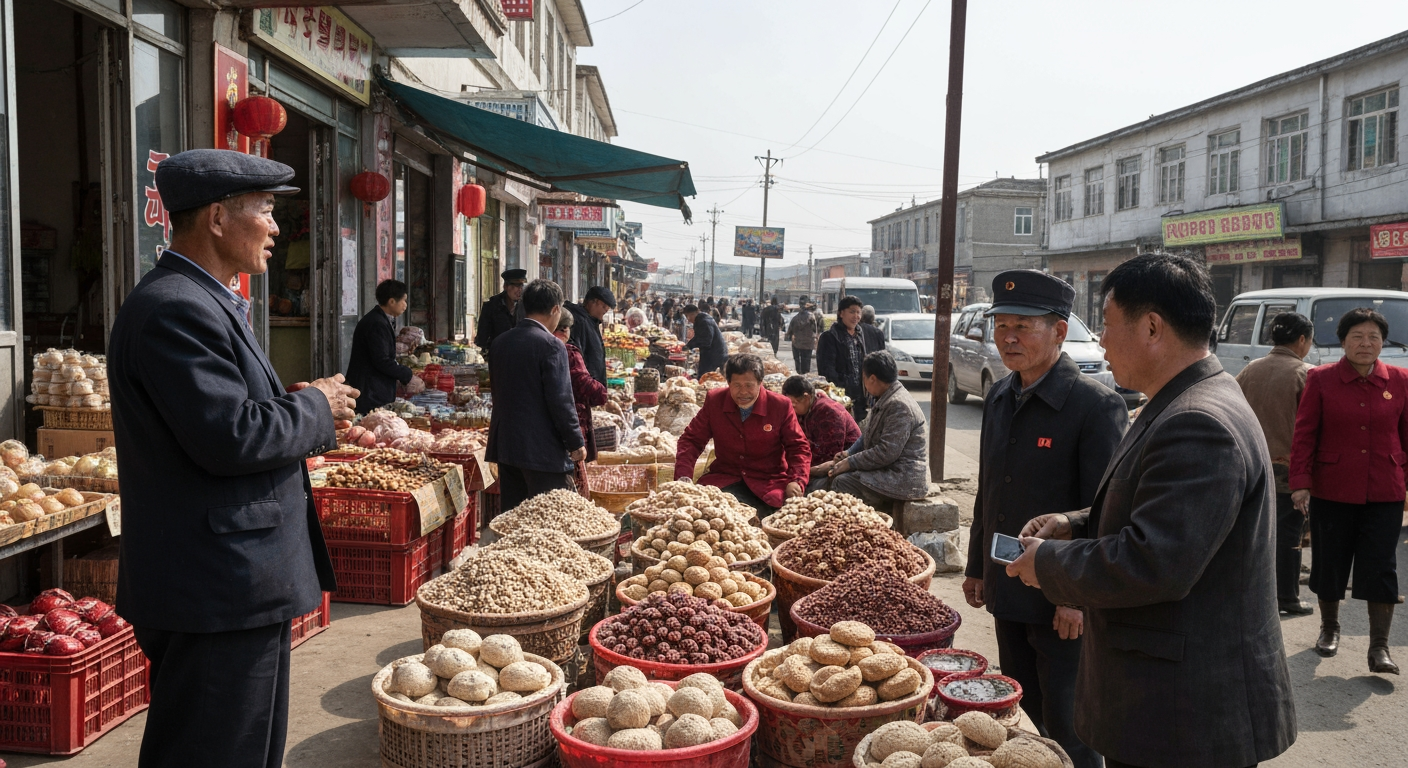
Beijing's steadfast economic support for North Korea stands as a complex and often contradictory pillar of regional geopolitics, sustaining a regime that frequently defies international norms and pursues a provocative nuclear weapons program. Despite global sanctions and widespread calls for Pyongyang's denuclearization, China remains the indispensable patron, providing the critical economic lifeline that keeps North Korea's isolated economy afloat. This intricate relationship is not born of pure ideological solidarity, but rather a deeply rooted geopolitical calculus driven by Beijing's strategic interests in regional stability, its long-standing rivalry with the United States, and the imperative of maintaining a crucial buffer zone on its northeastern border.
The Strategic Imperative: A Buffer Against Instability
At the heart of China's enduring commitment to North Korea lies a profound strategic concern: the maintenance of a stable buffer state separating its borders from the presence of U.S. military forces. The Korean Peninsula has historically been a flashpoint for great power competition, and for Beijing, North Korea serves as a vital shield. Should the Kim regime collapse, China anticipates a cascade of destabilizing consequences, including a potentially massive influx of refugees across its border, estimated to be in the millions. Beyond humanitarian concerns, there is also the alarming prospect of potential contamination from North Korea's chemical weapons, coupled with the profound regional upheaval that would inevitably follow such a collapse.
China adheres to a "three nos" principle regarding the peninsula: no war, no instability, and no nukes. This doctrine underscores Beijing's priority of preventing any scenario that could lead to a broader conflict or destabilize its immediate periphery. The presence of approximately 28,500 U.S. troops in South Korea reinforces China's determination to prevent a unified, U.S.-allied Korea directly on its frontier. The historical "lips and teeth" analogy, referencing the close but often fraught relationship forged during the Korean War, continues to resonate in Beijing's strategic thinking, emphasizing the intertwined destinies and the perceived necessity of North Korea's continued existence as a separate entity.
The Economic Tether: Pyongyang's Indispensable Lifeline
China's economic support for North Korea is not merely substantial; it is effectively Pyongyang's sole lifeline to the global economy. For more than two decades, Beijing has served as North Korea's top trading partner, accounting for an astounding 98 percent of the country's official total imports and exports in 2023. This overwhelming economic reliance highlights the extent to which China effectively underwrites the North Korean state, enabling it to endure even under the harshest international sanctions. Experts suggest that China actively seeks to maintain this economic dependence, leveraging it as a key tool of influence over the reclusive regime.
Despite international pressure and its own occasional frustrations with Pyongyang's actions, Beijing has been observed to undermine international pressure campaigns by violating UN sanctions and boosting both licit and illicit bilateral trade. This calibrated economic engagement allows China to provide just enough support to prevent a complete collapse, thereby preserving the buffer state, while simultaneously frustrating multilateral efforts to curb North Korea's nuclear ambitions. The post-COVID era has even seen trade between the two nations rebound significantly, further solidifying China's economic grip. Without this continuous flow of goods, food, and fuel, North Korea's already struggling economy would face far more dire circumstances.
Geopolitical Chess: Counterbalancing U.S. Influence
The relationship between China and North Korea must also be understood within the broader context of the intensifying geopolitical competition between Beijing and Washington. China views North Korea as a critical piece in its strategy to limit U.S. influence in East Asia. From Beijing's perspective, a powerful, unified, and U.S.-allied Korea would significantly alter the regional power balance to its detriment. The 1961 mutual defense treaty, China's sole formal security commitment, underscores this strategic alignment, though Beijing has subtly indicated that its obligations might not extend to scenarios where Pyongyang initiates conflict.
Chinese leaders have expressed concern that North Korea might align with other countries, including the United States, at China's expense. This historical distrust, alongside periodic tensions, has shaped a relationship where both countries attempt to use their ties to gain leverage in their respective dealings with Washington. Beijing's calculus is consistently aimed at maintaining a regional status quo that minimizes direct confrontation with the U.S. and its allies, while preserving a strategic advantage. The shifting dynamics, with North Korea recently deepening ties with Russia, add another layer of complexity, as China must now also consider Moscow's growing influence on the peninsula.
The Denuclearization Conundrum: Stability Over Sanctions
While China formally supports the denuclearization of the Korean Peninsula, its practical policy prioritizes stability over aggressive enforcement of denuclearization efforts that could jeopardize the Kim regime. Beijing fears that applying too much pressure, particularly economic, could lead to internal instability or outright collapse in North Korea, triggering the very refugee crisis and security vacuum it seeks to avoid.
Chinese policy, as such, tends to focus on working "on the margins" to limit North Korea's most provocative actions, such as nuclear tests, rather than seeking a complete dismantlement of its nuclear program. Beijing understands that such tests escalate tensions and could provoke a stronger trilateral security partnership between the United States, South Korea, and Japan, which directly undermines China's regional interests. Therefore, China often finds itself in a delicate balancing act, providing essential economic aid while subtly trying to rein in Pyongyang's more extreme behaviors, all without compromising the fundamental stability of its strategic buffer. The long-term goal for China appears to be a denuclearized peninsula that aligns with its own security interests, but not at the cost of a chaotic or U.S.-dominated outcome.
Conclusion: A Woven Tapestry of Self-Interest
China's decision to keep North Korea's economy alive is a multi-faceted strategy, intricately woven from threads of geopolitical self-interest, historical ties, and pragmatic concerns for regional stability. It is a relationship born more of necessity than affection, serving as a critical component of Beijing's broader foreign policy objectives. While the international community grapples with Pyongyang's nuclear ambitions, China consistently prioritizes the buffer zone, the prevention of a refugee crisis, and the containment of U.S. influence on its doorstep.
This complex dynamic ensures that despite sanctions and condemnations, North Korea will likely continue to receive the essential economic support it needs to survive, albeit under Beijing's careful watch. The implications are profound, shaping the security landscape of East Asia and presenting a persistent challenge to global efforts for denuclearization. As long as China's core strategic interests remain unchanged, its lifeline to Pyongyang will likely continue to flow, defining the fate of one of the world's most isolated nations and casting a long shadow over regional stability.
Related Articles


SpaceX Soars to Public Market: A Trillion-Dollar Bet on the Future of Space and AI
The financial world is abuzz as SpaceX, the ambitious aerospace company founded by Elon Musk, makes its highly anticipated public debut on the Nasdaq stock exchange. Trading under the ticker SPCX, the initial public...

Anthropic Seizes Early Lead in High-Stakes AI IPO Race Against OpenAI
The race to redefine the future of artificial intelligence is rapidly spilling over from research labs into the public markets, with Anthropic, a prominent AI developer, appearing to gain an early advantage in the...


German Business and Far-Right Politicians Navigate Geopolitical Tensions at Russia's Economic Forum
ST. PETERSBURG, RUSSIA – Amidst an international landscape marked by stringent sanctions and diplomatic estrangement, a notable contingent of German business leaders and far-right politicians made its presence felt at...