Alex Honnold Conquers Taipei 101 in Historic Free Solo Ascent
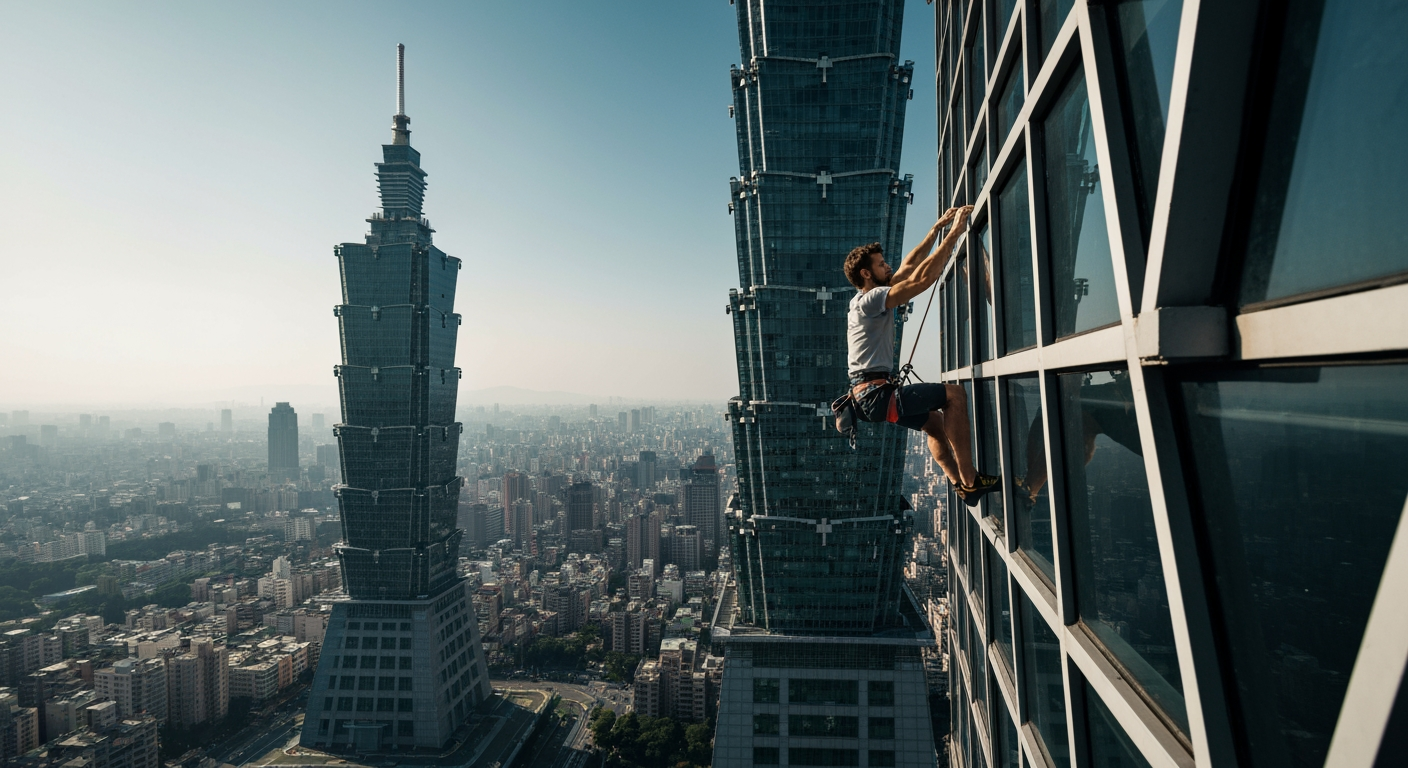
TAIPEI – In an unprecedented display of human endurance and mental fortitude, American rock climber Alex Honnold on Sunday, January 25, 2026, became the first person to free solo the iconic Taipei 101 skyscraper. The audacious ascent of the 508-meter (1,667-foot) tower, completed without the aid of ropes or safety equipment, unfolded live on Netflix, captivating a global audience and solidifying a new chapter in the annals of extreme sports. Honnold's remarkable feat, which saw him scale one of the world's tallest buildings in just over 90 minutes, marks the biggest urban free solo climb in history.
The Audacious Ascent: A Spectacle for the World
Under clear skies that followed a 24-hour weather delay, Honnold began his climb of Taipei 101, transforming the towering landmark into a vertical stage for an extraordinary performance. Cheers erupted from a substantial crowd gathered at the base as the 40-year-old climber, recognizable in a red short-sleeve shirt, meticulously navigated the building's intricate facade. Using the tower's horizontal metal beams and architectural features as handholds, Honnold pulled himself upward with bare hands, an act of sheer physical and psychological commitment.
The entire event, titled "Skyscraper Live," was broadcast globally on Netflix with a 10-second delay, allowing millions to witness each calculated move. The broadcast interwove live footage of the climb with expert commentary and interviews, including insights from Honnold's wife, Sanni McCandless, who was present at the scene. Honnold completed the monumental climb in one hour, 31 minutes, and 34 seconds, or approximately 1 hour and 32 minutes, just slightly over his personal estimate. Upon reaching the summit, he was met on a balcony by his wife, who greeted him with an emotional embrace. Despite the monumental achievement, Honnold reportedly expressed being "pretty tired" but also awestruck by the "incredible" view of Taipei from his unique vantage point. He also noted the significant wind, particularly near the spire, remarking, "It was very windy, so I was like, 'don't fall off the spire'."
Taipei 101: A Tower of Global Prominence
Taipei 101, formerly known as the Taipei World Financial Center, stands as a testament to modern engineering and architectural ambition. Located in Taiwan's capital city, it was officially opened in 2004 and held the title of the world's tallest building until 2010. Its design, reminiscent of a colossal bamboo stalk, incorporates traditional Asian aesthetics with advanced structural technology. The building's segmented, pagoda-like structure, with its repeated geometric forms, offered a unique set of challenges and opportunities for Honnold's ascent. The horizontal metal beams that define much of its exterior became crucial elements in his vertical progression.
The decision to free solo such an iconic urban structure added a layer of symbolic weight to Honnold's climb. Taipei 101 is not merely a tall building; it is a symbol of Taiwan's economic prowess and technological sophistication. Honnold's choice to scale this particular landmark highlights a growing trend of extreme athletes pushing boundaries in urban environments, reimagining the potential for human interaction with monumental architecture. The planned nature of the event, broadcast live, also served to elevate Taipei 101 into a global spotlight, showcasing both its impressive stature and the daring spirit of the climber.
Honnold's Unparalleled Feats and Enduring Legacy
Alex Honnold is no stranger to breathtaking, rope-free ascents. He rose to international fame in 2017 with his free solo of El Capitan in Yosemite National Park, a 3,000-foot granite monolith, a feat immortalized in the Oscar-winning documentary "Free Solo." That climb redefined what was considered possible in rock climbing, establishing Honnold as perhaps the greatest free solo climber in history.
While the El Capitan ascent was a quiet, intensely personal endeavor, the Taipei 101 climb was a meticulously planned public spectacle. This marked a significant departure in approach, with Honnold embracing the live broadcast and the immense public scrutiny. The urban free solo presented a different kind of challenge than natural rock. Though some climbing commentators suggested the technical difficulty of Taipei 101 might be less than El Capitan, Honnold himself estimated it to be around a 5.12 grade, which is still highly demanding. The sheer height, exposure, and constant wind at altitude, combined with the artificial and sometimes unconventional holds of a skyscraper, demanded an entirely different kind of physical and mental mastery. His success on Taipei 101 not only broke new ground in urban climbing but also reaffirmed his unique ability to manage extreme risk and maintain composure in life-or-death situations. Honnold stated his hope that the event would inspire others to pursue their own challenges and goals. "I think that people often find the inspiration that they need to pursue their own challenges or their own goals. It's often the kick they need to do whatever it is that they want to do in their life," he said.
Risks, Reactions, and the Human Element
The inherent danger of free solo climbing, whether on rock or skyscraper, is undeniable. One misstep, one lapse in concentration, could prove fatal. This ever-present risk was a central part of the broadcast's tension and the public's fascination. Discussions online and among commentators highlighted the unique psychological profile of Honnold, whose brain has been shown to exhibit an unusually low fear response.
A specific detail that garnered significant attention was the necessity of adding a "janky" or "sketchy" ladder for a section near the top of the building. This portion, described as vertical glass with no natural seams for climbing, posed a unique problem for a free solo ascent. The temporary addition, twisting in the wind, added another layer of precariousness to the already high-stakes climb, drawing comments about its perceived difficulty and the planning involved.
The world watched with bated breath, and official reactions were swift. Taiwan's President Lai Ching-te publicly congratulated Honnold on his success, acknowledging the "truly nerve-wracking" nature of the spectacle. While many expressed awe and admiration for Honnold's achievement, some viewers also voiced a sense of unease regarding the live broadcast of such a dangerous endeavor. However, the overwhelming sentiment was one of astonishment and respect for a climber who continues to push the boundaries of human capability.
A New Pinnacle of Achievement
Alex Honnold's free solo of Taipei 101 stands as a monumental achievement, not only for the climbing world but for the broader understanding of human potential. It marries the raw, primal act of climbing with the modern spectacle of live media, bringing an intensely personal challenge to a global audience. The successful ascent of Taipei 101 underscores Honnold's place as a living legend, an individual who consistently redefines the limits of what is physically and mentally possible. His latest triumph will undoubtedly serve as an inspiration for countless individuals to confront their own perceived limitations and reach for new heights in their personal and professional lives.
Related Articles

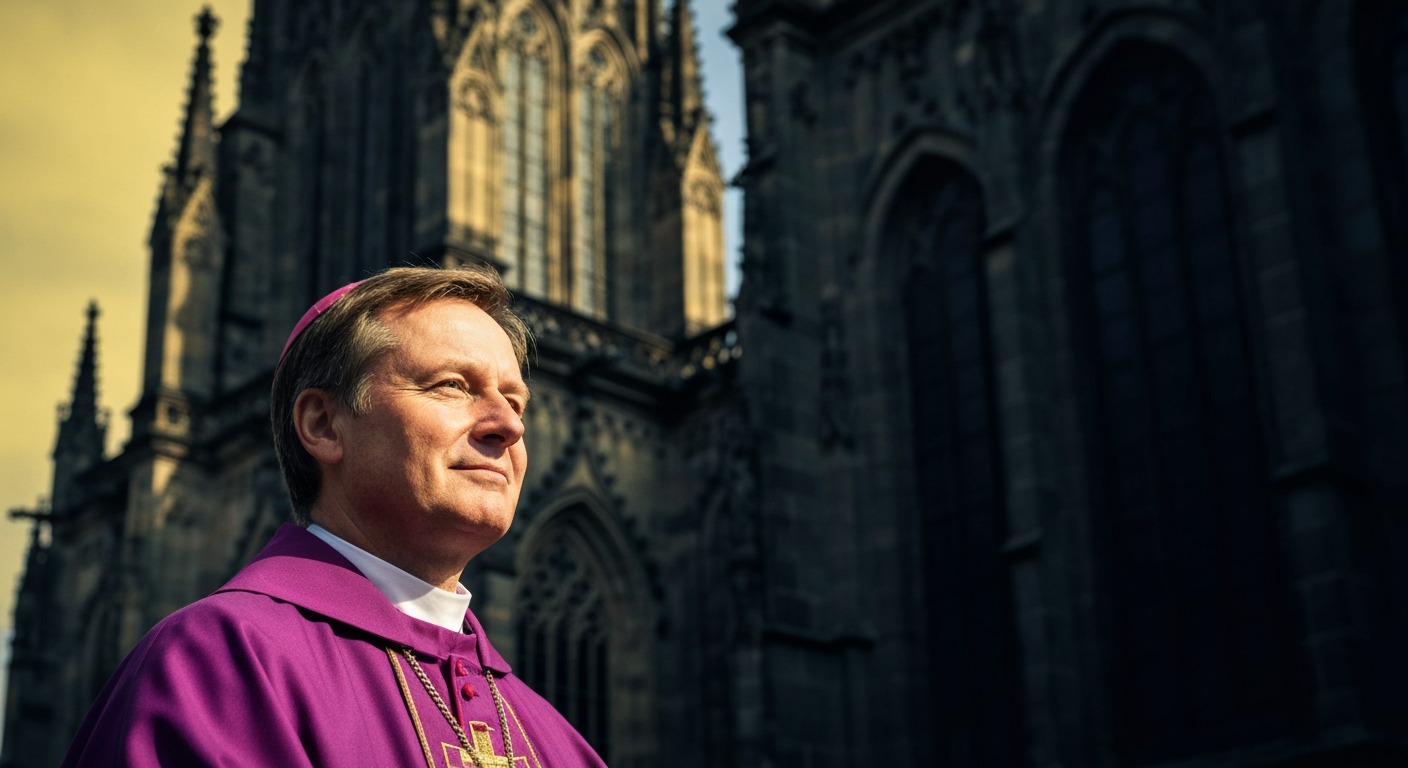
Bishop Heiner Wilmer Elected to Lead German Bishops' Conference Amidst Deep Divides
WÜRZBURG, Germany – Bishop Heiner Wilmer of Hildesheim has been elected the new President of the German Bishops' Conference, assuming leadership of a Church grappling with profound internal reform efforts, declining membership, and strained relations with the Vatican. His election on Tuesday, February 24, 2026, positions him at the helm for a six-year term, succeeding Bishop Georg Bätzing of Limburg, who chose not to seek re-election

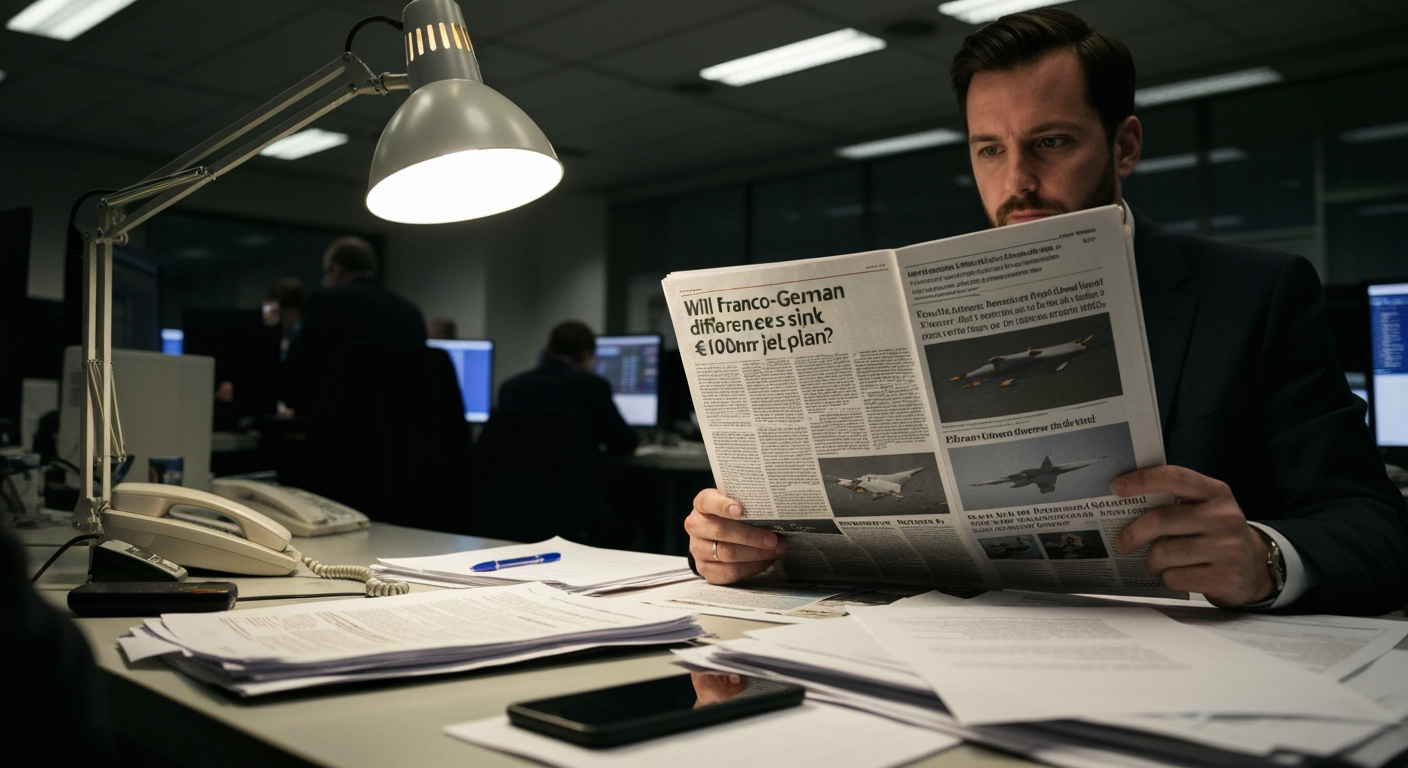
Franco-German Rift Threatens to Ground Europe's Flagship €100 Billion Fighter Jet Program
Brussels, Belgium – The ambitious €100 billion Future Combat Air System (FCAS), a cornerstone of European defense autonomy, faces an uncertain future as deepening industrial and strategic divisions between France and Germany threaten to derail the continent's most expensive military project. Originally envisioned as a unified sixth-generation fighter jet system by 2040, the program is now grappling with fundamental disagreements that could lead to its significant restructuring or even the abandonment of its central component, the Next Generation Fighter (NGF). Launched in 2017 as a joint initiative by France and Germany, with Spain joining in 2019, the FCAS program was designed to develop an integrated "system of systems." This comprehensive network includes a New Generation Fighter (NGF) to replace France's Rafale and Germany and Spain's Eurofighters, alongside autonomous Remote Carriers (drones) and a sophisticated "combat cloud" for data sharing and operational coordination
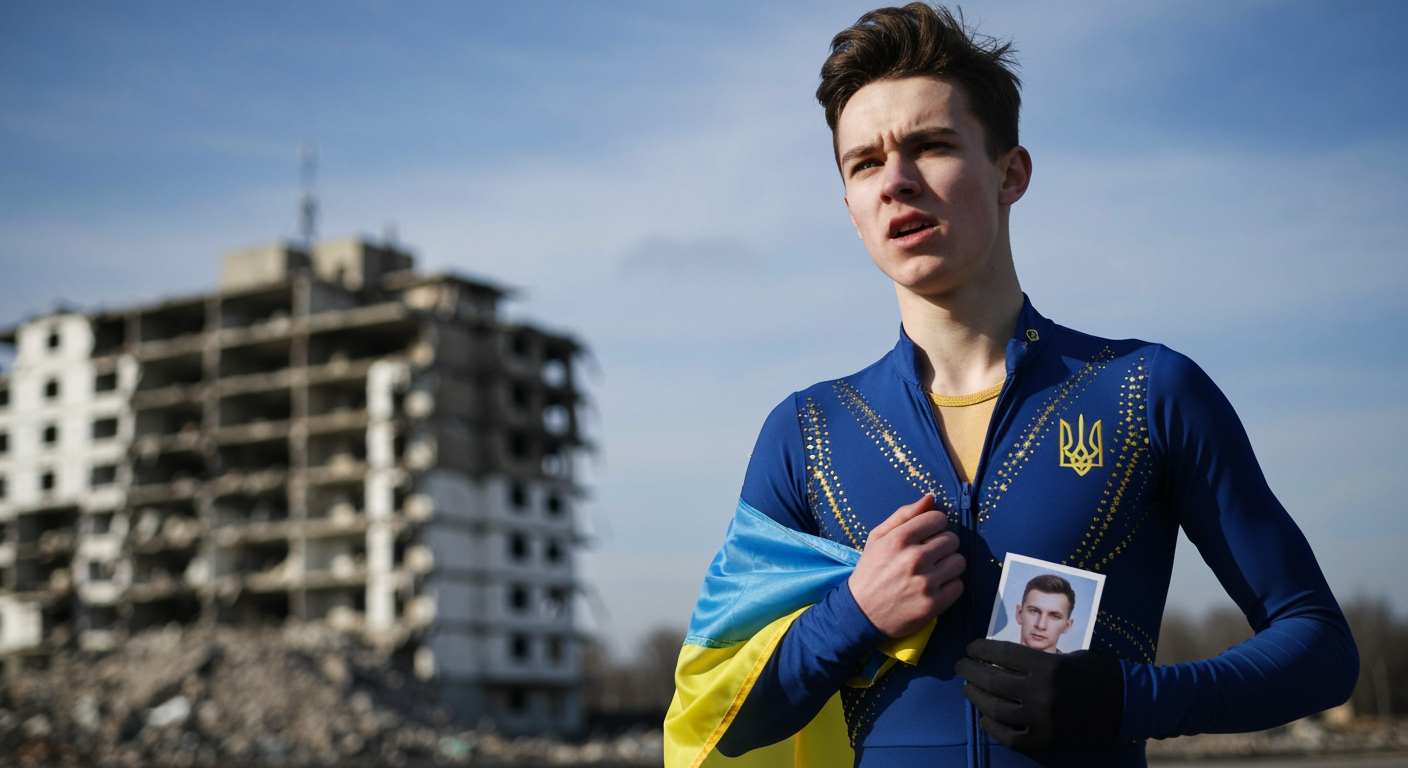
Olympic Skater Finds Brief Respite and Reunion Amidst Ukraine's Enduring Conflict
MILAN – Four years of relentless war, marked by the destruction of homes, shattered livelihoods, and the constant threat of aerial attacks, culminated in a poignant reunion at the Milan Cortina Games. American figure skater Vadym Kolesnik, whose family in Ukraine has endured the brutal realities of conflict, recently embraced relatives he had not seen since Russia’s full-scale invasion intensified